
What to See in Arezzo: Art, Piazza Grande and a Tuscany Many Travellers Miss
Arezzo is one of Tuscany’s great art cities, yet it often sits just outside the standard Florence–Siena–Pisa circuit. That is part of its charm. The historic centre is rich in Renaissance painting, medieval architecture and Etruscan history, but it still feels like a place where local life has not been completely reorganised around tourism.
The city rises gently toward its upper monuments, with Piazza Grande set on a slope and the Medici Fortress overlooking the surrounding valleys. Arezzo was important long before the Renaissance: it was an Etruscan settlement, then a Roman centre, and later a medieval commune whose fortunes were shaped by its position between Florence and central Italy. Those layers make a walk through Arezzo feel varied rather than stylistically uniform.
Start in Piazza Grande
Piazza Grande is the natural heart of Arezzo and one of Tuscany’s most distinctive squares. It slopes noticeably, creating a theatrical setting framed by medieval buildings, towers and the elegant Logge Vasari. Giorgio Vasari was born in Arezzo, and his architectural presence gives the city a strong Renaissance thread.
Look up at the clock on the Palazzo della Fraternita dei Laici. The square is beautiful at any time, but early morning is especially atmospheric before café tables and visitors fill the space.
See Piero della Francesca in San Francesco
The Basilica of San Francesco contains Arezzo’s artistic masterpiece: Piero della Francesca’s fresco cycle The Legend of the True Cross. The paintings are controlled, luminous and remarkably modern in the way figures occupy architectural space.
Reserve entry if possible rather than assuming you can walk in at any time. Visitor numbers are managed to protect the frescoes, and a little planning makes this one of the least stressful major-art experiences in Tuscany.
Walk uphill to the Cathedral
Continue through the centre toward the Cathedral of Saints Peter and Donatus. Its elevated position reflects the city’s layered geography, and the interior includes stained glass, sculpture and works connected with Arezzo’s long religious history.
Close by, the Museo Diocesano and smaller religious buildings can add depth if you enjoy art, but do not feel obliged to enter everything. One of Arezzo’s strengths is that monuments are close together and the streets between them are as pleasant as the interiors.
Visit Santa Maria della Pieve
Just above Piazza Grande stands Santa Maria della Pieve, instantly recognisable by its multi-level Romanesque façade. The church is one of the clearest traces of medieval Arezzo and feels more austere than the refined Renaissance spaces nearby.
Walk around the building rather than seeing only the façade. The rear and bell tower help explain how tightly Arezzo’s churches are woven into the surrounding streets.
Walk through the Prato to the Medici Fortress
At the highest part of the centre, the green area known as Il Prato creates a welcome pause between monuments. Continue to the Medici Fortress for broad views over rooftops and countryside. The fortress reflects the period when Florence’s Medici consolidated control over Arezzo, turning military architecture into a visible statement of authority.
This upper part of the city is particularly pleasant toward late afternoon. The light softens, the pace slows and the views make it clear how close Arezzo is to open countryside.
Look for Vasari’s house
Casa Vasari gives a more personal view of the artist and architect known above all for the Uffizi and his biographies of Renaissance artists. The decorated rooms are not enormous, which is precisely why the visit works well: it feels intimate rather than museum-like.
Nearby streets are worth wandering slowly. Arezzo has many stone façades and understated corners that do not advertise themselves as attractions but create the city’s atmosphere.
Step into San Domenico for Cimabue
The Basilica of San Domenico is simpler than many Tuscan churches, but it contains an important 13th-century Crucifix associated with Cimabue. The quiet interior can be a striking contrast after the visual richness of Piero della Francesca and Piazza Grande.
If you enjoy churches mainly for atmosphere rather than collections, San Domenico may become one of your favourite stops precisely because it is less crowded.
Where to park in Arezzo
For drivers, Parcheggio Pietri is especially useful because escalators connect the parking area with the upper historic centre. This saves a significant uphill walk and places you near the Cathedral and the Prato, allowing you to explore the city mostly downhill before looping back.
Baldaccio, Mecenate and San Donato are other recognised parking options around the centre. Avoid entering restricted central streets unless your accommodation has given you clear instructions.
Where to eat and where to stay
For an informal Tuscan meal in the centre, Antica Osteria l’Agania at Via Giuseppe Mazzini 10 is a long-established address known for straightforward local cooking. It is close enough to Piazza Grande to fit naturally into a sightseeing day without eating directly on the square.
Graziella Patio Hotel, at Via Cavour 23, is a central option for travellers who want to stay within easy walking distance of Arezzo’s main sights. The location is particularly convenient if you arrive by train and prefer not to use a car in the centre. Check Graziella Patio Hotel prices & availability
Want more accommodation options? Where to Stay in Tuscany: The Best Areas for Every Kind of Trip compares the best bases and makes it easier to choose the right location before you book.
Useful booking tools for this trip
Tours & experiences: For guided visits, attraction tickets and bookable experiences in Arezzo, See tours & tickets
How to spend a day in Arezzo
Begin in Piazza Grande, visit Santa Maria della Pieve, continue to the Piero della Francesca frescoes at San Francesco, then walk uphill to the Cathedral, Il Prato and the Medici Fortress. On the way down, add Casa Vasari or San Domenico depending on your interests.
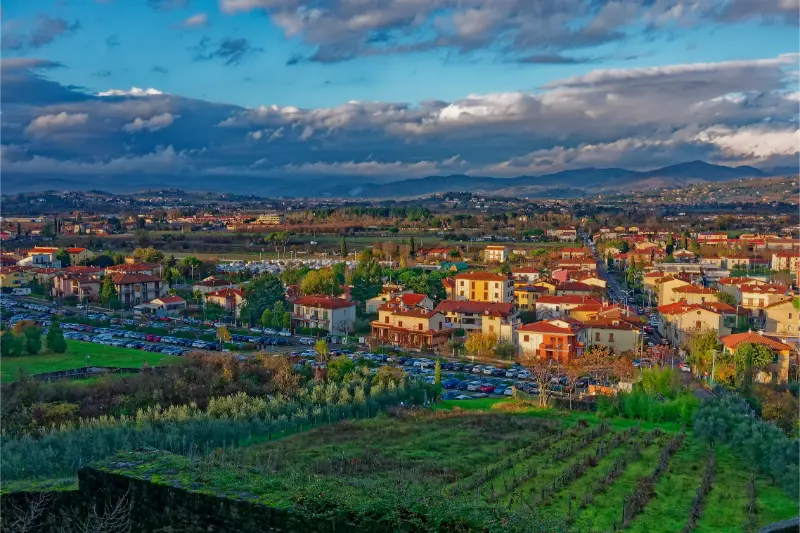
Arezzo can be visited comfortably in a day, but staying overnight reveals its biggest advantage: after the daytime visitors leave, Piazza Grande and the lanes around it feel remarkably relaxed for a city with this much art. If your Tuscany itinerary is already crowded with famous names, Arezzo is not a lesser substitute. It is a different kind of city break—cultured, beautiful and much easier to experience at your own pace.
Browse more Tuscany destination guides for ideas beyond the usual route.
Look for the city of La Vita è Bella
Arezzo became familiar to international audiences through Roberto Benigni’s film Life Is Beautiful, which used Piazza Grande and surrounding streets as part of its setting. You do not need to follow a formal film-location route to recognise the cinematic quality of the centre. The sloping square, arcades and stone streets naturally create framed views as you walk.
Instead of searching for exact camera positions, use the film connection as an excuse to wander between Piazza Grande, Via Cavour and the upper centre. It is a more enjoyable way to notice the city’s architecture.
Visit on antique-market weekend only if you enjoy the bustle
Arezzo is famous for its antiques market, when stalls spread through Piazza Grande and nearby streets. For collectors, it can be a highlight; for a first-time visitor focused on architecture, it changes the atmosphere considerably. If your dates coincide, arrive early and embrace the market rather than expecting empty squares.
On ordinary days, the same streets are much quieter, which can make Arezzo feel almost private compared with better-known Tuscan cities.
What to eat in Arezzo
Arezzo sits close to the Valdichiana, so menus often feature robust inland Tuscan food. Look for handmade pasta, crostini, grilled meats and dishes based on Chianina beef. In cooler weather, soups and slow-cooked dishes suit the city particularly well.

For a quick stop, choose a small enoteca or bakery away from Piazza Grande, then save a longer meal for the evening. Arezzo is compact enough that you never need to eat purely for convenience.
Take the train if you are coming from Florence
Arezzo is one of the easiest Tuscan art cities to visit without a car. The railway station is close to the lower historic centre, and from there you can walk gradually uphill through the main streets. This makes a day trip from Florence straightforward and avoids having to think about ZTL access or parking.
If you are continuing into the Valdichiana or countryside, a car becomes more useful. In that case, park once around the edge of the centre and do the entire city on foot.
Slow down around Corso Italia
Corso Italia is the main pedestrian spine through central Arezzo. It is useful for orientation, but the most interesting moments often occur when you step into parallel streets or climb one of the side lanes toward Piazza Grande. Shops and cafés here also make the route feel less like a museum corridor and more like a functioning city centre.
On the way, look for old shop signs, stone doorways and small religious images set into walls. Arezzo has enough monumental art that these modest details are easy to overlook, but they are part of what makes the city rewarding.
Use Arezzo as a base for eastern Tuscany
If you have more than a day, Arezzo is well placed for Cortona, the Valdichiana, Anghiari and the Casentino. Staying here can be more convenient than changing accommodation constantly, especially if you have a car. Evenings in Arezzo are quieter than Florence, while the railway station keeps larger-city connections simple.
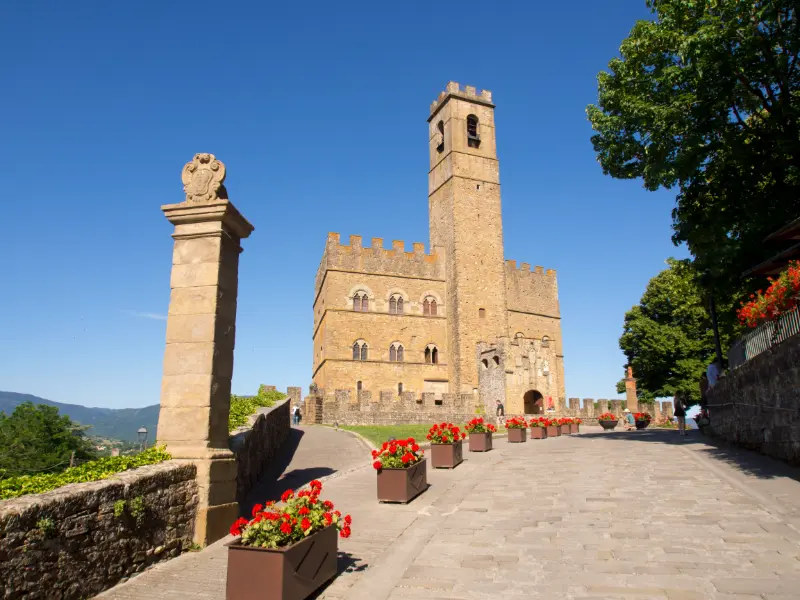
This balance—real city services, important art and quick access to countryside—is one reason Arezzo deserves more than a rushed stop.