
Pecorino di Pienza: Cheese Farms, Tastings and What You’re Actually Buying
Pienza’s cheese shops are one of the pleasures of the Val d’Orcia, but the labels deserve more attention than most travel guides give them. “Pecorino di Pienza” is a strong local identity and commercial description, while Pecorino Toscano DOP is a legally protected European designation with a defined production specification. The two can overlap, but they are not automatically the same thing. A useful cheese day therefore begins with reading the rind and label, then visiting a producer that can explain milk, ageing and production rather than simply selling a vacuum-packed wedge.
Fact-check note: denomination rules, producer visits and practical information in this article were checked against primary or official tourism sources in September 2026. Where a price or opening time is mentioned, treat it as a dated reference rather than a permanent tariff.
Quick facts that matter
| Protected designation | Pecorino Toscano DOP |
|---|---|
| EU PDO recognition | 2 July 1996 |
| Milk for DOP | Whole sheep’s milk from the defined production area |
| Important distinction | “Pecorino di Pienza” is not automatically Pecorino Toscano DOP |
The distinction between Pienza cheese and Pecorino Toscano DOP
The Pecorino Toscano DOP consortium states that the protected cheese is made exclusively from whole sheep’s milk originating in the defined production zone, which includes Tuscany plus specified neighbouring municipalities in Umbria and Lazio. The PDO was recognised at European level on 2 July 1996. Only cheese produced and handled according to the official specification can use the protected name and logo.

By contrast, “Pecorino di Pienza” is not itself the name of that EU PDO. In and around Pienza you will find sheep cheeses made by local dairies using different techniques, milk sources, ageing styles and flavourings. Some may also qualify as Pecorino Toscano DOP; others are excellent local pecorini but belong to a different legal category. The correct question in a shop is not “Is this real Pienza pecorino?” but “Is this Pecorino Toscano DOP, and who made it?”
On certified Pecorino Toscano DOP, look for the approved marks. The consortium explains that soft forms are ink-marked and aged forms are branded, while pre-packed portions carry the protected identification on the packaging.
A verified tasting at Caseificio Cugusi
Caseificio Cugusi, in the countryside between Montepulciano and Pienza, runs private guided tastings. The current classic tasting includes five types of Pecorino di Pienza, fruit preserves, ricotta, water and Rosso di Montepulciano. A member of staff explains the cheeses and production process, and the experience is offered in Italian, English and Spanish.
This is a good option if your priority is comparison: tasting five maturities/styles at one table makes differences in texture, salt and rind treatment much easier to understand. The dairy asks visitors to book; confirm the current schedule directly rather than relying on an old travel-blog timetable.
A farm-and-dairy visit at Podere Il Casale
Podere Il Casale, Via Podere il Casale 64 near Pienza, offers a different format: a guided farm tour from animal areas to the dairy, followed by a tasting of raw-milk cheeses and the farm’s organic wines. The current description gives a total duration of about 90 minutes and a minimum of two participants.
This is the better format if you want to see the agricultural context rather than only taste finished cheese. The farm explains its own production practices; do not generalise every technique you see there to all Pecorino Toscano or all Pienza producers. Raw-milk artisan cheese and the DOP legal category are separate questions.
How to taste pecorino properly
Start from the youngest cheese and move toward the most aged. A fresh or short-aged pecorino should be judged for milk sweetness, acidity and supple texture; longer-aged wheels become firmer, saltier and more concentrated. Rinds and treatments can add another layer. In Pienza you may encounter cheeses aged with hay, pomace, ash, herbs or other coverings. These can be traditional or producer-specific but they should not be confused with the core PDO definition.
Use accompaniments sparingly at first. Honey and preserves are pleasant, but they can hide subtle differences. Taste the cheese alone, then add a small amount of condiment. The same applies to wine: a robust red can overwhelm a young pecorino; a mature cheese can stand up to more structured wine.
Buying cheese in Pienza without making avoidable mistakes
- Read the label: if you specifically want Pecorino Toscano DOP, look for the protected name and mark.
- Ask the producer: shop staff should be able to tell you the dairy, milk type and approximate ageing.
- Do not equate “truffle pecorino” with better cheese: added flavours can be enjoyable but tell you less about milk and maturation.
- Consider transport: ask for vacuum packing if you are travelling, and keep cheese cool.
- Check customs rules: travellers flying outside the EU should verify their destination country’s rules on dairy imports before buying several kilos.
A useful half-day around Pienza
Book a late-morning dairy or farm tasting, then visit Pienza after lunch. This avoids trying to park in the old town at the busiest time and lets the food experience stand on its own. Alternatively, tour Pienza early, collect your car and drive to the farm for an afternoon appointment.
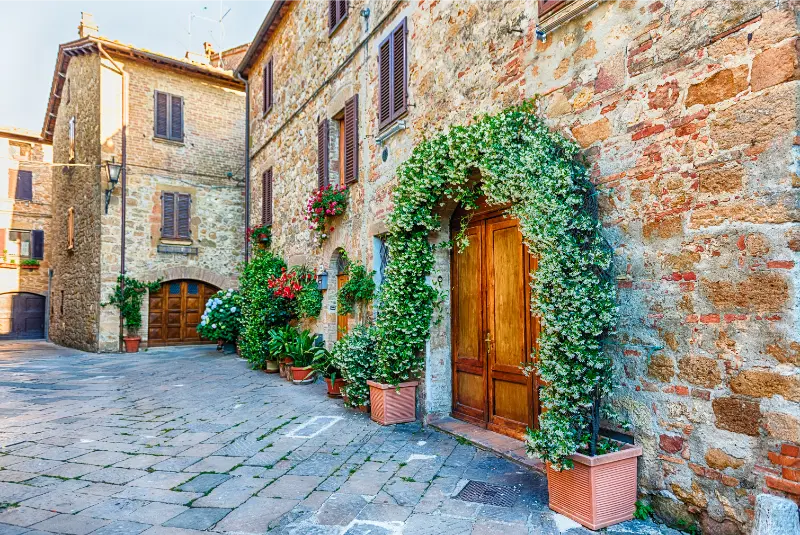
Do not schedule a major wine tasting immediately before a cheese session. Palate fatigue is real, and strong red wine makes it harder to compare delicate young cheeses. If you are spending a full day in Val d’Orcia, pair the cheese visit with one village — Pienza or San Quirico — rather than rushing through Pienza, Montepulciano and Montalcino on the same timetable.
Useful booking links for this trip
Browse Val d’Orcia tours and experiences
Build this into a Tuscany itinerary
The regulatory and visit details below were checked against official consortium, municipal, tourism-board or producer pages in September 2026. Opening times, prices and bookable experiences can change, so confirm directly before travelling.
Questions worth asking the cheesemaker
Ask where the milk comes from, whether it is raw or pasteurised, whether the cheese carries Pecorino Toscano DOP, how long it has aged and what — if anything — has been used to treat the rind. Ask how the flock’s feed changes seasonally. If a cheese contains truffle, chilli, wine or herbs, taste one plain pecorino first so you have a baseline for the milk and maturation. At a farm, also ask which cheeses are made every week and which are seasonal.
Before you set out
Check the producer or official consortium page again within 24–48 hours of travel. Rural opening times can change for harvest, private events and seasonal closures. Save the phone number and exact address, and allow extra driving time rather than scheduling tastings back-to-back. If alcohol is part of the experience, decide transport before the first pour, not afterwards. For food allergies or dietary restrictions, contact the producer directly because a tasting described simply as “local products” may include nuts, dairy, gluten, cured meats or other allergens.
Keep receipts and labels for products you want to remember. A photograph of the bottle or cheese label is more reliable than trying to reconstruct the producer name later. When an experience teaches you a regulation — grape percentage, ageing rule, protected mark or production area — compare that information with the official source linked at the end of this guide. That is the easiest way to separate a producer’s house style from the rules that apply to the whole denomination.
How much time to allow
Do not measure this experience only by the tasting duration. Add time for parking, check-in, questions, purchases and the transfer to your next stop. A listed 60-minute tasting can easily occupy 90 minutes door to door, while a farm or cellar tour may run longer during harvest. For a food-focused day, one major morning visit and one afternoon visit is usually more useful than three appointments. It leaves enough time to eat, take notes and understand the landscape connecting the producers.
When choosing between a guided tour and an independent visit, consider transport first. Guided options cost more but remove the driving problem when wine is involved and can connect rural addresses that are awkward by public transport. Independent travel is better for travellers who want to stop at villages and viewpoints, provided one person remains alcohol-free. Either way, reserve the key producer first and build the rest of the day around that fixed appointment.
How this guide was verified
The regulatory facts were taken from the relevant protection consortium or official regional/municipal source rather than copied from commercial travel blogs. Named farms, wineries, markets and restaurants were included only where a current official page confirmed that the place exists and describes the relevant experience or product. Dynamic details such as prices and opening times are presented as a September 2026 snapshot and are deliberately separated from permanent denomination rules.
This distinction matters in food and wine travel. A DOCG grape percentage is a rule until the production specification changes; a €35 tasting price can change tomorrow. A municipal market schedule is stronger evidence for opening patterns than an old review; a producer page is stronger evidence for its current tour than a third-party list. Recheck the dynamic details, but you should not have to second-guess the underlying definitions in this article.