Best Tuscany Wine Tours from Florence: Chianti, San Gimignano & Full-Day Options
A wine tour from Florence can mean very different things. One product may spend four to five hours visiting two Chianti estates with a small group; another may use most of a twelve-hour day to combine Siena, San Gimignano and a winery lunch; a private driver may focus on one producer and give you time to ask technical questions in the cellar. The right choice depends less on the words “wine tour” than on how much of the day is actually spent at wineries, how large the group is, and whether you want wine education or a sightseeing day with wine included.
Verification note: the concrete tour examples and practical details below were checked against current operator, marketplace or official Tuscany tourism pages in September 2026. I separate stable geography from product-specific conditions because schedules, prices, minimum ages and inclusions can change.
Which wine-tour format actually fits your trip?
| Format | Typical time commitment | Best for | Watch for |
|---|---|---|---|
| Small-group Chianti tasting | About 4.5–6.5 hours | Travellers who want two winery stops without losing a whole day | Meeting point in Florence, lunch inclusion, number of wines |
| Full-day wine + hill towns | Roughly 9–12 hours | First-time visitors who also want Siena or San Gimignano | Less cellar time; long coach/minivan day |
| Private wine day | Flexible, usually most of a day | Couples, collectors, specific estates | Higher price; confirm winery reservations are included |
| Self-drive tastings | Your schedule | Experienced drivers and people staying in Chianti | One person must avoid alcohol; winery appointments matter |
The two Florence wine tours people often confuse
Current Florence listings make the distinction clear. GetYourGuide currently shows highly reviewed small-group Tuscany wine-tasting trips around 4.5 hours and Chianti winery tours around 5 to 6.5 hours, while the popular Florence–San Gimignano–Siena–Chianti combinations run around 11 hours. That is not a small difference: the first style is a wine-focused half day; the second is a regional sightseeing day where wine is one component. If your priority is learning how Chianti Classico is made, choose the former. If you have only one free day outside Florence and want medieval towns as well, the latter may be more efficient.

Read the itinerary stop by stop before paying. “Two wineries” should mean two meaningful producer visits, not one tasting room plus a retail stop. Check whether cellar or vineyard access is explicitly listed, whether lunch is a full meal or a light snack, and whether the tour explains which appellation you are visiting. Chianti is a broad geographic word; Chianti Classico has a specific historic production zone between Florence and Siena.
Chianti, San Gimignano or Val d’Orcia: choose the geography first
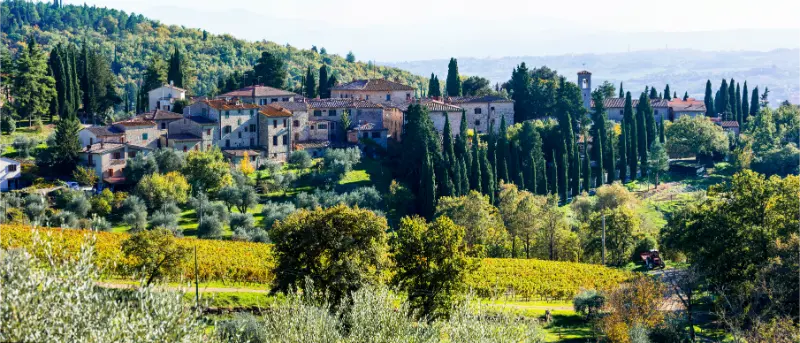
For a first wine excursion from Florence, Chianti is the easiest fit because travel time is relatively modest and there are many tours built around Greve, Panzano, Barberino Tavarnelle and the countryside toward Siena. It is the logical choice when you want vineyards, stone villages and Sangiovese without spending hours transferring south.
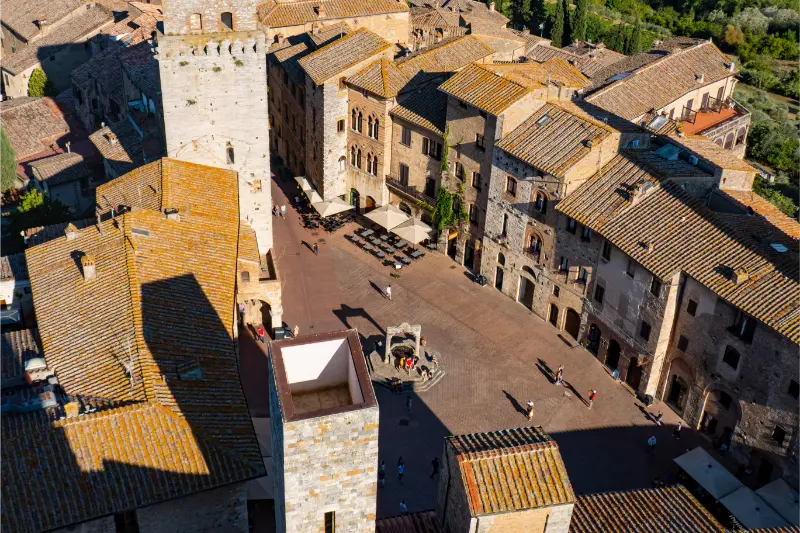
San Gimignano changes the wine focus. The town is famous for Vernaccia di San Gimignano DOCG, a white wine that gives a useful contrast to the red-wine image of Tuscany. A combined Chianti and San Gimignano day can therefore make sense if the itinerary includes a producer rather than merely free time in the town. For Brunello di Montalcino and Vino Nobile di Montepulciano, expect a much longer day from Florence; those territories are better treated as dedicated Val d’Orcia/Valdichiana wine days.
What a worthwhile winery stop should include
A useful winery visit should give context before the glasses arrive. At minimum you want to understand where the vineyards are, which grapes are used, what kind of ageing the wines receive and how the producer’s entry wine differs from its reserve or single-vineyard bottling. A tour that pairs wine with local food can be excellent, but food should not replace the explanation if you are booking specifically for wine.
- Confirm how many wineries are visited and how many wines are tasted.
- Ask whether the tasting is seated and guided or self-paced.
- Check whether cellar/vineyard access is included or depends on harvest operations.
- If buying bottles, ask whether shipping is available to your country and what taxes apply.
- If you do not drink, verify whether the operator discounts or accommodates non-drinkers.
Transport is part of the value
The strongest reason to book from Florence is not only convenience; it is avoiding the conflict between driving and tasting. Many wine estates are reached by narrow rural roads, and public transport is not designed around cellar appointments. A minivan tour lets every adult taste and also removes parking and ZTL worries. This matters especially if the itinerary includes several estates.
For travellers staying overnight in Chianti, self-driving can still be better because you can book one or two producers close to your accommodation and keep the day slow. Do not try to imitate a commercial tour by cramming four wineries into one day. Two serious visits, with lunch and time in one village, usually produce a better understanding of the area.
When to book and what harvest season changes
Late spring and early autumn are excellent for vineyard scenery, but September and early October can be operationally busy because producers are harvesting and processing grapes. That can make a visit fascinating, yet it can also restrict access to working areas. A reputable tour will adapt the visit rather than promise that every cellar space is always accessible.
In July and August, the practical issue is heat: a morning departure is preferable if walking vineyards is part of the program. In winter there are fewer crowds and tastings can feel more personal, but daylight is shorter and some countryside businesses reduce opening days. Always judge a tour by the current date-specific itinerary, not a generic description copied from summer.
Before you pay: six checks that prevent disappointment
Check the exact departure point in Florence and the vehicle size. A small-group minivan feels very different from a large coach, especially on narrow rural roads. Look for a maximum group number rather than the vague word “small.”
Check winery names if the operator publishes them, but understand that substitutions can happen because estates host private events or harvest work. The more important promise is the number and quality of producer visits, not one famous label.
If your party includes a non-drinker, confirm whether they can still join the cellar tour and lunch comfortably. If mobility is limited, ask about cellar stairs and gravel vineyard paths. Finally, compare cancellation deadlines with your itinerary: a wine tour is easiest to change when booked early in a multi-night Florence stay rather than on the final day.
A realistic decision rule
Choose a 4.5–6.5 hour Chianti tour if wine is the main objective and you still want part of the day in Florence. Choose an 11–12 hour combination if this is your only chance to see Siena or San Gimignano and you accept that wine will share the day with sightseeing. Choose private if you have named producers in mind or want a technical tasting. And if you already stay in Chianti, skip the Florence transfer altogether and arrange local visits with one designated driver.
Compare current Tuscany wine tours
Use the current wine-tour category to compare half-day Chianti tastings, full-day wine trips and small/private options. Check the exact wineries and inclusions for your date.
Compare Tuscany wine toursAffiliate link: Tuscany Explorer may earn a commission at no extra cost to you. Prices, schedules and availability can change.
Frequently asked questions
Is a half-day wine tour from Florence enough?
Yes if your goal is Chianti and you choose a tour with two substantial winery stops. It is not enough for Montalcino or Montepulciano, where transfer time makes a longer day more sensible.
Should I choose a tour with San Gimignano?
Choose it if you genuinely want the town as well as wine. If wine education is your priority, a tour that spends more time at producers is normally stronger.

Can I visit wineries by train?
Not efficiently. Trains can get you to some towns in Tuscany, but most vineyard estates are outside stations and many require appointments.
Is lunch always included?
No. Some current listings include a meal, others only snacks or tastings. “Wine tour” does not imply lunch, so check the inclusion list.
Can I buy wine at the winery?
Usually, but shipping rules and costs vary. If you plan to ship bottles abroad, ask the winery directly before committing to a large purchase.
A final booking strategy
For Tuscany wine tours from Florence, I would shortlist no more than three products and compare them side by side. Open the full inclusion list, cancellation policy and meeting-point map rather than deciding from the headline. Write down actual activity time, transfer time, group size, physical requirements and what happens if weather changes. This catches the most common mismatch between what a traveller imagines and what the operator is selling.
Then check the newest date-specific availability. Marketplace pages aggregate products from different suppliers, so two activities with almost identical names can have completely different rules. Screenshot or save the final voucher after booking, including the emergency contact and meeting instructions. On rural Tuscany tours, being at the correct meeting point ten to fifteen minutes early is more important than it sounds because guides may not be able to delay the whole group.
Finally, keep the rest of that day realistic. Experiences become disappointing when they are squeezed between timed attractions with no buffer. Allow for rural traffic, weather adjustments, a meal that runs long and the simple fact that good guides sometimes spend a few extra minutes answering questions. The purpose of booking an experience rather than merely transporting yourself through the landscape is to have enough time to understand what you are seeing.
Operational details were checked in September 2026. Tour products, prices, meeting points and weather policies can change, so re-check the booking page for your date.