
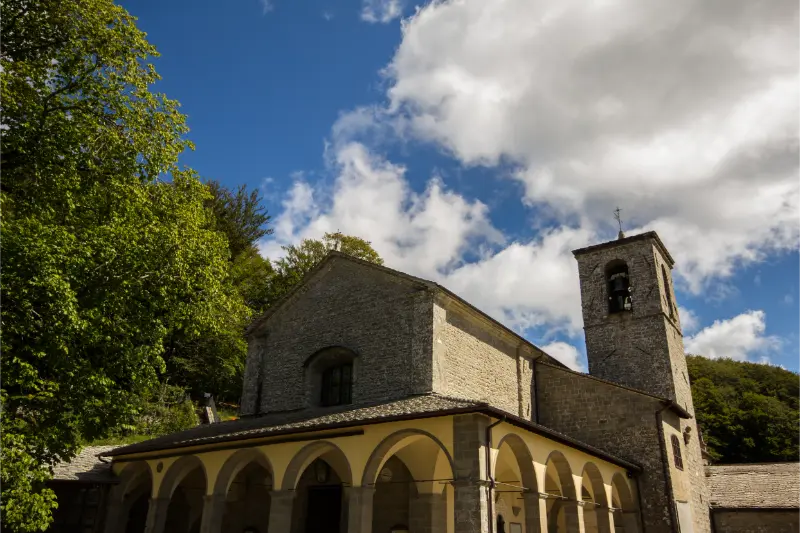
La Verna Sanctuary: 2026 Hours, Stigmata Chapel and Casentino Forest Walks
La Verna is both a major Franciscan sanctuary and one of the most powerful forest landscapes in eastern Tuscany. Visiting only the basilica misses the cliffs, sacred forest and walking routes; treating it only as a hike misses the religious history that gives the mountain its meaning. The best visit combines the sanctuary complex with at least a short walk in the surrounding Casentino forest.
Use this guide with our Casentino travel guide, Best Nature Experiences in Tuscany, our Arezzo guide and Hidden Gems in Tuscany.
La Verna 2026 practical facts
| Location | Chiusi della Verna, province of Arezzo |
|---|---|
| Sanctuary visiting hours May–Sep | 06:30–21:30 |
| Sanctuary visiting hours Oct–Apr | 06:30–19:00 |
| Chapel of the Stigmata May–Sep | 07:30–18:30 |
| Chapel of the Stigmata Oct–Apr | 07:30–17:30 |
| Nature trail | Official La Verna Nature Trail: 2.5 km, with significant walking time |
| Character | Active religious site + national-park forest |
Why La Verna matters
The mountain is associated with Saint Francis and the receiving of the stigmata, which makes it one of the most important Franciscan sites in Italy. That history is not confined to one chapel: rock, forest, caves and built spaces are woven together in the devotional landscape.
Even non-religious visitors can appreciate the site if they approach it respectfully. The architecture is restrained compared with Florence or Siena, while the setting does much of the emotional work.
What to see inside the sanctuary
The Chapel of the Stigmata is the central devotional destination, but the route through the complex includes the basilica, smaller chapels, cloisters and places associated with Franciscan tradition. Allow silence into the itinerary; racing room to room as if collecting museum highlights feels especially inappropriate here.
The official schedule distinguishes general sanctuary visiting hours from access to the Chapel of the Stigmata. In summer, the sanctuary remains open much later than the chapel, so do not arrive in the evening assuming every interior space will still be accessible.
2026 opening hours and Mass times
From May through September the sanctuary currently lists visitor opening from 06:30 to 21:30, while from October through April it closes at 19:00. The Chapel of the Stigmata is listed 07:30–18:30 in the warmer period and 07:30–17:30 in the colder period.
The site is an active place of worship with multiple daily Masses and a 15:00 liturgical office/procession. Times can shape visitor movement and access. If you want a purely quiet sightseeing visit, avoid arriving just before a major service; if you want to experience the religious life of La Verna, plan deliberately around it.
The forest is not an optional backdrop
La Verna rises within the National Park of the Casentino Forests, Monte Falterona and Campigna. The surrounding woodland helps explain why the sanctuary feels isolated even when visitor numbers are high. The Park’s official La Verna Nature Trail starts from Chiusi della Verna and connects settlement, forest and sanctuary.
The published nature trail is 2.5 km, with about 100 metres of positive elevation and a higher cumulative descent in the described direction. The Park gives a much longer walking time than the distance alone might suggest, so treat it as an interpretive route rather than a fast 30-minute stroll.
Monte Penna and longer walking
Experienced walkers can extend the day toward Monte Penna and other signed paths around the sanctuary. A 2026 national-park guided event used a higher loop around Monte Penna before entering the lower forest circuit, which illustrates how easily La Verna can become a full hiking day.
Do not improvise a longer mountain route in formal clothes because you came primarily for the basilica. If hiking is part of the plan, bring proper shoes, water and a trail map and check current trail conditions on the Park website.
How long to spend
Two hours is enough for the sanctuary and a short look around the immediate forest. Half a day is much better if you want the nature trail or a quiet meal. A full day makes sense for a longer hike.
The mistake is trying to combine La Verna with too many Casentino castles on one day. Distances are not enormous, but mountain roads and the slower rhythm of the sanctuary make an overloaded route feel rushed.
Dress and behaviour
La Verna is a functioning Catholic sanctuary. Dress in a way that is appropriate for churches, keep voices low in devotional spaces and avoid treating services or friars as a backdrop for photographs. Outdoors, switch to practical mountain logic: weather can be cooler and more changeable than in Arezzo or Florence.
A light layer is useful even in summer. In shoulder seasons, bring rain protection and shoes suitable for damp forest paths.
Families
Families can visit successfully because the forest breaks up the church experience, but children should understand that parts of the complex require quiet. The short nature trail is more engaging than asking younger visitors to stand through every chapel explanation.
If using a stroller, contact the sanctuary or check current accessibility information because historic levels, slopes and forest paths cannot be assumed to be step-free.
Where to stay
Staying in the Casentino turns La Verna from a long day trip into part of a quieter mountain itinerary. Chiusi della Verna is the closest base, while Bibbiena and other valley towns provide more services. Travellers based in Arezzo can visit by car, but should plan for mountain-road time in both directions.
Check accommodation near La Verna and in the Casentino
A good first-time route
- Arrive in the morning and visit the principal sanctuary spaces before tour groups peak.
- Walk to the Chapel of the Stigmata during its published access window.
- Take a simple lunch or break.
- Do part or all of the official nature trail in appropriate footwear.
- Finish with a quiet return through the forest rather than adding another distant city.
Best season
Late spring through early autumn gives the longest sanctuary hours and the easiest forest walking. Summer weekends can be busy with pilgrims and visitors. Autumn is beautiful in the Casentino woods but daylight shortens and the chapel closes earlier after September.
Winter can be powerful and quiet, yet mountain weather is the controlling factor. Check road and trail conditions rather than assuming Tuscany’s winter is mild everywhere.
Bottom line
La Verna is one of the rare Tuscany attractions where art, religion and landscape cannot be separated without losing the point. Give the sanctuary time, respect its active religious use, and add a forest walk if conditions allow. The result is far more memorable than treating it as a church stop between Arezzo and somewhere else.
Practical information was checked on 11 September 2026. Opening hours, prices, temporary restrictions and access rules can change, so recheck the official source shortly before travelling.
La Verna and the wider Casentino cluster
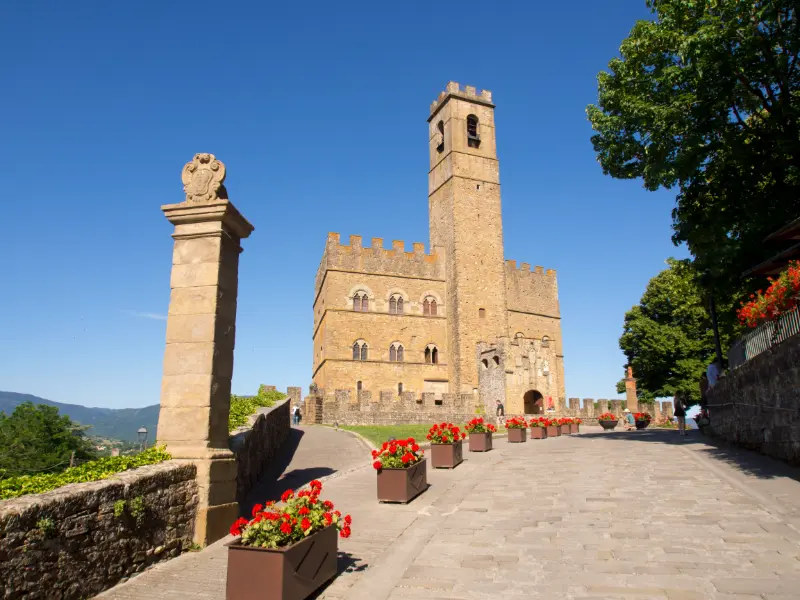
La Verna pairs naturally with the Casentino’s forests, castles and monastic landscapes, but not all on one hurried loop. Poppi, Camaldoli and the national park each deserve time. If La Verna is your spiritual or hiking priority, make it the anchor and add only one secondary stop.
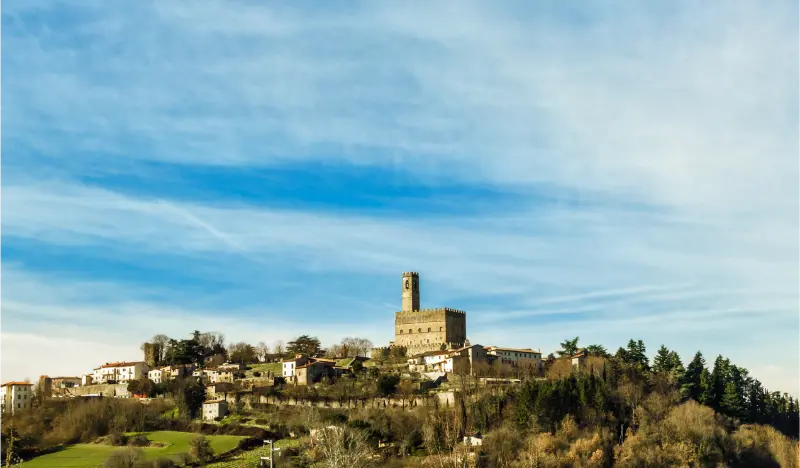
Travellers who want the full Casentino experience should stay overnight. The region feels very different after day-trippers leave, and early-morning forest light suits the contemplative character of the area.
Final planning checklist
Before leaving for La Verna Sanctuary, reopen the official source rather than relying on a saved screenshot. Seasonal hours, temporary maintenance, weather restrictions and special events can all change the practical visit without changing the attraction itself.
Build at least 30 minutes of margin around parking or public transport. Tuscany’s most frustrating travel days are often caused not by long distances but by assuming that the final kilometre, ticket office and entrance process will take no time.
Keep the rest of the day geographically coherent. One detailed attraction plus a nearby town, meal or landscape stop usually produces a better experience than crossing the region to tick off a second famous name.
Finally, distinguish information that is structural from information that is temporary. Historic significance and route character change slowly; ticket prices, last admission, access limits and transport timetables can change quickly. This guide deliberately labels current 2026 operational details so they can be rechecked.
Sanctuary hours and the forest are separate planning questions
The sanctuary publishes long opening hours—6:30 to 21:30 from May through September and 6:30 to 19:00 from October through April—but individual sacred spaces have shorter access windows. The Chapel of the Stigmata, for example, has its own timetable. Plan around the specific place you most want to see, not simply the outer sanctuary gate.
The national park’s La Verna nature trail is a real hiking component rather than a paved extension of the church visit. Official trail information gives a 2.5 km route with a substantial estimated duration and meaningful elevation change in its described direction. Wear walking shoes and check conditions; sacred forest atmosphere is part of the reward, but wet roots, steep sections and mountain weather deserve the same respect as elsewhere in the Apennines.
La Verna is an active Franciscan sanctuary. Masses, prayer and pilgrim activity are not performances for tourists, so keep voices low in religious spaces and avoid blocking worshippers for photographs. This simple etiquette also improves the visit: the architecture and forest make more sense when you experience the place at its own pace rather than treating it as a photo stop.