
Volterra Etruscan Sites: Guarnacci Museum, Roman Theatre and the Volterra Card
Volterra is one of the rare Tuscan hill towns where an archaeology-focused day can be as strong as the medieval streets above it. The Museo Etrusco Guarnacci, Roman Theatre, Etruscan Acropolis and civic museums belong to a coherent historical cluster rather than separate attractions. The Volterra Card is designed around that network, which makes the town ideal for travellers who want to go beyond panoramic squares.
Pair this page with our Volterra guide, Best Museums in Tuscany, day trips from Florence and the San Gimignano towers guide if you are building a west-central Tuscany route.
Volterra archaeology at a glance
| Volterra Card | €23 full / €18 reduced; valid 72 hours |
|---|---|
| Family card | €32 for qualifying family group |
| Guarnacci Museum | €10 full / €8 reduced single ticket |
| Roman Theatre | €10 full / €8 reduced single ticket |
| Core route | Guarnacci → Acropolis/centre → Roman Theatre |
| Allow | 4–6 hours for a history-focused town visit |
Start at the Guarnacci Museum while your attention is fresh
The Guarnacci is not a museum to save for the end of a hill-town day. Its funerary urns, Etruscan objects and famous elongated bronze known as the Ombra della Sera require concentration, and the collection becomes a key for reading the town outside. Start here if Etruscan Volterra is the reason for your visit.
Current museum information lists a €10 full single ticket and €8 reduced ticket. From spring through early November the museum is generally open daily with longer hours, while winter schedules are shorter and include a Tuesday closure; always check the current calendar before travel.
Why the Volterra Card can be better value than separate tickets
The 72-hour Volterra Card currently covers the Guarnacci Museum, Civic Art Gallery, Alabaster Ecomuseum, Palazzo dei Priori, Etruscan Acropolis and Roman Cistern, Roman Theatre and the Diocesan Museum of Sacred Art. At €23 full price, it makes sense once you plan multiple paid sites rather than only the Guarnacci.
The family rate is particularly useful for a group that wants museums without buying every site separately. The real advantage, though, is psychological: the card lets you split the attractions across an afternoon and the next morning instead of trying to extract maximum value in one exhausting block.
The Roman Theatre changes the chronology of your day
Volterra is famous for the Etruscans, but the Roman Theatre prevents the story from ending there. The remains sit below the medieval city and make the topography clear: different eras occupy different levels of the same hill. The current single-ticket price is also €10 full / €8 reduced, with seasonal hours that are longer in summer.
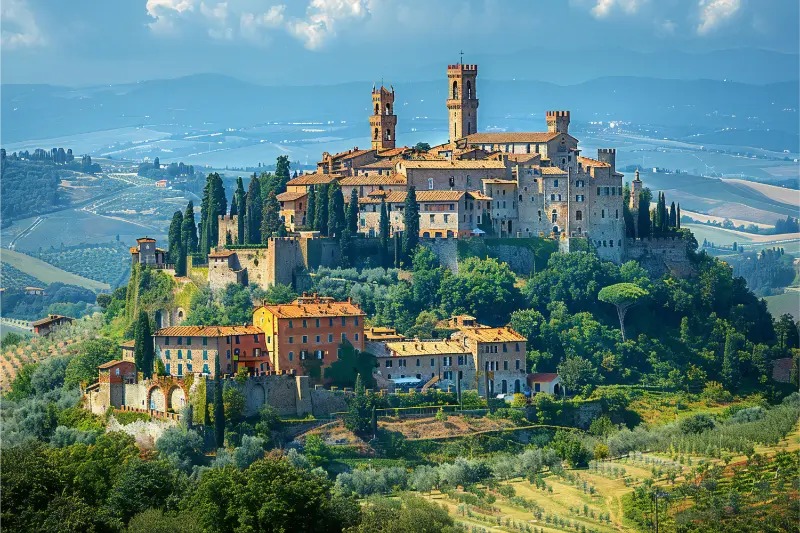
Visit after the historic centre if possible. Looking back up toward the town from the archaeological area makes the layering of Etruscan, Roman and medieval Volterra easier to understand than reading dates in isolation.
Do not overlook the Acropolis and cistern
The Etruscan Acropolis is quieter than the headline museum and useful precisely because it takes you back outdoors. Foundations and later structures require more imagination than a standing theatre, but they connect the museum objects to a physical urban landscape.
If archaeology is not your main interest, keep this section short and use the saved time for Palazzo dei Priori. If archaeology is the focus, slow down and read the site as terrain rather than expecting monumental walls around every corner.
A route through the town that respects the hill
Volterra is steep enough that route order matters. Start at the Guarnacci side, work toward the central Piazza dei Priori and Acropolis, then descend toward the Roman Theatre only when you are ready to leave the highest part of town. Random backtracking adds unnecessary climbs.
Parking areas sit outside or below the historic core. Follow current municipal parking signs and assume the final approach will be on foot. Comfortable shoes matter more here than in flatter Lucca.
What to see inside the Guarnacci rather than wandering every case
Prioritise the large collection of cinerary urns, the Ombra della Sera and pieces that explain Volterra’s role in Etruscan funerary culture. Notice materials and recurring mythological scenes rather than trying to memorise every inscription. A museum this dense becomes more rewarding when you choose themes.
Allow at least 75–90 minutes if Etruscan history is new to you. Archaeology enthusiasts can easily stay longer, but a three-hour museum visit followed by the theatre often produces diminishing returns.
Combine Volterra with San Gimignano only if you have a car and a full day
The two towns pair naturally geographically but both deserve walking time. A realistic combined day gives one town the morning and the other late afternoon rather than attempting every museum in both.
Use our San Gimignano towers guide to choose one major paid stop there if Volterra is receiving the deeper archaeological treatment.
A practical first-time plan
| 9:30–11:00 | Museo Etrusco Guarnacci. |
|---|---|
| 11:00–12:15 | Piazza dei Priori, central lanes and Acropolis. |
| 12:15–13:30 | Lunch and break. |
| 13:30–14:30 | Roman Theatre. |
| 14:30 onward | Palazzo dei Priori / alabaster / drive toward San Gimignano if continuing. |
If you hold the 72-hour card and sleep nearby, move the Roman Theatre or Palazzo dei Priori to the next morning. Volterra improves when its museums are separated by outdoor time.
Mistakes that make this experience harder than it needs to be
- Treating Volterra as only a medieval viewpoint town.
- Leaving the Guarnacci Museum until late afternoon when concentration is lowest.
- Buying single tickets to several sites without comparing the Volterra Card.
- Underestimating steep walking between parking and the centre.
- Trying to “do” every included museum just because the card covers it.
The best use of the card is freedom, not obligation. Choose the sites that build one historical story and allow the rest of the town to remain a town.
Official information and booking
The city museum network publishes current card prices, museum schedules and included sites on Volterra’s official tourism museum page. Check the official page again close to your visit because opening hours, weather restrictions, ticket rules or temporary closures can change.
See Tuscany archaeology & day tours
Check Volterra hotel prices & availability
Final planning advice
Volterra is strongest when you let the archaeology reshape the way you see the streets above. Begin with the Etruscans, step back into the medieval centre, then descend into the Roman city.

For most first-time visitors, Guarnacci + Roman Theatre + a slow central walk is the sweet spot. Everything else is a bonus, not a requirement.
Extra details that matter on the day
The alabaster tradition is a useful bridge between ancient material culture and modern Volterra. If you have extra time, the Ecomuseum of Alabaster can keep the day focused on objects and craft without adding another major historical era.
Winter visitors should pay particular attention to museum days and hours because opening patterns change more than in summer. The Volterra Card remains useful only if the sites you want are actually open during your stay.
If you are photographing the Roman Theatre, afternoon light and the elevated approach from town can be visually effective, but access hours should determine the schedule before aesthetics do.
How to fit this stop into a wider Tuscany itinerary
Volterra Etruscan sites works best when the rest of the day is geographically coherent. Before adding another famous place simply because it appears close on a map, compare the route with What to See in Volterra, San Gimignano towers guide, Best Museums in Tuscany and Best Day Trips from Florence. These guides help you decide whether the next stop belongs in the same walking area, needs a train or car transfer, or is better saved for another day. The practical advantage is important: fewer unnecessary transfers usually means more time at the attraction, a better lunch break and less pressure from timed tickets.
For a first visit, keep one main objective before Volterra Etruscan sites and one flexible stop afterward. If the visit runs long, weather changes or traffic slows you down, the flexible stop can disappear without damaging the whole itinerary. This is especially useful in Tuscany, where historic centres, ZTL zones, rural roads and seasonal opening times can make apparently short distances take longer than expected.
Practical checks before you leave
Save the key operating details for Volterra Etruscan sites on your phone before setting out. In this guide the two details most likely to shape the day are Volterra Card: €23 full / €18 reduced; valid 72 hours and Family card: €32 for qualifying family group. Recheck them on the official source on the morning of the visit, especially in high season, around public holidays or after severe weather. A screenshot is useful in rural areas or crowded historic centres where mobile reception can be inconsistent.
Build a realistic buffer around Volterra Etruscan sites. Thirty to forty-five minutes of flexibility before the next fixed booking protects the itinerary from queues, parking searches, ZTL diversions, a slower meal or simply spending longer at the site than expected. Tuscany rewards unhurried visits; the easiest way to create that pace is to reduce the number of non-negotiable reservations rather than trying to make every transfer perfectly efficient.