
Best Day Trips from Florence: 10 Easy Escapes into Tuscany
Florence is one of Europe’s best bases for day trips because fast trains and regional connections put several Tuscan cities within easy reach. The countryside is more complicated: places such as Chianti, San Gimignano and Val d’Orcia can be reached, but the best transport depends on whether you value simplicity, flexibility or not driving at all. The trick is to choose one destination that feels complete rather than combining three places simply because a tour brochure says it is possible.
Why this experience belongs in your Tuscany trip
For the easiest train day, choose Lucca, Pisa, Arezzo or Prato. Siena is straightforward by bus or organised transport. Chianti and Val d’Orcia are better with a car, driver or well-designed tour. San Gimignano is possible by public transport but requires more planning than a direct train city.
1. Siena
Siena gives the strongest contrast with Florence: a medieval street pattern, Piazza del Campo, the Duomo and neighbourhood identities that feel very different from the Renaissance capital.
A direct bus can be more convenient than the train for the historic centre. Give Siena most of the day rather than combining it with several hill towns.
2. Pisa
Pisa is an easy rail trip and the Piazza dei Miracoli genuinely deserves time, but the city becomes more rewarding when you also walk along the Arno and through university streets.
Book the Leaning Tower if climbing it is essential. Otherwise, arrive early and leave space to see more than the cathedral complex.
3. Lucca
Lucca is ideal for a slower day: walk or cycle the walls, explore the compact centre and climb a tower if the weather is clear.
The station is close enough to the walls to make this a low-stress trip without a car. Read our Lucca guide before you go.
4. San Gimignano
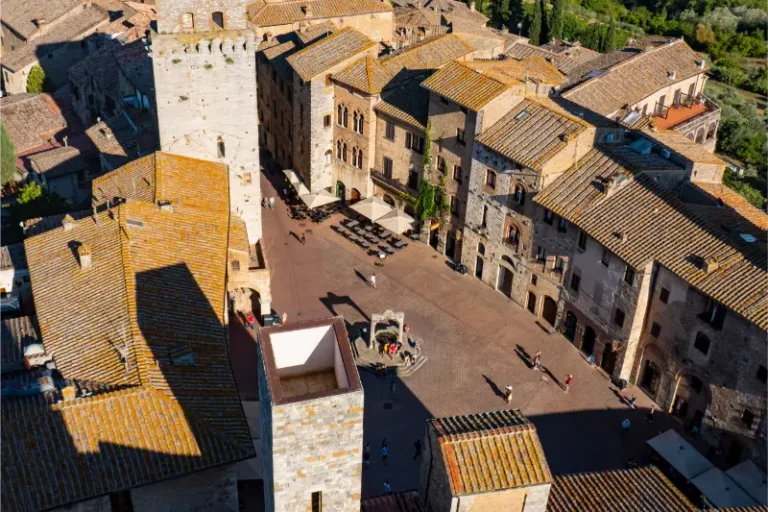
The towers and hill-town silhouette make San Gimignano one of Tuscany’s most memorable small towns, especially once you walk beyond the busiest central axis.
Public transport usually involves a connection, while tours are simpler but can compress the visit. If using a car, park outside the walls.
5. Chianti
Chianti is not one town but a landscape of villages, vineyards and small roads. It is the day trip to choose when you want countryside rather than another museum city.
A rental car, driver or wine tour is far more efficient than trying to link multiple villages by bus. Keep tastings compatible with safe driving.
6. Arezzo
Arezzo offers Renaissance art, Piazza Grande and a lived-in historic centre with fewer international crowds. It is one of the easiest ways to make a Florence-based trip feel less obvious.
Direct trains make the logistics simple. Our Arezzo guide gives a walking order that works well for a day.
7. Cortona
Cortona rises above the Valdichiana with Etruscan history, steep streets and broad views. It feels more like a hill-town excursion than a conventional city trip.
The railway station is below the hill, so the final connection matters. Check bus schedules or use a taxi from Camucia-Cortona station.
8. Volterra
Volterra combines Etruscan remains, medieval streets, alabaster workshops and a dramatic position above open countryside.
It is less convenient by train than Pisa or Lucca. A car or organised trip usually makes the day smoother.
9. Val d’Orcia
Pienza, San Quirico, Montalcino and the roads between them create one of Tuscany’s great landscape days. The attraction is the space between villages as much as the villages themselves.
This is a car, driver or tour day. Public transport is not designed for visitors trying to hop between scenic stops in one day.
10. Prato
Prato is often ignored because it sits so close to Florence, but that is exactly why it works: the cathedral, medieval castle, textile history and food scene are only a short rail ride away.
Use the train and enjoy a half- or full-day without transport stress. It is particularly good when Florence feels crowded or you want contemporary art as well as history.
How to plan it well
Choose transport before choosing the day trip. Rail-friendly cities reward independent travel; countryside routes reward a car, private driver or structured tour. Trying to force rural Tuscany into a train-only day often creates more waiting than sightseeing.
Return to Florence with a buffer rather than booking an inflexible dinner minutes after your scheduled train. Regional delays, summer traffic and missed connections happen. A relaxed return makes the day feel like an excursion, not a commute.
Best time to go
Day trips work all year, but the best destination changes with weather. Summer favours early city starts and countryside evenings; winter makes museums and compact rail cities appealing; spring and autumn are strongest for mixed landscape days.
How to choose the right day trip from Florence
Think about a Florence day trip as part of the wider itinerary rather than a standalone box to tick. A successful excursion feels simpler than a change of hotel, so transport and realistic return times matter as much as the destination. A day becomes much easier when you decide in advance what the main experience is and what can remain optional. That matters in Tuscany because short distances on a map can hide slow roads, parking outside historic centres, queues at famous sites or long walks from the car. Give the main stop enough room to breathe, then add only one or two secondary ideas nearby. If everything goes smoothly you can always do more; if not, the day still feels complete.

For transport, use direct trains for Pisa, Lucca, Arezzo and Prato, buses where they better serve the historic centre, and a car or tour for countryside zones. Before leaving your accommodation, save the exact parking area, station, meeting point or trailhead rather than only the attraction name. This small habit prevents navigation apps from sending you through restricted streets or onto roads that are technically correct but impractical. In rural Tuscany, fuel, shade, public toilets and food options can be less frequent than visitors expect, while city centres often require the opposite strategy: leave the car outside and walk. The best choice is usually the simplest one, not the route with the most stops.
Booking is worth handling selectively. Book only the attraction that defines the day—such as a tower, museum or wine visit—and leave the rest of the destination flexible. Reserve what would genuinely disappoint you if unavailable, but do not schedule every hour. Tuscany is full of places where a long lunch, a sudden viewpoint or a small church can alter the plan for the better. Leave gaps between timed activities, especially if driving, and avoid stacking two high-demand reservations with no buffer. When opening hours or access rules matter, check the official source the evening before rather than relying on screenshots or old travel posts saved weeks earlier.
Timing can transform the same place. Leave Florence early enough to gain a full day, but avoid returns so late that one missed connection creates stress. Early starts are useful for popular sites, but not every day needs to begin at dawn. Sometimes the better choice is a slow morning followed by a later visit when tour groups are leaving. In summer, use the hottest hours for lunch, museums or rest; in cooler months, make the most of shorter daylight. If photography matters, remember that Tuscany’s strongest light is often at the edges of the day, when stone, hills and water gain depth and the atmosphere becomes calmer.
The most common mistake is combining multiple distant towns simply because they are all labelled “day trips from Florence.” A stronger approach is to choose quality over quantity and let the location set the pace. Wear shoes suited to uneven paving, gravel, wet surfaces or trails where relevant, carry water, and keep a light layer in the car because hill and coastal weather can change quickly. If travelling with children or anyone with limited mobility, check the final approach rather than assuming a place labelled accessible on a map is effortless in practice. Historic Tuscany is beautiful precisely because it was not designed around modern convenience.
Finally, choose one destination that contrasts with Florence: medieval Siena, relaxed Lucca, rural Chianti, Etruscan Volterra or another city with a different rhythm. This is where personal travel style matters more than rankings. A visitor who loves art may happily spend three hours in one museum; another will remember the market outside more vividly. Some travellers want a polished spa or organised beach club, while others prefer a rough path to a natural pool or quiet cove. Use guides to understand the options, then choose the version that matches your energy, budget and route. The goal is not to reproduce someone else’s perfect Tuscany, but to make your own days feel coherent and enjoyable.
Useful booking tools for this trip
Tours & experiences: For guided visits, attraction tickets and bookable experiences in Florence, See tours & tickets
Car rental: If this trip works better with your own wheels, Compare car rental prices before choosing the pickup point.
Useful official information
Visit Tuscany’s official day trips from Florence overview includes Pisa, Lucca, Chianti, San Gimignano, Volterra, Siena and Val d’Orcia.
Where to stay for this trip: Where to Stay in Florence: Best Neighborhoods and Hotels for a First Visit. Check prices & availability
Final thoughts
The best day trip from Florence is the one that gives you a different rhythm without turning the day into logistics. Pick one strong destination, choose the right transport and come back having actually experienced somewhere new.