Uffizi Gallery Florence: Tickets, What to See and the Best Route for a First Visit
The Uffizi Gallery is not a museum to “fit in” between two other Florence sights. It is one of the places that can define an entire day in the city, and the difference between a memorable visit and an exhausting one usually comes down to three things: choosing the right ticket, knowing which rooms matter most to you, and resisting the temptation to look at everything with equal intensity.
This guide is designed for travellers who want to visit the Uffizi intelligently rather than simply enter the building. It explains the current ticket system, the best order for seeing the essential works, how much time to allow, what to do if you only have two hours, and how to connect the museum with the rest of a Florence itinerary. If you are still planning the city as a whole, start with our Florence city guide and our guide to the best museums in Tuscany.
Uffizi Gallery at a glance
| Where | Piazzale degli Uffizi, next to Piazza della Signoria and the Arno |
|---|---|
| Normal opening | Tuesday to Sunday, generally 8:15 am–6:30 pm |
| Weekly closing day | Monday |
| How long to allow | 2–3 hours for a focused first visit; 4 hours if art is a major priority |
| Best first-time strategy | Timed entry, start with the early Renaissance rooms, slow down for Botticelli and Leonardo, then be selective |
| Who should book ahead | Almost everyone travelling in spring, summer, weekends or school-holiday periods |
In 2026, the official Uffizi ticket structure distinguishes between tickets bought on the day and tickets purchased in advance. The museum also offers a late-afternoon promotion and multi-site passes. Because prices and temporary displays can change, use the figures in this article as planning guidance and check the official Uffizi ticket page before your visit.
Which Uffizi ticket should you choose?
For a first visit, the standard Uffizi ticket is usually enough. The important choice is not “basic or premium” but how much certainty you want over your entry time. The Uffizi remains one of Florence’s most demanded attractions, and a timed reservation protects the rest of your day from being swallowed by a long ticket queue.
The official 2026 full-price ticket is €25 when bought on the day and €29 when purchased before the day of entry. The museum also advertises an afternoon fare for entries from 4:00 pm onward. Travellers who plan to visit Palazzo Pitti and the Boboli Gardens should compare the five-day combined pass rather than automatically buying separate tickets. If the Vasari Corridor is a priority, read the conditions carefully because that product is nominative, has a mandatory reservation and follows a specific visit sequence.
When the afternoon ticket makes sense
The late-afternoon option is attractive if you are spending several days in Florence and do not need to rush. It works particularly well in summer, when the harshest heat has already passed by the time you leave the museum. The drawback is simple: you have less margin for a slow visit. If Botticelli, Leonardo, Michelangelo and the long sequence of Renaissance rooms are central to your trip, morning remains the better choice.
The route I recommend for a first visit
The Uffizi is large enough that trying to “complete” it can flatten the experience. A better method is to think in chapters.
1. Begin with the transition out of the Middle Ages
Do not sprint immediately to Botticelli. Spend a short amount of time with Cimabue, Duccio and Giotto. Seeing these works first makes the Renaissance that follows much easier to understand. The shift in space, human expression and physical presence is more obvious when you have just seen the visual language that came before it.
2. Give Botticelli proper time
The Birth of Venus and Primavera attract the densest crowds for a reason, but they are worth more than the obligatory photograph. Stand back first and read the overall composition, then move closer. On a busy day, a good tactic is to see the room once, continue to the next rooms and return if circulation has eased. The gallery is not a one-way race.
3. Slow down again for Leonardo
Leonardo’s works reward close looking. The unfinished Adoration of the Magi is especially useful because the incompleteness exposes part of the artist’s thinking. If you have already visited or plan to visit the Accademia, compare how differently Michelangelo and Leonardo build physical tension. Our Accademia Gallery guide is designed as the natural companion to this article.
4. Choose, rather than endure, the later rooms
After two hours, museum fatigue becomes real. Pick the painters you care about most—Raphael, Titian, Caravaggio or others—rather than forcing yourself through every room. The quality of attention is more important than the number of galleries crossed.
How much time do you really need?
Two hours: realistic for a disciplined first visit. Concentrate on the early Renaissance, Botticelli, Leonardo and a small number of later masterpieces.
Three hours: the sweet spot for most travellers. You can include pauses, river views and a broader selection of rooms without feeling rushed.
Four hours or more: worthwhile for art lovers, but schedule a proper break afterward. Do not immediately book another major indoor attraction.
What to pair with the Uffizi on the same day
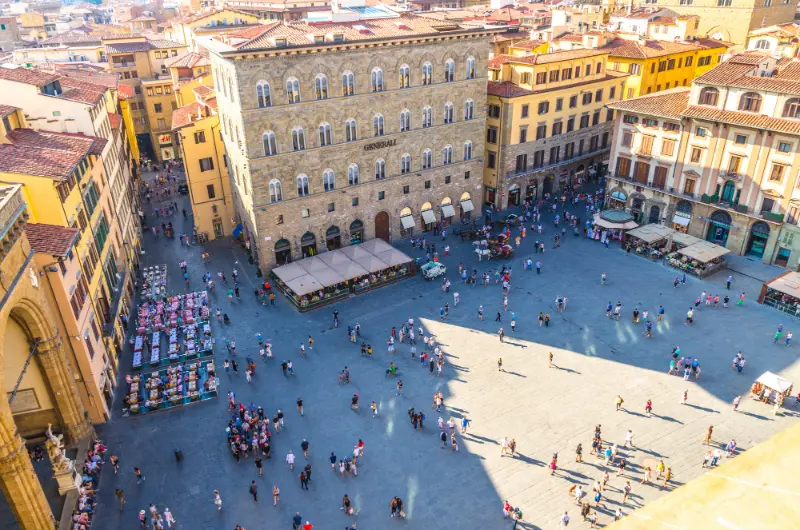
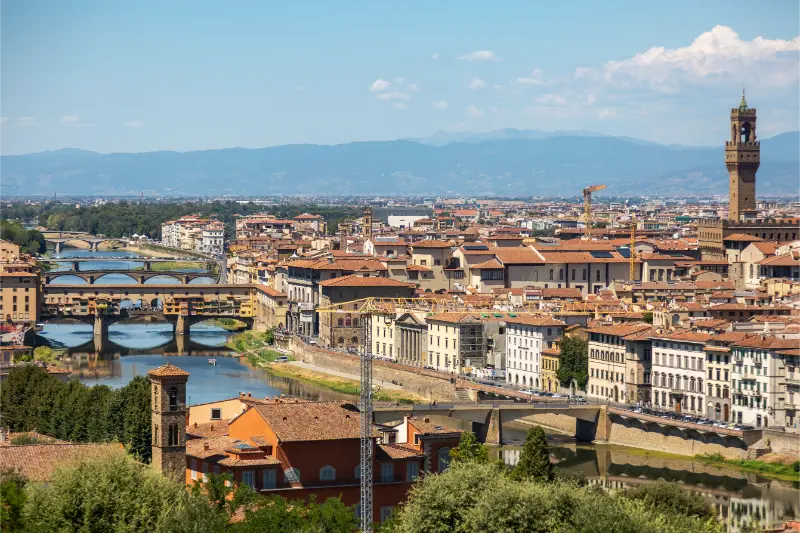
The easiest pairing is Piazza della Signoria + Uffizi + Ponte Vecchio. These places sit naturally together and do not require crossing the city repeatedly. If your Uffizi slot is in the morning, have lunch in the historic centre and use the afternoon for an outdoor walk toward Oltrarno or Piazzale Michelangelo.
I would not put the Uffizi, Accademia and a full Duomo complex visit into the same day unless your stay is extremely short. On paper the distances are small; mentally, it is too much high-intensity art. A better Florence plan appears in our 3-day Tuscany itinerary and in the family version of the city in Florence with kids.
Uffizi or Accademia if you only have time for one?
Choose the Uffizi if you want the broader story of Renaissance painting and can devote at least two hours. Choose the Accademia if Michelangelo’s David is the non-negotiable work of your trip or if you want a shorter museum visit. The Accademia is much more compact; the Uffizi offers a richer chronological journey.
Travellers with only one day in Florence sometimes assume the Uffizi is automatically the right choice. It is not. If your real interest is architecture, walking the city and climbing the dome, you may get more from the Florence Duomo complex and an Accademia visit than from three hours inside the Uffizi.
Practical details that make a big difference
- Arrive before your time slot. Security and ticket procedures still take time even with a reservation.
- Keep the morning flexible around the museum. Do not schedule a train departure or another timed attraction immediately after your expected finish.
- Travel light. A compact bag is far easier in crowded galleries than a daypack stuffed for an entire day.
- Use the museum view as a pause. Looking out toward the Arno helps reset your concentration before the later rooms.
- Do not treat free-admission days as automatically “better”. Saving money can mean much heavier demand and less control over the visit.
Where to stay if the Uffizi is a priority
For a short Florence stay, the historic centre between Santa Maria Novella, the Duomo and Piazza della Signoria keeps almost everything walkable. If you want more evening atmosphere and do not mind crossing the river, Oltrarno is another strong base. Our detailed Where to Stay in Florence guide compares the neighbourhoods, transport trade-offs and practical issues in much more detail.
Check Florence hotel prices & availability
Build a Florence art cluster instead of isolated visits
The Uffizi makes far more sense when connected to the rest of Florence rather than treated as an isolated famous museum. The Duomo explains the scale of civic and religious ambition; the Accademia gives you Michelangelo at close range; Piazza della Signoria places sculpture in the political centre of the old republic.
FAQ: practical Uffizi questions
Do I need a reservation?
For a first visit in spring, summer, weekends or holiday periods, I would reserve. The price difference for advance purchase is small compared with the value of protecting a limited Florence day from a long queue. If you are travelling in a quieter period and can be flexible, same-day admission can still make sense.

Can I see the Uffizi and Accademia on the same day?
Yes, but make one museum the main event. A strong combination is Accademia early, a long lunch, then Uffizi later in the afternoon. Trying to “do” both in two hours each is possible but tends to reduce Botticelli, Leonardo and Michelangelo to checkpoints.
Is the Uffizi worth it if I am not an art expert?
Yes, provided you use a selective route. Focus on the transition from medieval painting to the Renaissance, then choose a handful of rooms. The gallery is much easier to enjoy when you stop asking yourself whether you have seen everything.
Final planning advice
The Uffizi is at its best when you arrive knowing what you want from it. Reserve a sensible entry time, give the first half of the visit your freshest attention, and let yourself skip rooms once your concentration fades. Florence is not a museum checklist; the streets outside are part of the same story. A focused two-and-a-half-hour Uffizi visit followed by Piazza della Signoria, the Arno and a slow walk across Ponte Vecchio is usually more memorable than a four-hour marathon followed by another reservation.