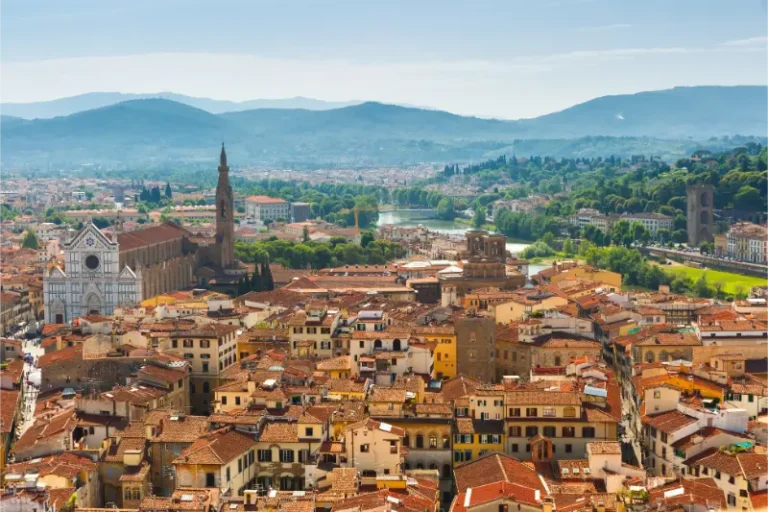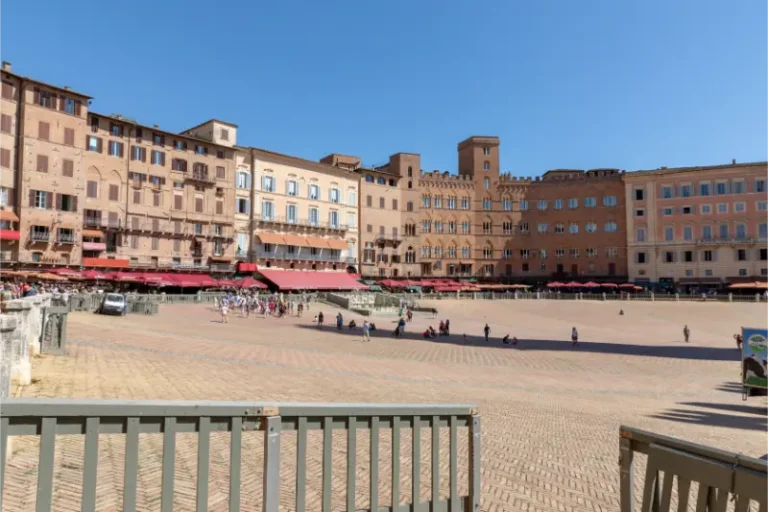

Florence with Kids: A Family Guide to Art, Parks and Easy City Adventures
Florence with Kids: A Family Guide to Art, Parks and Easy City Adventures is designed for families who want to enjoy Tuscany without turning every day into a race. Florence can look intimidating for families because its greatest treasures are associated with museums, churches and art history. In practice, the historic centre is compact, many sights are close together, and the city offers enough open spaces and child-oriented museum activities to build days that feel varied rather than academic.
The secret is to make each half-day have a clear theme. Choose a major work of art, then add a square, a garden, a bridge or a food stop. Florence is also one of the best places in Tuscany to stay without a car, which removes the stress of ZTL cameras and parking from the family routine.
How to plan it well
Family travel in Tuscany works best when the schedule has space. Historic centres can be compact but cobbled, summer afternoons can be hot, and even short drives may include parking, restricted traffic zones and a final walk uphill. Build each day around one or two priorities, then leave enough room for a playground, a long lunch, a gelato stop or a swim. That flexibility is not a compromise; it is what allows both adults and children to experience the region rather than simply move through it.
Before each day, check the official website for any attraction with timed entry, seasonal opening, age restrictions or height limits. For cities, check the local ZTL and parking information rather than following a navigation app into the historic centre. In the countryside, assume that services are more spread out and carry water and a small snack even when lunch is planned.
Best things to do and how to fit them into a family trip
Start outside the Duomo before going inside anything
The cathedral complex has an immediate visual impact that even young children understand: coloured marble, an enormous dome, a bell tower and a baptistery all sharing one square. You do not need to climb every monument to make the place memorable. A slow circuit around the exterior gives children time to spot animals, faces and geometric patterns in the decoration.
If you want a climb, choose one rather than both dome and bell tower. Verify current age, ticket and access rules first; narrow stairs and heat can make a climb much harder than the photographs suggest.
Use Piazza della Signoria as an open-air gallery
Piazza della Signoria turns Renaissance sculpture into something less formal. The Loggia dei Lanzi is open to the square, Palazzo Vecchio looks like a fortress and copies of famous statues stand in public space. Children can look for lions, horses, shields and mythical creatures without needing to whisper or follow a museum route.
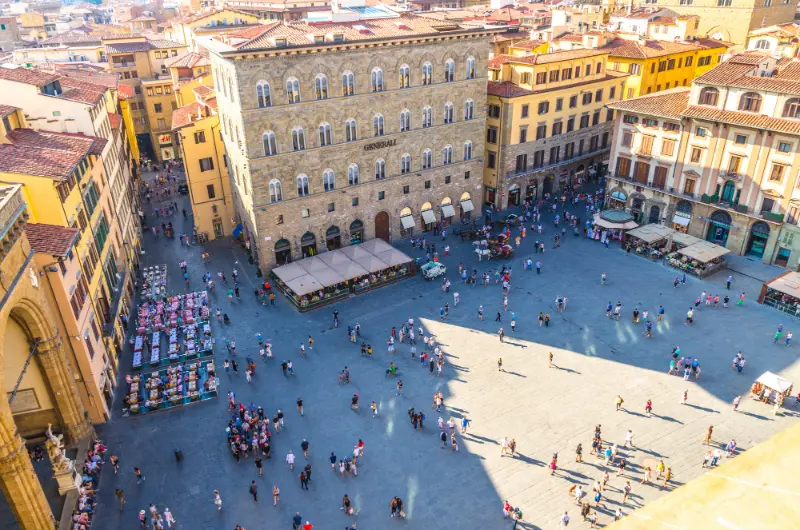
Visit early or around dinner time when the square feels less compressed. Palazzo Vecchio’s MUS.E programme regularly offers family activities, so check the current calendar if you want a guided experience.
Choose the Uffizi only with a plan
The Uffizi welcomes families and runs Uffizi Kids activities, but the collection is too large for a child-friendly ‘see everything’ approach. Pick a handful of famous works, tell one or two stories before entering, and leave while the visit is still going well. Under-18 admission policies can be advantageous, but reservations and fees should always be checked on the official site.
A ninety-minute visit can be far more successful than three hours. Bring a short list of must-sees and treat everything else as a bonus.
Meet science at Museo Galileo
For children who connect more easily with inventions than paintings, the Museo Galileo can rebalance a Florence itinerary. Historical scientific instruments, globes and telescopes show a side of the Renaissance built on observation and experiment. The official city tourism site specifically recommends Galileo’s telescopes among family experiences.
Pair the museum with a walk along the Arno. The riverfront gives everyone a mental reset before another indoor stop.
Cross Ponte Vecchio and explore Oltrarno
Ponte Vecchio is busy, but the idea of shops built along a bridge catches children’s attention. Once across the river, Oltrarno feels more residential. Piazza Santo Spirito, artisan streets and small food stops give families a slower version of Florence after the busiest central sights.
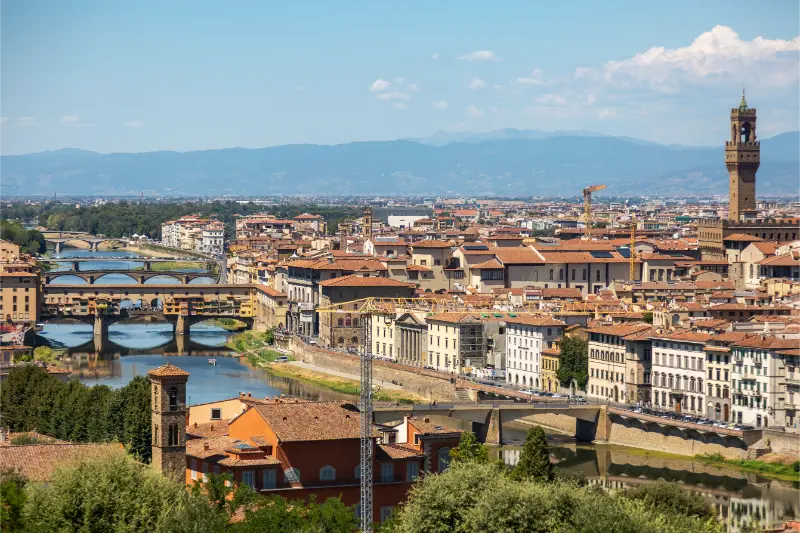
Do not stop in the middle of the bridge during peak hours with a stroller. Cross, then pause on the quieter riverbank or continue toward Santo Spirito.
Use Boboli Gardens as a change of pace
Boboli is not a playground, but it gives families paths, slopes, fountains and long views after museum time. Children can move more freely than inside a gallery, and the garden helps explain how the Medici world extended beyond palace rooms into designed landscapes.
The garden is large and hilly. Take water, choose a limited loop and avoid the hottest middle hours in summer.
Climb toward a skyline view only if energy is good
Piazzale Michelangelo is the classic panorama, but the walk from the river is uphill. With older children, the climb can become a small challenge ending with a full view of the city. With toddlers, a bus or taxi may be more sensible.
San Miniato al Monte, just above the piazzale, can be quieter and more atmospheric. Respect services and keep voices low inside the church.
Look for the less obvious museums
Florence’s official family guide points to the Stibbert Museum, natural-history collections, the Archaeological Museum and HZERO miniature railway museum as alternatives to the main Renaissance galleries. These can be excellent on a second day or when children have very specific interests.
Choose by the child’s curiosity rather than prestige. A museum about armour or trains may create a stronger memory than another room of masterpieces.
Make gelato and markets part of the route
Food breaks are useful landmarks in a family day. Mercato Centrale can work for varied tastes, while neighbourhood bakeries and gelaterie turn walking into a sequence of small rewards. Schiacciata, fruit and simple pasta make it easy to keep meals relaxed.
Avoid promising a specific famous shop at a specific hour; queues can be long. In central Florence, there is almost always another good option a few streets away.
Sleep central enough to come back easily
A central base is especially valuable with children because it makes midday breaks realistic. Hotel Santa Maria Novella, at Piazza Santa Maria Novella 1, advertises family rooms and is within walking distance of the Duomo, Palazzo Vecchio and Uffizi.

Families arriving by car should confirm parking arrangements before entering central Florence. The ZTL is camera-controlled, and a hotel stay does not mean you can simply drive through restricted streets without instructions.
Useful booking tools for this trip
Tours & experiences: For guided visits, attraction tickets and bookable experiences in Florence, See tours & tickets
Where to stay with children
Santa Maria Novella is one of the easiest areas for families arriving by train, while the Duomo and Santa Croce put you close to major sights. Oltrarno is appealing if you prefer a more local evening atmosphere. Before booking, check lift access, room configuration and whether your hotel is inside a restricted traffic zone.
When comparing accommodation, look beyond the headline price. A family room that genuinely sleeps everyone comfortably, a lift, predictable parking, breakfast on site and a location that lets you walk back for a break can be worth more than an extra star. In rural areas, ask about road access after dark, pool safety, restaurant opening days and whether there is somewhere simple to eat if children are tired.
Eating well without making meals complicated
Florence is simple with children if meals stay flexible. Ribollita and pappa al pomodoro are mild, comforting Tuscan dishes, while fresh pasta, pizza and schiacciata cover familiar ground. Markets are useful at lunch because each family member can choose something different. For dinner, reserving ahead helps when you do not want to wait outside with tired children.
Tuscany is a good place to keep family food simple. Bread, focaccia, pasta, pizza, fresh fruit, mild cheeses and grilled dishes are easy to find, while local specialities give older children a chance to try something new without making every meal an experiment. Carrying one familiar snack is still useful on museum days, train journeys and long drives between villages.
Practical family tips
Use the train rather than a car for a city-only stay. Florence Santa Maria Novella station is walkable from much of the centre. Cobblestones are manageable with a sturdy stroller, but a baby carrier is useful for stairs. In summer, plan museums for late morning or early afternoon and keep outdoor climbs for earlier or later. Public fountains are limited compared with some Italian cities, so refill bottles whenever you have the chance.
For younger children, a sturdy compact stroller and a lightweight carrier make a strong combination. For school-age children, give them a role: let them choose a tower, count contrada symbols, navigate one section of the walls or pick the afternoon gelato stop. For teenagers, build in ownership by letting them choose one beach, activity or meal. The more the trip feels shared, the less it feels like adults dragging children through an itinerary.
Useful official resources and related Tuscany Explorer guides
- Feel Florence: Families and Children
- Uffizi Families
- Tuscany Explorer Florence Guide
- Tuscany Explorer: Where to Stay in Florence
- Tuscany Explorer: Best Museums in Tuscany
Where to stay for this trip: Where to Stay in Florence: Best Neighborhoods and Hotels for a First Visit. Check prices & availability
A final thought
The best family trip through Tuscany is not the one with the most famous places checked off. It is the one where a child remembers a tower, a ferry, a bicycle ride, a strange statue or the taste of a warm piece of focaccia, while the adults still have time to notice the landscape and the art around them. Plan less than you think you can fit, choose bases carefully, and let the region supply the unexpected moments.