Chianti Travel Guide: Villages, Vineyards and the Roads Worth Getting Lost On
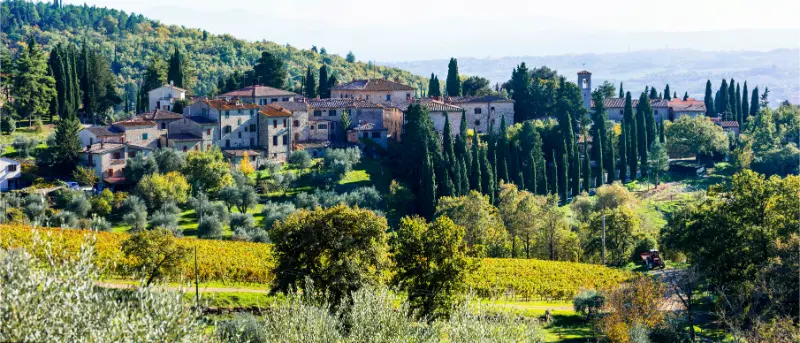
Chianti is one of those names that seems familiar before you arrive, yet the place itself is richer than the postcard version. Between Florence and Siena, vineyards fold around oak woods, stone farmhouses and small towns that still feel connected to the land rather than built for visitors. Wine is central here, of course, but the pleasure of Chianti lies just as much in the roads between villages, the Romanesque churches on quiet ridges and the habit of stopping when a view suddenly opens across the hills.
In a hurry? Give this area at least two days if you can. Choose one logical base, start early for the most popular stops and leave room for a road, village or viewpoint you did not plan. The landscape is part of the attraction, so a schedule that looks efficient on paper can easily become less enjoyable once you are there.
Why Chianti feels different
The historic heart of Chianti grew around Gaiole, Radda and Castellina, the towns of the medieval League of Chianti created by the Florentine Republic in 1384. Its emblem was the black rooster, a symbol that still appears on Chianti Classico bottles today. That long relationship between farming, politics and landscape explains why the area feels so coherent: vineyards are not decorative scenery but working fields that have shaped settlement patterns, roads, estates and local food for centuries.
What to see and where to stop in Chianti
Greve in Chianti
Greve is the easiest introduction to the region, especially if you are arriving from Florence. Piazza Matteotti has an unusual triangular shape and is lined by arcades, food shops and cafés, but the best reason to start here is orientation: you can understand how the wine villages sit in relation to one another before heading deeper into the hills. Visit in the morning, then leave before lunch traffic builds and the car parks become busier.
Montefioralle
Just above Greve, Montefioralle is a compact fortified village wrapped around a single circular lane. There is no need for a checklist here. Walk slowly, notice the stone doorways and the gaps between houses that frame the countryside, and resist the temptation to rush back to the car. The tiny scale makes it one of the best places in Chianti for understanding what a medieval hill settlement actually feels like.
Panzano and the Conca d’Oro
Panzano sits between Greve and Castellina and looks over the so-called Conca d’Oro, an amphitheatre of vineyards with particularly beautiful light in late afternoon. The village itself has a lived-in rhythm, while the nearby countryside is ideal for a winery appointment followed by a long lunch. If you are driving the SR222, Panzano is the point where the route begins to feel less like a day trip and more like a landscape you want to stay inside.
Radda in Chianti
Radda is one of the most satisfying bases for a night in Chianti. The historic centre is small enough to explore on foot but has enough restaurants, enoteche and evening atmosphere to reward staying after day-trippers leave. Walk the lanes around Palazzo del Podestà, then follow the edge of the village where the view drops into a mosaic of vineyards and wooded slopes. The change of mood around sunset is worth arranging your day around.

Castellina in Chianti
Castellina occupies a strategic ridge and feels slightly more substantial than many neighbouring villages. Do not miss Via delle Volte, the covered medieval passage built into the old defensive structure. It is especially atmospheric in summer when the stone remains cool. Castellina also works well as a midpoint between the Florentine and Sienese sides of Chianti, making it useful if you want to explore in both directions without spending the whole day in the car.
Gaiole and the castle country
Gaiole itself is modest, but the surrounding territory is extraordinary: this is the side of Chianti where castles, abbeys and historic estates seem to appear around every bend. Castello di Brolio is the best-known landmark, while Badia a Coltibuono combines monastic history, gardens, wine and hospitality. Give this eastern side of Chianti more time than a quick tasting stop; its quieter roads are among the most rewarding in the area. Check Badia a Coltibuono prices & availability
The SR222 Chiantigiana
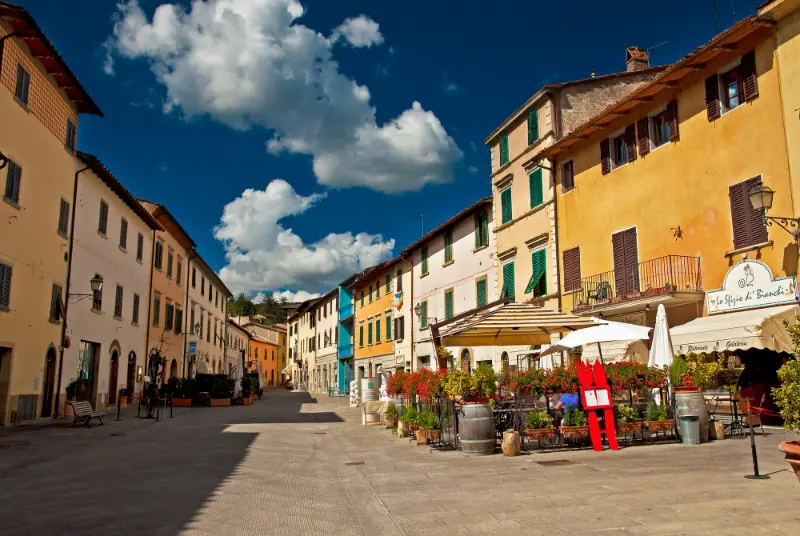
The SR222 between Florence and Siena is famous for good reason, but it is most enjoyable when treated as a thread rather than a race. Greve, Panzano and Castellina form an easy first route, yet some of the best moments come from turning onto smaller roads toward Lamole, Volpaia or country churches. Navigation apps tend to favour speed; in Chianti, the slightly slower road is often the one you actually came to see.
Getting around Chianti: driving and parking
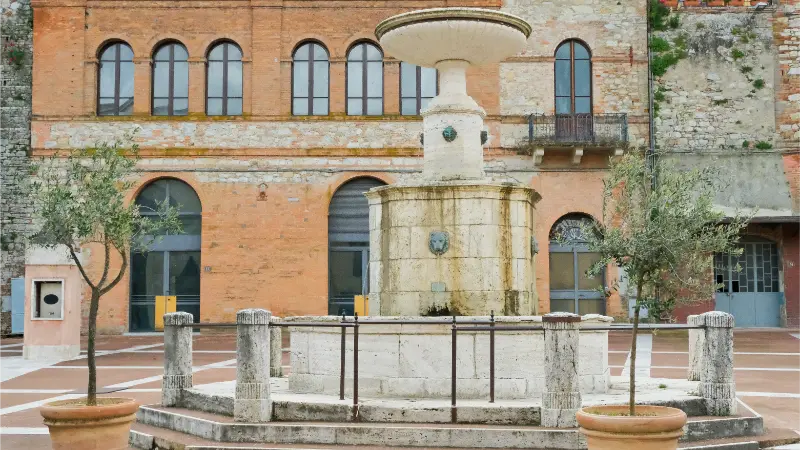
A car is the simplest way to explore Chianti because wineries, abbeys and smaller villages are scattered across the hills. Buses connect some towns, but they are not designed around sightseeing loops. In historic centres, do not follow navigation blindly into narrow streets: park in signed public areas outside the oldest core and walk the final few minutes. ZTL restrictions are common in Tuscan towns, and the signs matter more than whatever route your phone suggests. Winery visits should usually be reserved in advance, particularly from May through October. If someone in your group is tasting seriously, arrange a driver or guided tour rather than trying to turn a scenic road trip into a sequence of tastings.
A useful habit throughout Tuscany is to treat the brown or blue parking signs at the entrance to a town as your cue to stop looking for a “better” space closer to the centre. Historic streets were not built for modern traffic, and a ten-minute walk is usually preferable to worrying about a ZTL camera, squeezing through a medieval lane or discovering that the route ahead is residents-only.
A quieter way to experience Chianti
For a quieter Chianti, look beyond the famous trio of Greve, Radda and Castellina. Volpaia feels almost like a castle that gradually became a village, while Lamole sits higher in the hills and opens onto a different, more rugged landscape. Early morning is also transformative: the same road that feels busy at noon can be nearly empty before 9 a.m., with low light across the vines and locals beginning their day.
Useful booking tools for this trip
Tours & experiences: For guided visits, attraction tickets and bookable experiences in Chianti, See tours & tickets
Car rental: If this trip works better with your own wheels, Compare car rental prices before choosing the pickup point.
Where to eat
Chianti food is built for the landscape: ribollita, pappa al pomodoro, handmade pasta, grilled meats, pecorino, local olive oil and dishes that make sense beside a glass of Sangiovese. A particularly atmospheric address is Badia a Coltibuono, Località Monti di Sotto 10, Gaiole in Chianti, a historic former abbey that combines accommodation, wine, gardens and a restaurant. It is the sort of place where staying for dinner makes more sense than trying to squeeze another village into the afternoon.
Opening days can change outside high season, and many small Tuscan restaurants close one or two days each week. For anywhere you would be disappointed to miss, reserve and confirm the opening time rather than building the whole day around an old listing.
Where to stay
If you want evenings that feel genuinely Tuscan, sleep in or near Radda, Gaiole or a countryside estate rather than commuting back to Florence. The biggest difference comes after sunset, when the roads quieten and small towns stop feeling like destinations on a circuit. Badia a Coltibuono is distinctive for history and setting; in Radda, a centrally located hotel gives you the advantage of walking to dinner instead of driving after a tasting.
Want more accommodation options? Where to Stay in Chianti: Best Villages, Wine Estates and Country Hotels compares the best bases and makes it easier to choose the right location before you book.
How many days do you need?
With one day, drive Florence–Greve–Panzano–Castellina and choose one pre-booked winery rather than three. With two days, add Radda, Gaiole and a castle or abbey, then stay overnight in the countryside. Three days allows you to explore the minor roads, eat slowly and spend part of a morning simply walking between vineyards instead of treating every stop as a photo opportunity.
If you are travelling for a week or more in Tuscany, an area like this works best as a genuine base rather than a single excursion. Unpacking for two or three nights gives you the freedom to see a famous place early, return to your accommodation for a break and go out again when the light and atmosphere improve in the evening.
Best time to visit Chianti
April to June and September to October are especially rewarding, with comfortable temperatures and strong colour in the landscape. September and early October bring harvest energy, while late spring is intensely green. July and August are beautiful but hotter and busier; begin early and reserve tastings and restaurants. Winter is quiet, sometimes misty and wonderfully atmospheric, although opening days can be reduced.
Small practical details that make the trip better
Carry water, keep a light layer in the car and download an offline map before rural drives. In summer, do not assume that every village has shade beside the main attraction. In spring and autumn, keep flexible plans because a wet morning can become a brilliant afternoon. When visiting churches and monasteries, carry something to cover shoulders if needed, and when walking natural paths, use proper footwear rather than sandals chosen for the town.
Most importantly, do not measure a Tuscany day by the number of pins you managed to open on a map. The strongest memories often come from the hour that looked inefficient: a quiet piazza after lunch, a road through woodland, a conversation in a food shop or the decision to remain for sunset instead of driving to one more landmark.
For nearby city planning, continue with our guides to Florence and Siena
Is Chianti worth visiting?
Yes—especially if you want Tuscany to feel like a place rather than a sequence of famous photographs. Chianti rewards curiosity, slower travel and a willingness to look beyond the headline attraction. Give it enough time to develop its own rhythm and it can easily become the part of Tuscany you remember most clearly after the major cities have begun to blur together.