Lucca Walls & Guinigi Tower: Bike Route, Tickets and the Best Viewpoints
Lucca’s two signature experiences work best together: circle the city on the Renaissance walls, then climb Torre Guinigi to understand the same urban fabric from above. The walls form a continuous elevated park around the historic centre, while the 45-metre Guinigi Tower rises from inside that ring with holm oaks on its roof garden. One is free, spacious and horizontal; the other is ticketed, compact and vertical. Combining them creates a far stronger half-day than treating either as a quick photo stop.
This route links directly to our Lucca city guide, Lucca with Kids, day trips from Florence and the car-free Tuscany itinerary.
Lucca walls and Guinigi Tower at a glance
| Walls length | About 4.2 km continuous circuit |
|---|---|
| Walls access | Free and fully walkable |
| Guinigi Tower | 45 m high; no lift |
| Tower booking | Recommended weekdays; required weekends and holidays |
| Best transport | Walk or bicycle inside the historic centre |
| Allow | 2.5–4 hours for walls + tower + central streets |
Walk or cycle the walls first?
If it is your first hour in Lucca, I prefer a slow circuit on the walls before entering the densest streets. The ring immediately explains the size of the historic centre and shows church towers, gardens and rooftops from changing angles. Cycling is faster and fun, but walking lets you notice bastions and views without constantly overtaking other users.
The official tourism site describes the walls as a 4.2-kilometre elevated park. Because the circuit is continuous and free, you can join at the access ramp closest to your arrival point instead of hunting for one official “start”.
A useful wall circuit rather than a meaningless lap
Use Porta San Pietro if arriving from the railway station, then follow the ring with the old town on one side and modern Lucca on the other. Pause at bastions that open views toward San Frediano, cathedral towers and the Guinigi skyline. A complete circuit on foot can take around an hour at a brisk pace, but two hours is more realistic with stops.
By bicycle, the loop itself can be quick; the value comes from leaving the bike at selected points and dropping into the centre. Do not turn the walls into a race. The park is shared with walkers, runners, families and local residents.
Torre Guinigi: what the climb is actually like
Torre Guinigi is 45 metres high and reached by stairs; there is no lift. The upper metal staircase leads to the unusual hanging garden of holm oaks. The physical effort is moderate for a tower climb but should not be minimised for people with mobility issues or a strong fear of stairs.
Booking is recommended on weekdays and required on weekends and holidays according to Lucca Tourism. That makes the tower the fixed point in your half-day. Build the flexible wall circuit around the booked slot rather than the other way around.
What to look for from the top
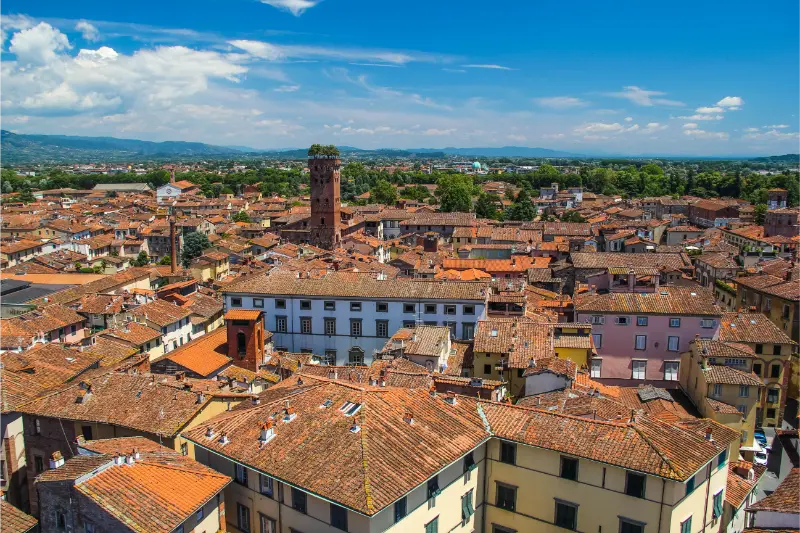
The view is valuable because Lucca remains enclosed and legible. You can trace the wall ring, identify church towers and see how low residential roofs dominate much of the centre. The trees at the summit create a strange frame that makes the experience distinct from the stone viewpoints of Florence or Siena.
Spend a few minutes orienting yourself before taking photographs. Find the cathedral, San Frediano and the wall line, then connect them to streets you have already walked. The tower becomes an urban map rather than only a scenic platform.
Bicycle logistics and current bike sharing
Lucca is one of the easiest Tuscan historic cities to enjoy by bicycle because most of the centre is limited traffic and the walls themselves function as a broad shared promenade. The official tourism information currently lists Lime bike sharing with app-based rental and designated parking areas; prices and operators can change, so verify the app before relying on it.
Traditional rental shops also operate around the centre. If travelling with children, ask about bike size and helmets in advance rather than assuming availability at midday in peak season.
ZTL and arriving by car or train
Most of the historic centre is within the ZTL, so the simplest car strategy is to park outside the walls and enter on foot. Lucca railway station is immediately south of the wall ring, which makes the city particularly suitable for a day trip without a car.
If public transport is your priority, connect this page with our Tuscany by Train guide and 7 Days in Tuscany Without a Car.
The best half-day sequence
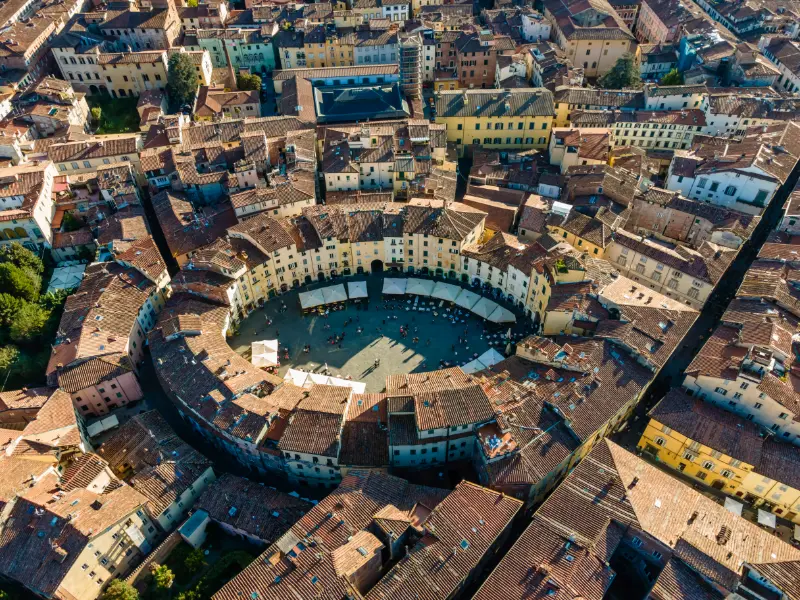
Arrive, complete roughly half the wall circuit, leave the ring near the centre, explore Piazza Anfiteatro and the streets around San Frediano, then reach Torre Guinigi for your booked time. After the climb, continue to San Michele and the cathedral before returning to the wall or station.
This zig-zag between elevated wall and interior streets prevents the visit from becoming repetitive. Lucca is at its best when you alternate green space, medieval streets and a single high viewpoint.
A practical first-time plan
| 9:00–10:00 | Walk or cycle the first half of the wall circuit. |
|---|---|
| 10:00–10:40 | Piazza Anfiteatro, San Frediano area and central lanes. |
| 10:45–11:30 | Booked Torre Guinigi climb and rooftop garden. |
| 11:30–12:30 | San Michele, cathedral area and return toward walls/station. |
Families can shorten the wall circuit and keep the tower as optional. A relaxed cycle plus gelato and one square often works better with children than a full sequence of church interiors.
Mistakes that make this experience harder than it needs to be
- Driving into the ZTL because a map app shows a shorter route.
- Renting a bike only to complete the wall loop as fast as possible.
- Arriving at Torre Guinigi on a weekend without a reservation.
- Assuming the tower has a lift.
- Skipping the city streets because the walls feel easier and greener.
Lucca’s strength is the relationship between ring and centre. See only the walls and you miss the medieval city; see only the centre and you miss what makes Lucca spatially unique.
Official information and booking
The city publishes wall, cycling and tower information through Lucca Tourism. Check the official page again close to your visit because opening hours, weather restrictions, ticket rules or temporary closures can change.
See Lucca & Tuscany experiences
Check Lucca hotel prices & availability
Final planning advice
If you have only half a day, make Torre Guinigi the only paid landmark and let the walls, streets and squares do the rest. Lucca does not need a dense ticket schedule to feel complete.

The ideal first visit is a loop rather than a straight line: wall, centre, tower, centre, wall. That rhythm is what differentiates Lucca from almost every other Tuscan city.
Extra details that matter on the day
In hot weather, the tree-lined wall avenues can be a useful refuge, but the tower climb still becomes warmer as the day advances. Booking an earlier tower slot leaves the shadier wall circuit for later.
If you are travelling by train from Florence or Pisa, Lucca is unusually forgiving because the station sits close to the southern wall. You can arrive without bus transfers, walk straight into the circuit and return to the platform with a clear route.
During major events the walls can host concerts, markets or sports activity. That can add atmosphere but may alter the easiest cycling line, so check the local events calendar when your visit coincides with a festival weekend.
How to fit this stop into a wider Tuscany itinerary
Lucca Walls and Guinigi Tower works best when the rest of the day is geographically coherent. Before adding another famous place simply because it appears close on a map, compare the route with What to See in Lucca, Lucca with Kids, Best Day Trips from Florence and Tuscany by Train. These guides help you decide whether the next stop belongs in the same walking area, needs a train or car transfer, or is better saved for another day. The practical advantage is important: fewer unnecessary transfers usually means more time at the attraction, a better lunch break and less pressure from timed tickets.
For a first visit, keep one main objective before Lucca Walls and Guinigi Tower and one flexible stop afterward. If the visit runs long, weather changes or traffic slows you down, the flexible stop can disappear without damaging the whole itinerary. This is especially useful in Tuscany, where historic centres, ZTL zones, rural roads and seasonal opening times can make apparently short distances take longer than expected.
Practical checks before you leave
Save the key operating details for Lucca Walls and Guinigi Tower on your phone before setting out. In this guide the two details most likely to shape the day are Walls length: About 4.2 km continuous circuit and Walls access: Free and fully walkable. Recheck them on the official source on the morning of the visit, especially in high season, around public holidays or after severe weather. A screenshot is useful in rural areas or crowded historic centres where mobile reception can be inconsistent.
Build a realistic buffer around Lucca Walls and Guinigi Tower. Thirty to forty-five minutes of flexibility before the next fixed booking protects the itinerary from queues, parking searches, ZTL diversions, a slower meal or simply spending longer at the site than expected. Tuscany rewards unhurried visits; the easiest way to create that pace is to reduce the number of non-negotiable reservations rather than trying to make every transfer perfectly efficient.