
What to See in Volterra: Etruscan Secrets, Alabaster and a Fiercely Tuscan Hill Town
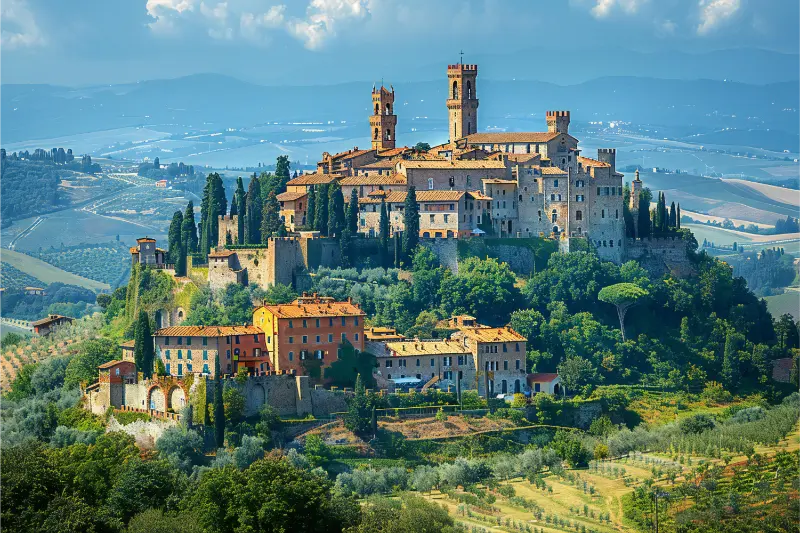
Volterra has a different mood from the soft, polished Tuscany of vineyard postcards. It rises on a high ridge above open countryside, its stone buildings are severe and beautiful, and traces of the Etruscans sit beside Roman ruins and medieval palaces. The town feels older than many of Tuscany’s famous destinations because its history is visible in layers rather than concentrated in a single period.
The Etruscans knew the city as Velathri, and it became one of the important centres of their civilisation. Roman Volterra later expanded beyond that world, while the Middle Ages gave the town much of the architecture you see today. Add centuries of alabaster craftsmanship and you have a place whose identity is unusually complex. Volterra is not just a pretty hill town; it is one of the best destinations in Tuscany for travellers who enjoy understanding what lies beneath the surface.
Enter through Porta all’Arco and touch the Etruscan city
Porta all’Arco is one of the most evocative entrances to Volterra. Parts of the gate date back to the Etruscan period, and weathered stone heads are still visible in the arch. Cars and daily life have passed through this area for centuries, yet the structure retains a remarkable sense of age.
Approach on foot and pause before crossing. Unlike a museum object, the gate still belongs to the fabric of the city. It is a powerful way to begin because Volterra’s ancient past is not hidden in a display case; it literally forms part of the streets.
Piazza dei Priori feels unmistakably medieval
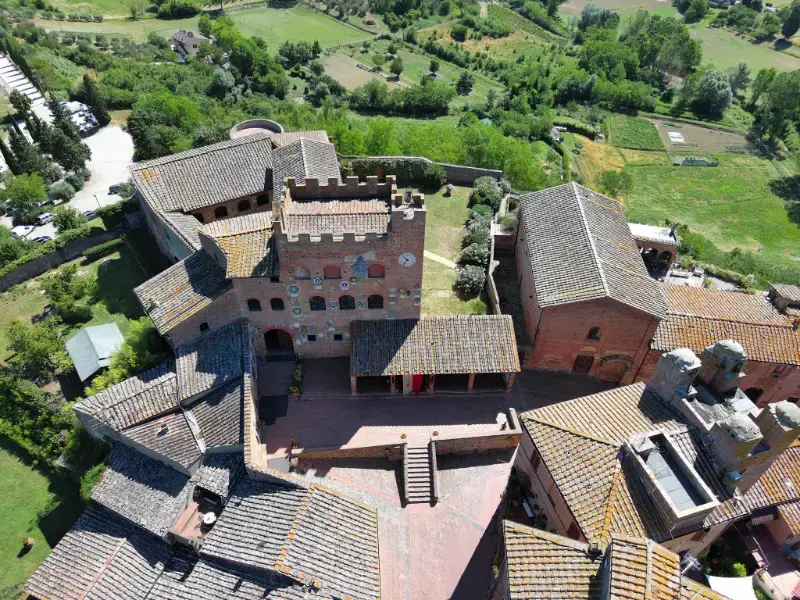
At the centre of town, Piazza dei Priori is framed by severe stone buildings and dominated by the Palazzo dei Priori. Construction of the palace began in 1208, and it is regarded as the oldest municipal palace in Tuscany. Its crenellated silhouette later influenced civic architecture elsewhere in the region.
The square is impressive without being enormous. Stand near one corner rather than directly in the middle and look at the different façades. The atmosphere changes throughout the day: busy and social around midday, more dramatic when shadows stretch across the stone in late afternoon.
Climb the Palazzo dei Priori if the tower is open
The interior of the Palazzo dei Priori gives context to Volterra’s medieval civic power, but the tower is the highlight for many visitors. The panorama reaches across a broad section of inland Tuscany, and on clear days the distances are extraordinary.
The climb can be narrow and physically demanding, so do not force it if stairs are difficult for you. There are other viewpoints around Volterra where you can enjoy the landscape without climbing a tower.
Visit the cathedral and baptistery
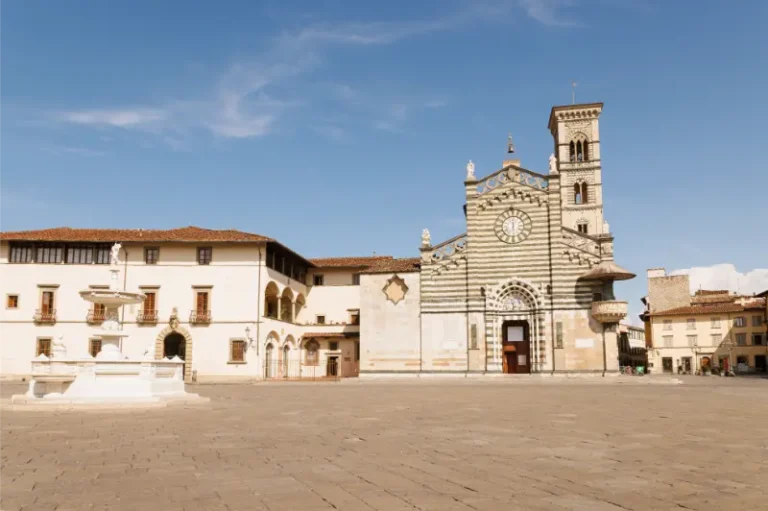
Close to Piazza dei Priori, the Cathedral of Santa Maria Assunta and the octagonal baptistery create another compact architectural group. The cathedral’s interior has been altered over centuries, resulting in a richer decorative character than its relatively restrained exterior suggests.
The baptistery faces the cathedral across the small square and is clad in the striped marble language familiar from Tuscan Romanesque architecture. This entire area can be visited slowly in less than an hour, yet it adds an important religious layer to the civic centre.
Go to the Guarnacci Museum for the Etruscans
If you visit only one museum in Volterra, the Guarnacci Etruscan Museum is the natural choice. Its collections include funerary urns, bronzes and objects that make the Etruscan city far more tangible than a few surviving walls can do on their own.
Do not worry if you know little about Etruscan history before entering. Focus on a few distinctive objects rather than trying to read every label. The famous elongated bronze figure known as the Ombra della Sera is particularly memorable because its proportions feel unexpectedly modern.
See the Roman Theatre from above and below
Volterra’s Roman Theatre, built around the late 1st century BC, sits just outside the medieval core and is one of the town’s great visual surprises. From the upper streets you can look down on the semicircular seating and stage remains, with medieval buildings rising behind them.
Entering the archaeological area gives a different sense of scale. The theatre could hold thousands of spectators, a reminder that Roman Volterra was a substantial urban centre rather than a remote hill settlement.
Watch alabaster become more than a souvenir
Volterra has a centuries-old relationship with alabaster, a soft translucent stone quarried in the area and worked into decorative objects and sculpture. Shops still display everything from traditional bowls to contemporary design pieces.
Look for a workshop where you can see carving or finishing rather than buying the first mass-produced object in a souvenir window. Watching a craftsperson work makes the material far more interesting. Genuine local workmanship also tends to reveal small variations and tool marks that give each piece character.
Walk toward the Balze for a landscape that feels unstable
On the western side of Volterra, the Balze are dramatic erosion cliffs created as softer geological layers have collapsed over time. The landscape is beautiful but also a reminder that this hill has always been physically fragile.
Views toward the Balze add a wilder dimension to the visit, although you should respect barriers and marked paths. Do not climb beyond safety fencing for a photograph. The panorama is impressive from established viewpoints, especially in softer evening light.
Do not confuse the Medici Fortress with a normal tourist castle
The large Medici Fortress dominates one end of Volterra’s skyline. It is visually impressive, but travellers are sometimes surprised to discover that the complex functions as a prison and is not a conventional castle attraction that you can simply enter during normal sightseeing.
Admire it from public streets and viewpoints, then concentrate your visit on the accessible civic, archaeological and religious sites. Knowing this in advance saves an unnecessary walk toward a locked entrance.
Where to eat in Volterra
La Vecchia Lira, at Via Giacomo Matteotti 19, is a reliable choice in the historic centre for Tuscan cooking with a local character. The location is convenient without forcing you to leave the old town during a day of sightseeing.
Ristorante Enoteca Del Duca, at Via di Castello 2, offers a more refined experience and is well suited to an evening meal if you are staying overnight. Volterra becomes noticeably quieter after the day-trip period, so dinner in town is a good reason not to leave too early.
Useful booking tools for this trip
Tours & experiences: For guided visits, attraction tickets and bookable experiences in Volterra, See tours & tickets
Where to stay
Albergo Etruria, at Via Giacomo Matteotti 32, is a highly regarded central hotel close to Piazza dei Priori. Its location is especially useful if you want to walk out early in the morning before the main streets become busy. Check Albergo Etruria prices & availability
Hotel La Locanda, at Via Guarnacci 24, is another strong option inside the centre. As with most hill towns, confirm parking and luggage arrangements before arrival rather than driving toward the hotel without instructions. Check Hotel La Locanda prices & availability
Where to park in Volterra
Volterra has several official paid parking areas around the historic centre. The municipality currently operates parking charges generally between 8:00 and 20:00, with overnight hours free in the regulated areas. Prices vary by location.
For a longer visit, the Stazione and Viale dei Filosofi areas are usually more economical than the closest central options, with a lower hourly rate and daily maximum. Gioconovo and the Macelli area put you closer to the centre but can cost more. Follow the official signs rather than trying to enter restricted streets.
Volterra is hilly, so choose convenience over a small saving if anyone in your group has limited mobility. A parking space that looks close on a map may still involve a steep climb.
How long do you need?
A half day lets you see Piazza dei Priori, the cathedral, Roman Theatre and a few streets. A full day is much more satisfying if you add the Etruscan museum, an alabaster workshop and the Balze. Volterra has enough substance to justify an overnight stay, especially for travellers interested in history.

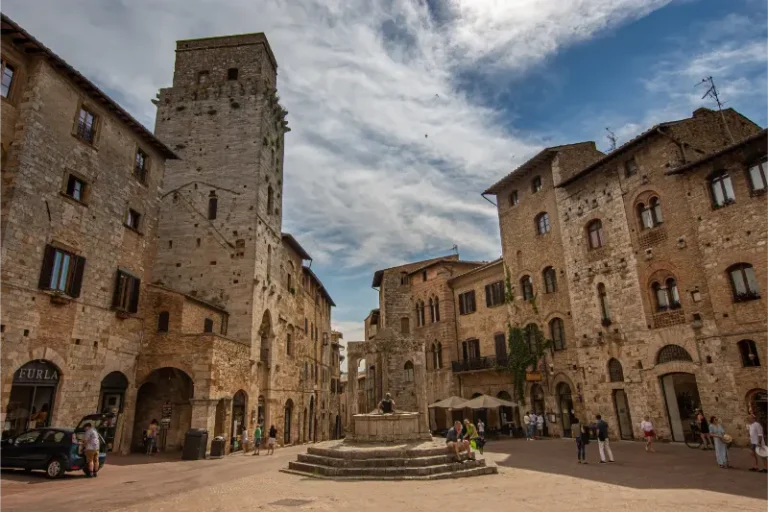
If you are coming from San Gimignano, the two towns make an excellent contrast: one is defined by its medieval towers, the other by Etruscan depth and a more austere landscape.
A route for a first visit
Enter through Porta all’Arco, continue to Piazza dei Priori and visit the Palazzo dei Priori. See the cathedral and baptistery, then spend time at the Guarnacci Museum. Walk to the Roman Theatre, stop at an alabaster workshop and finish the afternoon toward the Balze.
If you have only a few hours, do not sacrifice the Etruscan museum simply to add another viewpoint. Volterra’s landscape is beautiful, but its real distinction is the depth of its history. The more layers you notice, the more the town separates itself from every other hill town in Tuscany.
Stay after the light begins to fade
Volterra can feel almost cinematic in the evening. The stone is cooler in colour than the golden villages of the Val d’Orcia, and the broad ridge catches wind even after hot summer days. Walk back through Piazza dei Priori after dinner and the town’s austere architecture becomes especially atmospheric.

This is also when you realise why Volterra deserves more than a quick detour. Its beauty is not immediately sweet or decorative. It grows through repetition: an Etruscan stone reused in a later wall, a Roman ruin below a medieval street, an alabaster workshop glowing behind a window. Few Tuscan towns reveal time so clearly.
Want more accommodation options? Where to Stay in Tuscany: The Best Areas for Every Kind of Trip compares the best bases and makes it easier to choose the right location before you book.