What to See in Montalcino: Brunello, Fortress Views and a Hill Town Worth Lingering In
Montalcino is known around the world because of Brunello, but reducing the town to wine misses what makes it such a satisfying stop in southern Tuscany. Its stone streets climb to a powerful medieval fortress, the rooftops look across an enormous sweep of countryside, and the historic centre still feels compact and lived-in. Wine is part of almost every conversation here, yet you can enjoy Montalcino even if your perfect day involves a church, a viewpoint and a long lunch rather than a cellar tour.
The town developed on a hill that offered a naturally defensive position, and its history was closely tied to Siena. After Siena fell to Florence in the 16th century, Montalcino became the last stronghold of the Republic of Siena in exile for a few years. That sense of independence still fits the place. The fortress dominates the upper town, while the streets below retain a sober, practical beauty that feels less theatrical than some neighbouring hill towns.
Start at the Fortezza and understand the landscape first
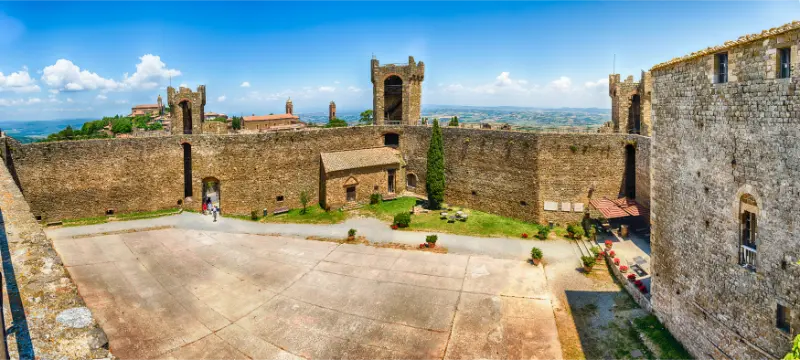
The Fortezza di Montalcino is the obvious place to begin because it immediately explains why the town stands where it does. Built in the 14th century, the fortress forms a compact polygon of stone walls and towers above the historic centre. Its courtyard is atmospheric even before you climb higher.
When access to the ramparts is available, the view is excellent. Vineyards, wooded slopes and farmhouses spread toward the horizon, with Monte Amiata visible in clear weather. This is a good moment to orient yourself before descending into the lanes below.
If you arrive around lunchtime in summer, consider reversing the usual order: explore shaded streets first and save the exposed ramparts for later afternoon, when the light becomes warmer and temperatures ease.
Walk Via Matteotti without rushing toward the wine shops
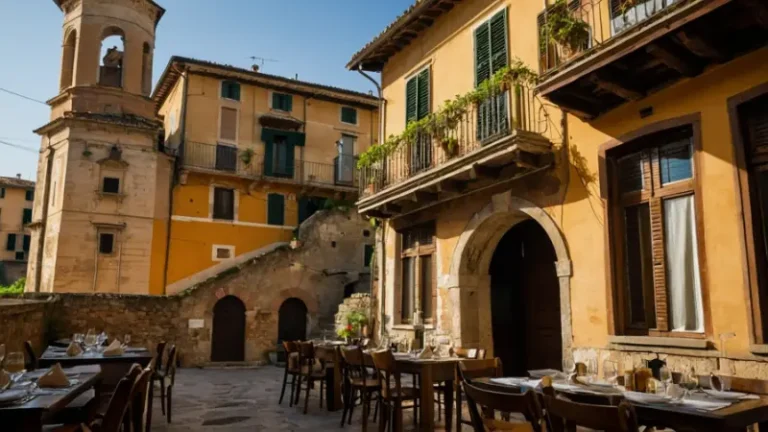
Montalcino’s centre is small, and Via Matteotti acts as one of its main spines. Enotecas and food shops naturally attract attention, but keep looking up. Stone façades, narrow side streets and small religious buildings give the town a strong visual rhythm.
The best way to explore is to let yourself turn down a few lanes without a fixed destination. Some end at private doors; others reveal views across the countryside. Unlike a larger city, getting “lost” here usually means walking for three minutes before finding the main street again.
See Piazza del Popolo and the Palazzo dei Priori
Piazza del Popolo is the civic heart of Montalcino. The slender tower of the Palazzo dei Priori rises above the square, and the arcaded loggia gives the space a distinctly medieval character. It is not as monumental as Piazza del Campo in Siena, but that smaller scale is part of its appeal.
Stop for coffee and watch the square rather than simply photographing it. Local life and tourism mix naturally here, especially outside the peak hours of the day.
Visit the churches for a quieter Montalcino
The former Church of Sant’Agostino and the religious buildings around the historic centre add depth to a visit that can otherwise become dominated by wine. The cathedral, dedicated to the Santissimo Salvatore, has a restrained neoclassical appearance, while smaller churches preserve a more intimate atmosphere.

Religious architecture in Montalcino is generally less flamboyant than in Florence or Siena. That simplicity suits the town. Enter when doors are open, lower your voice and give yourself a few minutes away from the shops and tasting rooms.
Discover the Temple of Brunello
For travellers curious about local wine culture, the Tempio del Brunello offers a contemporary way to understand the territory. Rather than functioning only as a tasting room, it connects Brunello with the history, landscape and people of Montalcino.
This is useful if you do not have time to visit an estate in the countryside. A winery visit can be wonderful, but it often requires a reservation, a car and several hours. In town you can learn the basics, taste responsibly and still leave time for architecture and views.
Walk to Madonna del Soccorso for one of the easiest great views
The area around the Madonna del Soccorso church gives you a broad panorama without requiring a demanding hike. From the western edge of town, the landscape seems to open suddenly below the walls.
Come in late afternoon if possible. The lower sun gives the hills more depth, and the viewpoint is a good alternative to lingering only around the fortress. It is also a peaceful place to pause before dinner.
Make time for Sant’Antimo if you have a car
South of Montalcino, the Abbey of Sant’Antimo is one of the most beautiful Romanesque churches in Tuscany. It sits in open countryside near Castelnuovo dell’Abate, surrounded by olive trees, fields and low hills. The pale stone interior is elegant and calm, and the setting makes the journey feel worthwhile even before you enter.
Do not treat Sant’Antimo as a five-minute photo stop. Allow time to walk around the abbey and absorb the silence of the valley. If your schedule includes a winery in the same direction, combine the two rather than driving back and forth across the countryside.
How to approach a Brunello tasting
Brunello di Montalcino is made from Sangiovese and is one of Italy’s most celebrated wines. In town, dozens of enotecas offer bottles and tastings. You do not need to choose the most expensive flight to have a meaningful experience.
Ask to compare a Brunello with Rosso di Montalcino or wines from different producers. A short guided tasting teaches you more than ordering several glasses without context. If you plan to drive afterwards, share tastes, use spittoons where available or schedule the tasting at the end of the day once the car is parked.
Useful booking tools for this trip
Tours & experiences: For guided visits, attraction tickets and bookable experiences in Montalcino, See tours & tickets
Where to eat in Montalcino
Re di Macchia, at Via Soccorso Saloni 21, is a well-regarded restaurant in the historic centre and a strong choice for traditional Tuscan flavours presented with care. It is particularly convenient after a walk toward the western viewpoints.

Il Moro, at Via Giuseppe Mazzini 44, is another popular option with a warm, informal atmosphere. In Montalcino, booking dinner is sensible in busy periods because the centre is small and the best-regarded dining rooms fill quickly.
Where to stay
Hotel Vecchia Oliviera, at Porta Cerbaia, is a characterful choice near the edge of the historic centre. Its position makes it easy to walk into town while avoiding the complications of driving through narrow central streets. Check Hotel Vecchia Oliviera prices & availability

If wine estates are the main focus of your trip, a countryside stay can be more practical. If you want to experience Montalcino itself, however, one night in town lets you enjoy Piazza del Popolo and the fortress area after day visitors have left.
Want more accommodation options? Where to Stay in Val d’Orcia: Pienza, Montalcino, San Quirico or the Countryside? compares the best bases and makes it easier to choose the right location before you book.
Where to park in Montalcino
Montalcino is compact and much better on foot than by car. Follow signs to the public parking areas around the edge of the historic centre rather than attempting to drive through the central lanes. Spaces closest to the walls fill quickly during weekends, harvest season and major wine events.
If you are staying overnight, ask your hotel exactly where guests should park before arrival. Some properties are central but accessed from routes that are not obvious on a navigation app. Once parked, keep the car there until you are ready for Sant’Antimo or a countryside winery.
How long do you need?
Without a winery visit, four or five hours allow time for the fortress, historic centre, viewpoints and lunch. A full day is better if you want a tasting and Sant’Antimo. If you plan a booked winery tour, consider staying overnight rather than trying to combine Montalcino with several other Val d’Orcia towns.
The distance between famous villages on a map can make southern Tuscany look easy to “collect,” but parking, winding roads, tastings and long lunches change the timing. Montalcino rewards a slower schedule.
A good first-day route
Start at the fortress, explore its courtyard and ramparts, then walk down toward Piazza del Popolo. Continue through the main streets, visit one church and the Temple of Brunello, and stop for lunch. In the afternoon, enjoy a short tasting, walk toward Madonna del Soccorso and then drive to Sant’Antimo if daylight and energy allow.
If you are staying overnight, return to the fortress after dinner for a final walk. Montalcino becomes very quiet after dark, and the stone walls and narrow lanes feel far removed from the busy wine destination of midday.
The best part of Montalcino is not something you can reserve
It is tempting to plan the town around tasting appointments, yet one of its strongest experiences is simply finding a bench or wall with a view and watching the landscape. Vineyards here are not decorative scenery added for tourists; they are the working environment that created the town’s modern identity.
Give yourself at least one unscheduled hour. Walk until a lane catches your attention, stop for an espresso, look across the hills and let Montalcino feel like a place rather than a product. Brunello may bring you here, but the hill town is what makes you want to stay.