What to See in Viareggio: Liberty Elegance, Sea Air and a Surprisingly Rich Tuscan Coast
Viareggio shows a side of Tuscany that surprises travellers who know the region mainly through medieval towns and vineyards. Here the horizon is flat and blue, the Apuan Alps rise dramatically behind the coast, Liberty façades line the seafront and fishing boats share the Darsena with sophisticated yacht-building yards. The city has an extroverted character that feels closer to a Mediterranean resort than a Renaissance museum town.
Viareggio developed as a maritime outlet for Lucca and grew substantially after the 18th and 19th centuries. The arrival of seaside tourism transformed it again, producing hotels, cafés and villas in the elegant Liberty style associated with the Italian version of Art Nouveau. Add one of Europe’s most famous Carnival traditions and you have a destination with far more cultural personality than a simple beach stop.
Begin on the Passeggiata and look up at the architecture
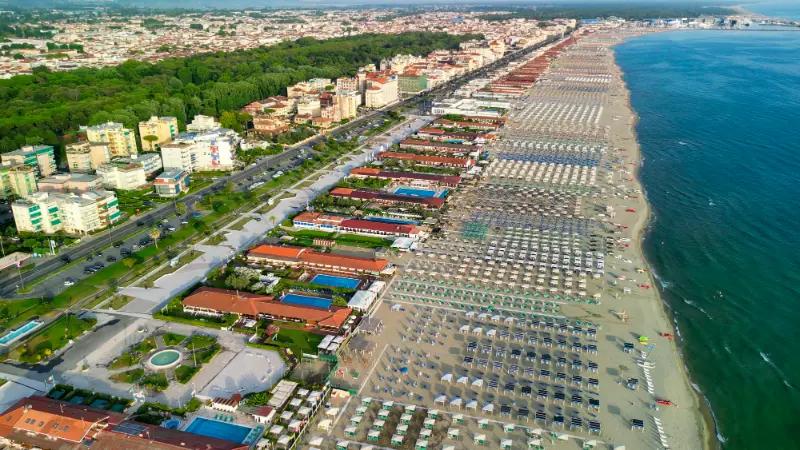
The Passeggiata is Viareggio’s long seafront promenade and the natural starting point. Shops, cafés, beach clubs and hotels create a lively resort atmosphere, but the most interesting detail is often above eye level. Liberty and eclectic façades preserve the optimism of early 20th-century seaside tourism.
One of the buildings most closely associated with this period is Gran Caffè Margherita, an iconic café with decorative architecture that evokes the city’s fashionable past. Even if you do not stop inside, use it as a reminder to slow down and notice façades rather than walking only toward the beach.
Walk the beach, but understand how Viareggio’s coast works
Much of the central beachfront is organised through private bathing establishments, or bagni, where visitors rent umbrellas, loungers and changing facilities. This is a classic Italian seaside model and can be convenient if you want a full beach day with services.
If you prefer a wilder landscape, save time for Lecciona Beach south of the city, near Torre del Lago. It lies beside protected coastal nature and feels completely different from the organised central seafront. Access generally involves walking, so bring water and avoid heavy beach gear if you are not used to carrying it.
See Torre Matilde, the city’s oldest symbol
Move inland toward the Burlamacca canal and you reach Torre Matilde, built in the 16th century and considered Viareggio’s oldest surviving building. Despite the name, it has no real connection with Countess Matilda of Canossa; the popular attribution came much later.
The tower reminds you that Viareggio existed before beach tourism. This area was tied to the port, coastal defence and the difficult relationship between land and sea. Today the building is used for cultural purposes, and even seeing it from outside adds historical context to a city often viewed only through the 20th century.
Cross into the Darsena for the maritime city
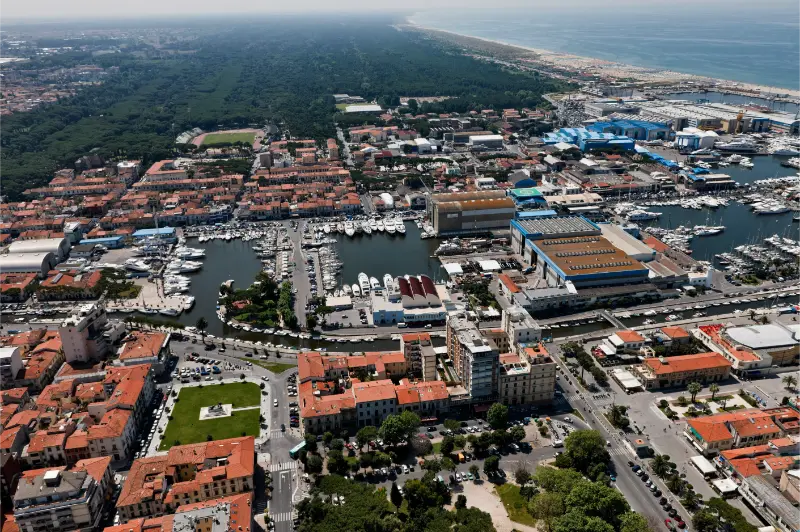
The Darsena is one of the best areas to explore if you want to see Viareggio beyond its promenade. Fishing traditions, boatyards, yacht construction and casual seafood restaurants coexist around the harbour. The atmosphere is more working and less polished than the hotel-lined seafront.
Walk along the canal toward the sea and watch the change in scale from small boats to major yacht-building facilities. Viareggio has an international reputation for shipbuilding, and the Darsena makes that identity visible without requiring a formal museum visit.
Walk out along the pier at the end of the day
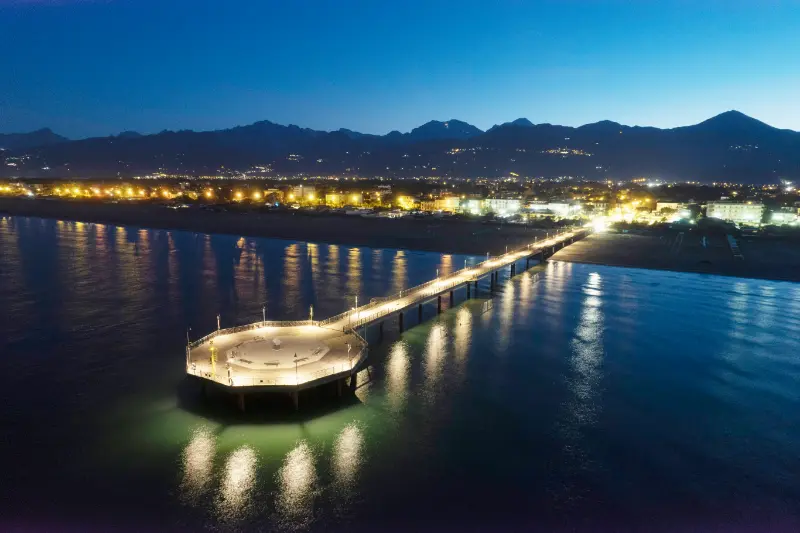
The molo and harbour area are especially pleasant toward sunset. From the outer section you can look back toward the city with the Apuan Alps behind it. On clear days, the contrast between sea and mountains is one of Viareggio’s most distinctive views.
This is a good moment to buy a simple snack or gelato rather than rush to the next attraction. Viareggio works best when part of the day is unstructured.
Understand Carnival even when it is not Carnival season
Viareggio’s Carnevale is famous for enormous satirical floats built in papier-mâché and animated with moving figures. During the Carnival period, the seafront becomes the stage for spectacular parades, but the tradition exists all year.
The Cittadella del Carnevale is the creative centre where the floats are designed and built, and museum spaces help visitors understand the craftsmanship behind them. If you are travelling with children, it is one of the city’s most distinctive cultural stops because it combines art, engineering, humour and theatre.
Take a break in the Pineta di Ponente
Just inland from the central seafront, the Pineta di Ponente offers shade, paths and a completely different rhythm. Locals use the pinewood for walking, cycling and family time, and it is an excellent escape during hot summer afternoons.
A simple local pleasure is to pair a walk here with a gelato or coffee. It may not sound like a major attraction, but it reveals the everyday resort culture of Viareggio better than another hour on the commercial promenade.
Look for Liberty details beyond the obvious buildings
Viareggio’s architectural identity is not limited to one famous café. Villas and decorative façades appear along streets near the seafront, with ceramic details, floral motifs and unusual window shapes. Some have been altered, but enough survive to create a recognisable style.
Walk a street or two inland from the Passeggiata and make the architecture the purpose of the route. The city becomes more interesting when you see it as an early modern resort shaped by changing ideas of leisure, health and seaside elegance.
Where to eat in Viareggio
Ristorante da Romano, at Via Giuseppe Mazzini 122, is one of Viareggio’s best-known dining addresses and a strong choice for travellers who want a refined meal rooted in seafood and local tradition. It is the kind of place worth planning rather than choosing spontaneously at the end of a long day.
For a more casual but highly regarded option around the Darsena, MaMe Restaurant, at Via Michele Coppino 56, puts you close to the maritime side of the city and works naturally after a harbour walk.
Useful booking tools for this trip
Tours & experiences: For guided visits, attraction tickets and bookable experiences in Viareggio, See tours & tickets
Where to stay
Grand Hotel Royal Viareggio, at Viale Giosuè Carducci 44, is a classic seafront hotel whose architecture fits the resort identity of the city. Its location makes it easy to enjoy the Passeggiata early in the morning and late in the evening. Check Grand Hotel Royal Viareggio prices & availability
Palace Hotel, at Via Flavio Gioia 2, is another historic-style option close to the sea. If you plan to spend most of your time at Lecciona or in the wider Versilia area, accommodation with easier parking outside the most central strip may be more practical. Check Palace Hotel prices & availability
Want more accommodation options? Where to Stay in Tuscany: The Best Areas for Every Kind of Trip compares the best bases and makes it easier to choose the right location before you book.
Where to park in Viareggio
The roads closest to the Passeggiata can be busy and parking demand is high in summer, especially on weekends. Unless your hotel provides a space, it is often easier to park a few streets inland and walk to the seafront rather than circle repeatedly near the beach.
Pay attention to coloured road markings and seasonal restrictions. If you are combining the centre with Lecciona Beach or Torre del Lago, plan them as separate stops rather than trying to keep the same parking space all day.
How much time do you need?
A half day is enough for the Passeggiata, Liberty architecture and Darsena. A full day lets you add the Carnival district, pinewood and time by the sea. In warm weather, an overnight stay makes sense because the city is at its best in the evening, when the promenade is lively and the heat has dropped.
Viareggio also works as a base for exploring northern Tuscany. Lucca is close enough for an easy day trip, while Pietrasanta and the Apuan Alps give you completely different experiences within the same part of the region.
A first-day route that shows the whole city
Begin on the Passeggiata and walk past the Liberty buildings. Continue toward the harbour, see Torre Matilde and cross into the Darsena. Have lunch around the maritime district, then spend the warmer part of the afternoon in the Pineta di Ponente or at the beach. Toward evening, return to the pier for mountain and sea views.
If Carnival culture interests you, move the Cittadella to the morning and save the waterfront for later. Viareggio is not a city of concentrated masterpieces, so the order matters less than allowing its different personalities to emerge.
Why Viareggio belongs in a Tuscany itinerary
After several days of hill towns, churches and Renaissance museums, Viareggio can feel refreshing precisely because it does not fit the stereotype. You hear gulls instead of cathedral bells, smell salt air instead of stone cellars and see mountain peaks beyond beach umbrellas.
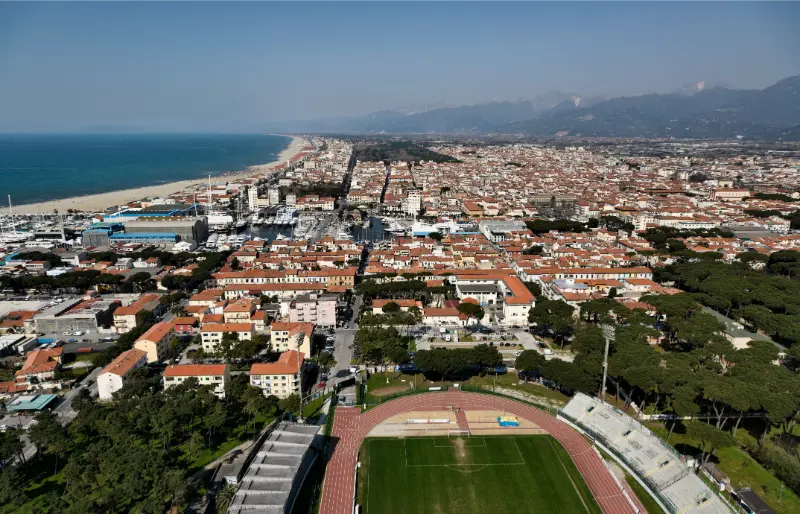
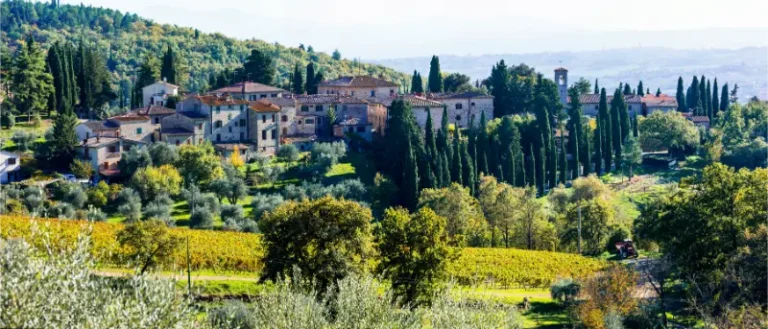
That difference is the reason to come. Tuscany is not only an inland landscape of vineyards and cypress roads. It also has a long coast, working ports, resort traditions and contemporary seaside life. Viareggio makes that broader identity easy to understand.
One final walk: from the sea toward the ordinary city
Before leaving, walk inland for fifteen or twenty minutes without aiming at a landmark. The blocks behind the seafront show a more ordinary Viareggio of bakeries, apartment buildings, bicycles and neighbourhood cafés. It is a useful counterweight to the glamorous hotels and beach establishments.
Then turn back toward the sea. The sudden appearance of the bright horizon at the end of a city street is one of Viareggio’s recurring pleasures. It is also a reminder that the coast is not a backdrop here; it shapes the city’s light, architecture and daily rhythm.