Casentino Travel Guide: Castles, Sacred Forests and Quiet Mountain Tuscany
Casentino is one of Tuscany’s great valleys for travellers who prefer forests to vineyards and silence to spectacle. The upper Arno runs through a landscape enclosed by the Apennines and Pratomagno, where castles, Romanesque churches and spiritual sites sit against deep woodland. Poppi gives the valley a recognisable medieval landmark, but the real character of Casentino emerges on the roads toward Camaldoli, La Verna and the Foreste Casentinesi National Park.
In a hurry? Give this area at least two days if you can. Choose one logical base, start early for the most popular stops and leave room for a road, village or viewpoint you did not plan. The landscape is part of the attraction, so a schedule that looks efficient on paper can easily become less enjoyable once you are there.
Why Casentino feels different
The Guidi counts dominated much of medieval Casentino, leaving castles at Poppi and other strategic points. Dante knew the valley and the Battle of Campaldino, fought nearby in 1289, connected Casentino directly to Florence’s political history. At the same time, monasteries and hermitages gave the forests a spiritual identity: Camaldoli and La Verna remain two of central Italy’s most significant religious landscapes.
What to see and where to stop in Casentino
Poppi
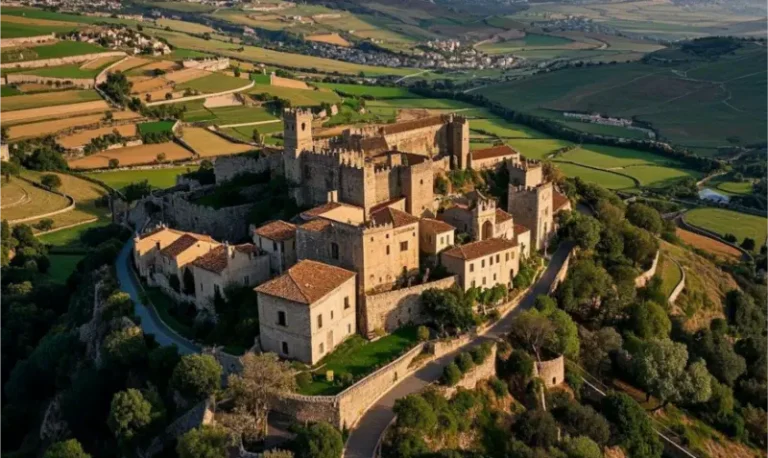
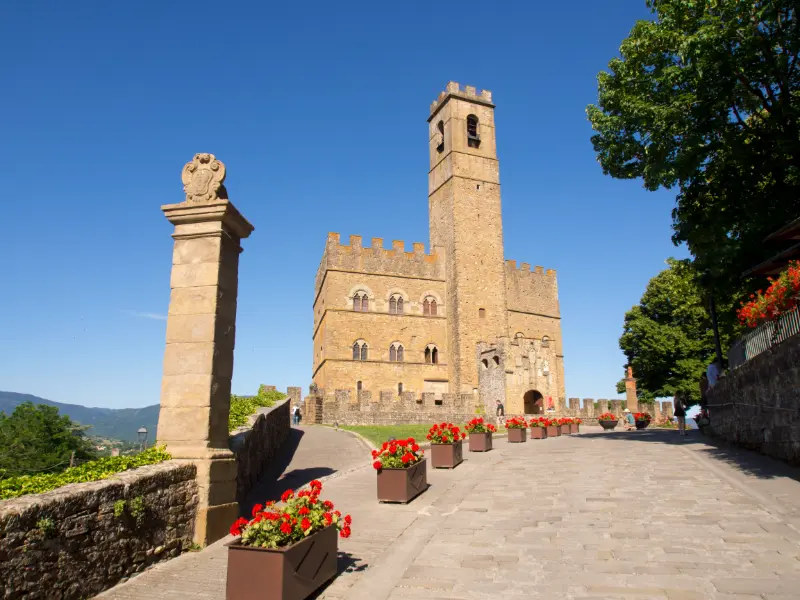
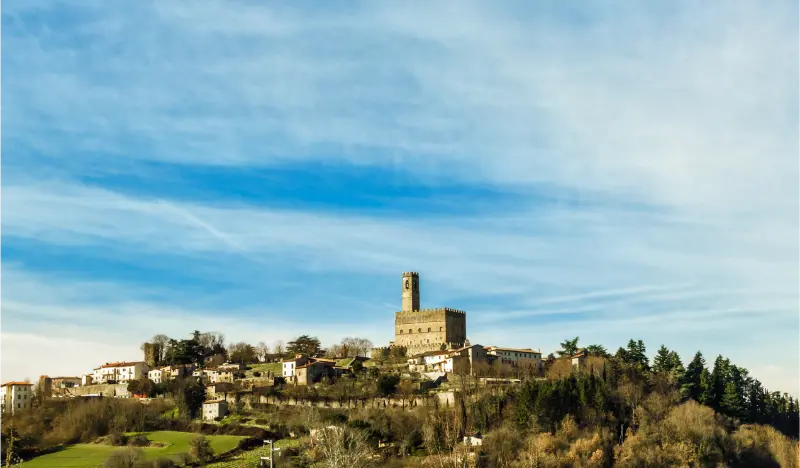
Poppi is the most immediately impressive town in Casentino. Its Castello dei Conti Guidi rises above the valley and contains historic rooms and a library, while the arcaded main street below feels intimate and lived-in. Walk beyond the castle terrace for views rather than turning straight back. The town is compact, but steep sections make comfortable shoes worthwhile.
Camaldoli
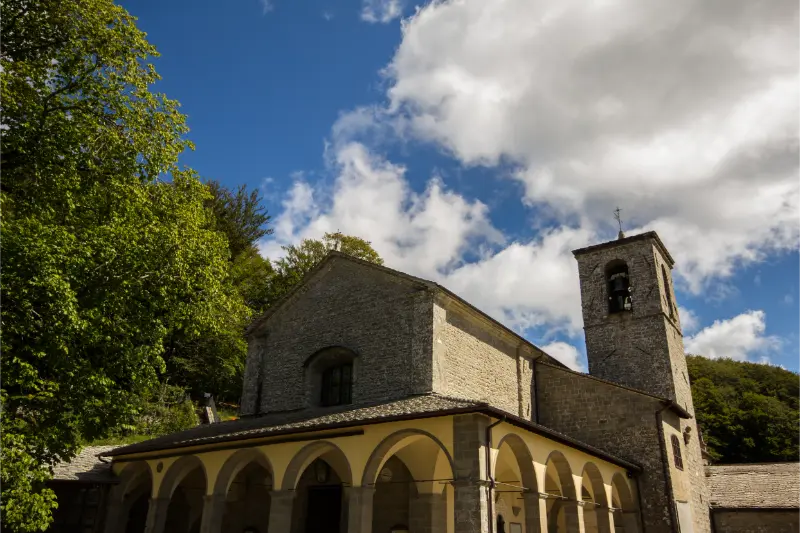
Camaldoli is both monastery and forest landscape. The monastery sits lower in the woods, while the hermitage higher up is more secluded and contemplative. Even visitors without a religious interest tend to feel the atmosphere: dense fir and beech forest muffles sound and changes the pace of the day. Dress respectfully and remember that these remain active spiritual places rather than museum sets.
La Verna
The Sanctuary of La Verna clings to a rocky mountain setting associated with Saint Francis. Architecture, caves, forest paths and long views combine into one of the valley’s most memorable experiences. Arrive early if you value quiet. The weather at altitude can be cooler than in Arezzo, so bring a layer even when the valley below feels warm.
Foreste Casentinesi National Park
The national park protects one of Italy’s richest forest landscapes, extending beyond Tuscany into Emilia-Romagna. Trails vary from easy woodland walks to long mountain routes. Choose a walk based on time and elevation, not simply distance, and download a map before losing mobile signal. Autumn is spectacular, but wet leaves make slopes and stone paths more slippery.
Romena
The Romanesque Pieve di Romena and the nearby castle ruins create one of Casentino’s most evocative combinations of architecture and landscape. The church’s simple stone interior feels perfectly matched to the surrounding fields and mountains. This is an excellent late-afternoon stop when the larger attractions are closing and the valley light becomes softer.
Pratovecchio and Stia
Pratovecchio Stia offers craft, industrial and rural history in a compact area. Stia is associated with traditional wool production, and the old centre around Piazza Tanucci has a distinctive arcaded shape. These towns are useful for lunch, supplies and an easy walk before heading into the forest.
Raggiolo
Raggiolo is a tiny stone village on the Pratomagno side of the valley and feels deliberately slow. Lanes, water channels and chestnut culture make it a good choice when you want somewhere with no major monument to tick off. Park outside the compact centre and walk; trying to push a car into the old lanes defeats the point.
Getting around Casentino: driving and parking
A car makes Casentino much easier because the spiritual sites and trailheads sit away from the railway. The valley floor is straightforward, but roads climb quickly toward forests and passes. In winter and shoulder seasons, check weather before driving to high-altitude sites. Poppi has parking outside its upper historic centre; from there the castle is reached on foot. For Camaldoli and La Verna, arrive earlier than midday on weekends if you want easier parking and a quieter atmosphere.
A useful habit throughout Tuscany is to treat the brown or blue parking signs at the entrance to a town as your cue to stop looking for a “better” space closer to the centre. Historic streets were not built for modern traffic, and a ten-minute walk is usually preferable to worrying about a ZTL camera, squeezing through a medieval lane or discovering that the route ahead is residents-only.
A quieter way to experience Casentino
Casentino’s less obvious pleasure is the relationship between villages and forest. Instead of racing from castle to monastery, include a short woodland walk or stop beside the Arno. Badia Prataglia is a useful gateway into the national park, while the road over Pratomagno opens broad views in clear weather. Morning fog can make the valley feel mysterious, then disappear into blue skies by lunch.
Where to eat
The cuisine is mountain Tuscan: chestnuts, mushrooms, potato tortelli, game, cheeses and simple soups. In Poppi, Albergo Ristorante Casentino at Piazza della Repubblica 6 sits directly opposite the Castello dei Conti Guidi and combines rooms with traditional dining. It is an especially convenient address if you want to leave the car parked and enjoy the old town after day visitors have gone. Check Albergo Ristorante Casentino prices & availability
Opening days can change outside high season, and many small Tuscan restaurants close one or two days each week. For anywhere you would be disappointed to miss, reserve and confirm the opening time rather than building the whole day around an old listing.
Useful booking tools for this trip
Car rental: If this trip works better with your own wheels, Compare car rental prices before choosing the pickup point.
Where to stay
Poppi is the easiest first base; Pratovecchio Stia is convenient for the northern valley, while Badia Prataglia suits hikers. If you want to wake close to forest trails, stay higher in the valley; if you prefer restaurants and an evening stroll, Poppi is more practical. The Albergo Ristorante Casentino is distinctive mainly because of its position facing the castle.
Want more accommodation options? Where to Stay in Tuscany: The Best Areas for Every Kind of Trip compares the best bases and makes it easier to choose the right location before you book.
How many days do you need?
Day one: Poppi, Romena and Pratovecchio Stia. Day two: Camaldoli plus a forest walk. Day three: La Verna and a quieter village such as Raggiolo. If you have only one day from Arezzo, choose Poppi and either Camaldoli or La Verna rather than trying to include both spiritual sites at speed.
If you are travelling for a week or more in Tuscany, an area like this works best as a genuine base rather than a single excursion. Unpacking for two or three nights gives you the freedom to see a famous place early, return to your accommodation for a break and go out again when the light and atmosphere improve in the evening.
Best time to visit Casentino
May and June are green and fresh, while October is arguably the most beautiful month for forest colour. Summer is comfortable in higher areas and popular for hiking. Winter can bring snow and a deeply atmospheric landscape, but you need appropriate tyres or chains when required and should verify road conditions before driving to high sites.
Small practical details that make the trip better
Carry water, keep a light layer in the car and download an offline map before rural drives. In summer, do not assume that every village has shade beside the main attraction. In spring and autumn, keep flexible plans because a wet morning can become a brilliant afternoon. When visiting churches and monasteries, carry something to cover shoulders if needed, and when walking natural paths, use proper footwear rather than sandals chosen for the town.
Most importantly, do not measure a Tuscany day by the number of pins you managed to open on a map. The strongest memories often come from the hour that looked inefficient: a quiet piazza after lunch, a road through woodland, a conversation in a food shop or the decision to remain for sunset instead of driving to one more landmark.
If you are connecting this area with a city break, our guide to Arezzo is a useful next read.
Is Casentino worth visiting?
Yes—especially if you want Tuscany to feel like a place rather than a sequence of famous photographs. Casentino rewards curiosity, slower travel and a willingness to look beyond the headline attraction. Give it enough time to develop its own rhythm and it can easily become the part of Tuscany you remember most clearly after the major cities have begun to blur together.
Planning your route without rushing
A realistic visit to Casentino works better when you divide the map into small daily zones. Plan one anchor experience before lunch and one after it, then use the spaces between them for viewpoints, cafés and short walks. This also gives you room to adapt when a restaurant is full, a road is slower than expected or a place deserves more time. In rural Tuscany, flexibility is not wasted time; it is often what turns an itinerary into a trip that feels personal.