Lunigiana Travel Guide: Castles, Stone Villages and Tuscany’s Secret Northern Edge
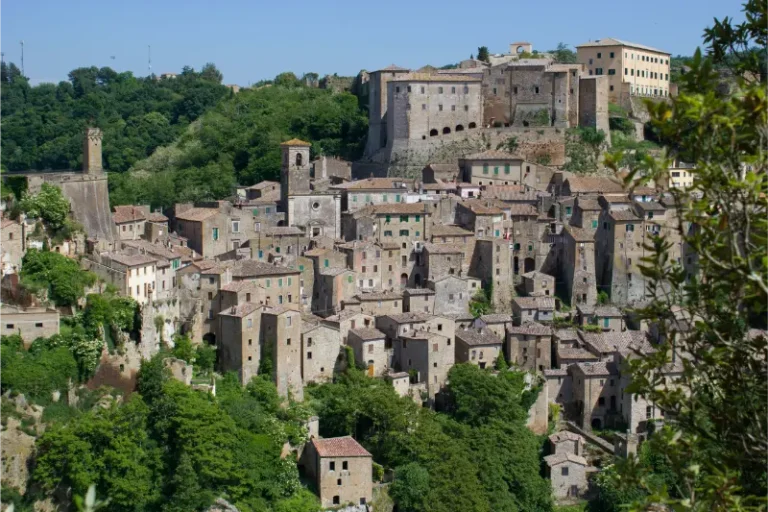
Lunigiana is a borderland in the best sense of the word. At Tuscany’s northern edge, the Magra valley sits between the Apennines, the Apuan Alps and Liguria, so architecture, food and landscape shift from village to village. Castles rise above chestnut woods, medieval bridges cross clear streams and the Via Francigena threads through towns that many international visitors have never heard of. If you want Tuscany without the expectation that every stop must resemble Val d’Orcia, Lunigiana is one of the most rewarding places to explore.
In a hurry? Give this area at least two days if you can. Choose one logical base, start early for the most popular stops and leave room for a road, village or viewpoint you did not plan. The landscape is part of the attraction, so a schedule that looks efficient on paper can easily become less enjoyable once you are there.
Why Lunigiana feels different
The name recalls the ancient territory of Luni, the Roman city near today’s Ligurian coast. During the Middle Ages, Lunigiana fragmented among powerful families, especially the Malaspina, which helps explain the extraordinary number of castles scattered across ridges and valleys. The Via Francigena brought pilgrims through Pontremoli and other settlements on their way to Rome, making this remote-looking land a historic corridor rather than an isolated corner.
What to see and where to stop in Lunigiana
Pontremoli
Pontremoli is the cultural gateway to Lunigiana. The old town stretches along the Magra and Verde rivers, connected by bridges and watched over by Castello del Piagnaro. Inside the castle, the Museum of the Stele Statues introduces mysterious prehistoric stone figures found across Lunigiana. Give the museum time: it changes the way you see the valley, because symbols and human presence suddenly feel much older than the medieval streets outside.
Castello del Piagnaro
The climb to Piagnaro is part of the experience. From the fortress, rooftops, river valleys and surrounding mountains reveal Pontremoli’s strategic position. The castle itself is not simply a viewpoint; its layered defensive architecture helps explain centuries of movement through the Apennine passes. Wear shoes that are comfortable on steep stone lanes.
Fivizzano
Fivizzano has a graceful central square and a history of connections toward both Lucca and the mountain passes. It makes a good base for exploring eastern Lunigiana, especially if you want to combine villages with nature around Equi Terme. The town feels lived-in and unhurried, and cafés around Piazza Medicea are good places to stop before a country drive.
Equi Terme and its caves
Equi Terme sits beneath the Apuan Alps in a dramatic limestone environment. The cave system, thermal history and mountain setting make it one of Lunigiana’s strongest natural stops. Guided visits operate on schedules, so check times before driving there. Even if you are not entering the caves, the village and surrounding rock walls are worth seeing.
Fosdinovo
Fosdinovo occupies a ridge close to the Ligurian side of the territory and is dominated by a Malaspina castle. On clear days the view reaches toward the coast, making the borderland character of Lunigiana obvious. The village is small enough for a slow walk, and the castle adds a dramatic historical centre without the crowds of Tuscany’s more famous fortress towns.
Bagnone
Bagnone is one of those places that feels discovered rather than consumed. A stream cuts below stone houses, small bridges connect lanes and the castle rises above the settlement. Visit after rain, when water gives the town extra energy, but take care on wet stone steps. It works beautifully as a lunch stop between Pontremoli and Fivizzano.

The Via Francigena
Walking even a short section of the Via Francigena helps connect Lunigiana’s villages. The route here is not a decorative trail added for visitors; it follows a historic movement corridor through passes and river valleys. Choose a manageable section, check elevation and arrange transport back rather than assuming a linear walk will be easy to reverse.
Getting around Lunigiana: driving and parking
A car is the easiest way to connect castles and villages, though Pontremoli and some valley towns are reachable by train. Mountain roads can be narrow and slower than expected. Park outside old centres where possible, especially in Pontremoli, Fivizzano and Fosdinovo, then walk. Lunigiana is also a good place to keep cash and a full fuel tank because small businesses and services are more dispersed than in central Tuscany. In wet weather, allow extra time on stone lanes and forest roads.
A useful habit throughout Tuscany is to treat the brown or blue parking signs at the entrance to a town as your cue to stop looking for a “better” space closer to the centre. Historic streets were not built for modern traffic, and a ten-minute walk is usually preferable to worrying about a ZTL camera, squeezing through a medieval lane or discovering that the route ahead is residents-only.
A quieter way to experience Lunigiana
Lunigiana’s strongest quality is the absence of a single must-see circuit. Villages such as Mulazzo, Filetto and Licciana Nardi can become spontaneous stops. In autumn, chestnut woods and mist around the castles create an almost northern-European mood, while spring brings fast rivers and intense green. Do not judge distances only in kilometres: the road may be beautiful enough that you stop repeatedly.
Where to eat
The cuisine reflects Tuscany, Liguria and the mountains. Testaroli, a local flat pasta traditionally cooked on large cast-iron or terracotta surfaces, is the signature dish, often served with pesto or olive oil and cheese. For a characterful stay, Castello di Pontebosio Luxury Resort, Via Pontebosio 3, Licciana Nardi, occupies a restored seventeenth-century residence. Locanda Il Rustichello, Via Crocetta 2, Mulazzo, is another well-regarded country address for an overnight stop.
Opening days can change outside high season, and many small Tuscan restaurants close one or two days each week. For anywhere you would be disappointed to miss, reserve and confirm the opening time rather than building the whole day around an old listing.
Useful booking tools for this trip
Car rental: If this trip works better with your own wheels, Compare car rental prices before choosing the pickup point.
Where to stay
Pontremoli is best for travellers who want evening life and rail access. Fivizzano works well for the eastern mountains, while a castle or agriturismo near Licciana Nardi gives you the strongest sense of rural Lunigiana. The region is ideal for two-base travel if you have four or five nights, because east and west feel surprisingly different.
Compare accommodation: See stays on Booking.com. For a more detailed comparison, read Where to Stay in Tuscany: The Best Areas for Every Kind of Trip
How many days do you need?
Spend day one in Pontremoli with Piagnaro and the Stele Museum. On day two, explore Bagnone, Licciana Nardi and a castle stay. Day three can focus on Fivizzano and Equi Terme, while a fourth adds Fosdinovo and the transition toward the coast. This is not a region to rush through on the way to somewhere else; its slow roads are part of the appeal.

If you are travelling for a week or more in Tuscany, an area like this works best as a genuine base rather than a single excursion. Unpacking for two or three nights gives you the freedom to see a famous place early, return to your accommodation for a break and go out again when the light and atmosphere improve in the evening.
Best time to visit Lunigiana
Late spring and early autumn are excellent. Summer works well because evenings are cooler than in southern Tuscany, though valleys can still be hot. Autumn is particularly atmospheric for chestnuts, mushrooms and forest colour. Winter is quiet and beautiful but requires more attention to mountain weather and seasonal opening hours.
Small practical details that make the trip better
Carry water, keep a light layer in the car and download an offline map before rural drives. In summer, do not assume that every village has shade beside the main attraction. In spring and autumn, keep flexible plans because a wet morning can become a brilliant afternoon. When visiting churches and monasteries, carry something to cover shoulders if needed, and when walking natural paths, use proper footwear rather than sandals chosen for the town.
Most importantly, do not measure a Tuscany day by the number of pins you managed to open on a map. The strongest memories often come from the hour that looked inefficient: a quiet piazza after lunch, a road through woodland, a conversation in a food shop or the decision to remain for sunset instead of driving to one more landmark.
For nearby city planning, continue with our guides to Massa and Carrara.
Is Lunigiana worth visiting?
Yes—especially if you want Tuscany to feel like a place rather than a sequence of famous photographs. Lunigiana rewards curiosity, slower travel and a willingness to look beyond the headline attraction. Give it enough time to develop its own rhythm and it can easily become the part of Tuscany you remember most clearly after the major cities have begun to blur together.
Planning your route without rushing
A realistic visit to Lunigiana works better when you divide the map into small daily zones. Plan one anchor experience before lunch and one after it, then use the spaces between them for viewpoints, cafés and short walks. This also gives you room to adapt when a restaurant is full, a road is slower than expected or a place deserves more time. In rural Tuscany, flexibility is not wasted time; it is often what turns an itinerary into a trip that feels personal.