Monte Amiata Travel Guide: Forests, Hot Springs and Villages Around an Ancient Volcano
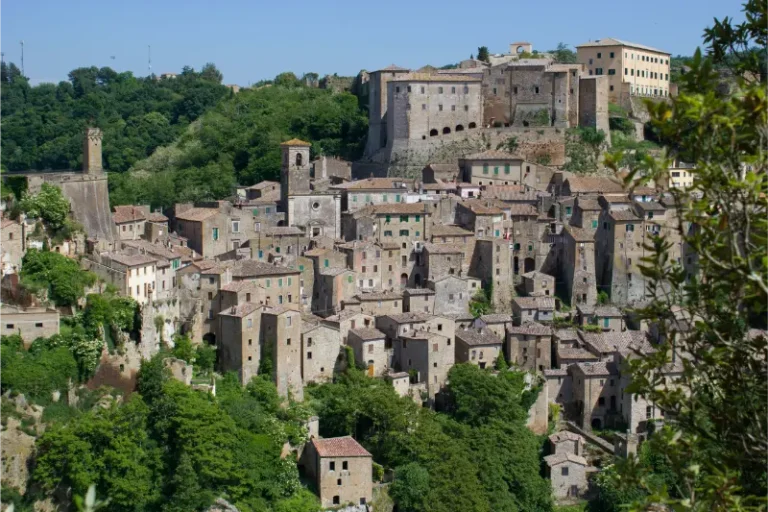
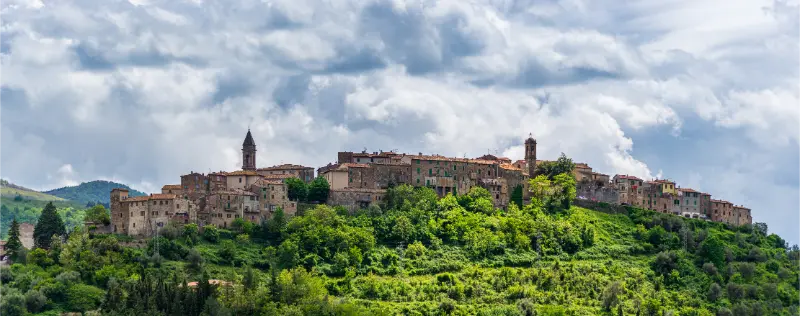
Monte Amiata rises between Val d’Orcia and Maremma like a separate world. The extinct volcanic mountain reaches 1,738 metres and carries dense beech and chestnut forests above villages built from dark stone. In summer it offers shade and cool air; in autumn it smells of mushrooms and chestnuts; in winter it can become a small ski destination. Around its slopes, thermal water, olive groves and historic mining communities add variety that few first-time Tuscany itineraries expect.
In a hurry? Give this area at least two days if you can. Choose one logical base, start early for the most popular stops and leave room for a road, village or viewpoint you did not plan. The landscape is part of the attraction, so a schedule that looks efficient on paper can easily become less enjoyable once you are there.
Why Monte Amiata feels different
Amiata’s volcanic origins shaped both the landscape and local economy. Fertile soils supported chestnuts and olives, while mineral resources contributed to mining communities, particularly mercury extraction around Abbadia San Salvatore. Medieval monasteries and villages developed on strategic slopes between Siena, Maremma and Lazio. Today the mountain feels culturally distinct: neither classic wine-country Tuscany nor coastal Maremma, but an inland island with its own rhythm.
What to see and where to stop in Monte Amiata
Abbadia San Salvatore
Abbadia San Salvatore is the mountain’s most substantial historic town. The abbey, with its atmospheric crypt, gives the settlement its name, while the old centre retains dark stone lanes and a mountain character. The mining museum adds a completely different story, revealing how industrial work shaped twentieth-century life here. Give the town at least half a day rather than using it only as a route to the summit.
The summit and beech forest
The upper mountain is covered by an extensive beech forest that becomes a natural refuge in summer. Roads lead toward Prato delle Macinaie and Prato della Contessa, from where trails continue upward. Weather can change quickly at altitude; bring a layer, water and proper footwear. The summit cross is a landmark, but the forest itself is often the most memorable part of the walk. Check Le Macinaie prices & availability
Santa Fiora
Santa Fiora sits on the southern slopes and is one of the most characterful villages around Amiata. Water is central to its identity: the Peschiera, a historic spring-fed basin, creates a calm green space below the upper town. Walk from the old centre down through different neighbourhoods rather than visiting only the main square.
Arcidosso
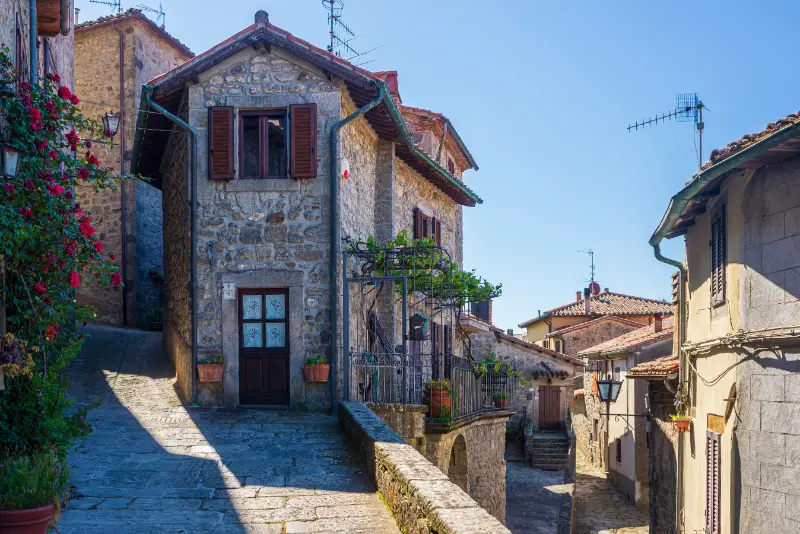
Arcidosso climbs below a fortress and works well as a gateway between mountain and Maremma. The old streets are compact and steep, with views toward the surrounding countryside. Its position makes it a useful lunch or evening stop after time in the forest. Nearby villages such as Montelaterone add another layer if you have time.
Castel del Piano
Castel del Piano has a broader, more open feel and is closely tied to olive-growing and mountain life. Its historic centre is pleasant, but the real advantage is location: roads from here climb directly toward the upper forest while also connecting toward Montalcino and the Maremman side. It makes a practical base for travellers who want to move around rather than remain in one village.
Bagni San Filippo
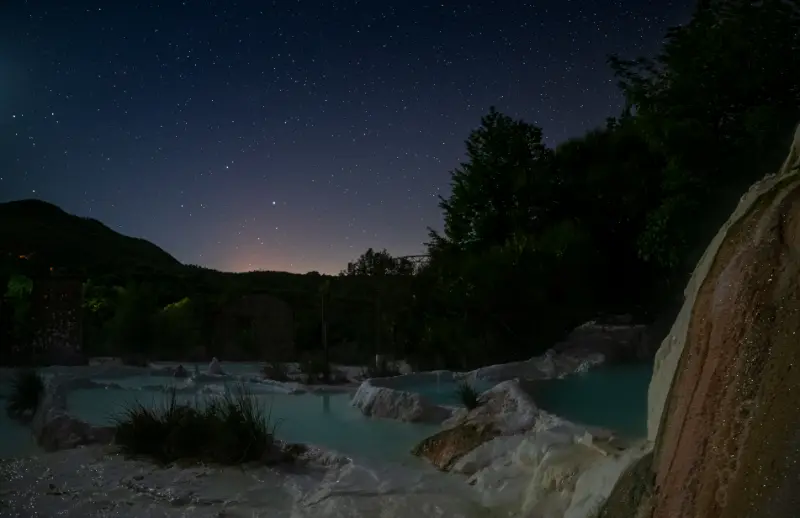
Thermal water emerges below Amiata at Bagni San Filippo, where mineral deposits have created white formations in the woods. The natural setting is attractive but fragile. Wear shoes with grip, respect barriers and never assume every pool shown online is safe or legally accessible. Combine the stop with Abbadia San Salvatore or a forest walk for a balanced day.
Seggiano
Seggiano is surrounded by olive groves and is associated with the Olivastra Seggianese cultivar. The village itself is small and steep, but food-minded travellers should pay attention to local olive oil. It is an excellent detour when moving between the Amiata slopes and Val d’Orcia, especially outside the busiest summer months.
Getting around Monte Amiata: driving and parking
A car is essential for making the most of Amiata. Distances are moderate, but roads curve around the mountain rather than crossing it directly. In winter, check snow conditions and equipment requirements before climbing. In summer and autumn, parking around popular forest areas can fill on weekends, so arrive early. Villages are best explored after parking at the edge of the historic core; steep lanes are more enjoyable on foot and may have restricted access.
A useful habit throughout Tuscany is to treat the brown or blue parking signs at the entrance to a town as your cue to stop looking for a “better” space closer to the centre. Historic streets were not built for modern traffic, and a ten-minute walk is usually preferable to worrying about a ZTL camera, squeezing through a medieval lane or discovering that the route ahead is residents-only.
A quieter way to experience Monte Amiata
For a quieter experience, drive the smaller roads between Santa Fiora, Montelaterone and Seggiano rather than spending the whole day around the summit. Autumn mornings can be misty below the forest and clear above it. Amiata also works beautifully as a bridge between two better-known regions: spend one day in Val d’Orcia, one on the mountain and one in southern Maremma, and the contrasts become obvious.
Where to eat
Look for chestnut dishes, porcini mushrooms, local cheeses, game and Seggiano olive oil. At roughly 1,400 metres, Hotel Le Macinaie in Località Prato Le Macinaie, Castel del Piano, sits directly in the beech forest and has its own restaurant. The location is particularly useful for hikers because you can start mountain activities without a long morning drive.
Opening days can change outside high season, and many small Tuscan restaurants close one or two days each week. For anywhere you would be disappointed to miss, reserve and confirm the opening time rather than building the whole day around an old listing.
Useful booking tools for this trip
Car rental: If this trip works better with your own wheels, Compare car rental prices before choosing the pickup point.
Where to stay
Abbadia San Salvatore gives you the most services and historical atmosphere. Santa Fiora is quieter and more romantic, while Castel del Piano is practical for the southern and western slopes. Le Macinaie is the choice if the mountain itself is the purpose of the trip and you prefer forest at the door to a town centre.
Want more accommodation options? Where to Stay in Tuscany: The Best Areas for Every Kind of Trip compares the best bases and makes it easier to choose the right location before you book.
How many days do you need?
With two days, spend one around Abbadia San Salvatore, the summit forest and Bagni San Filippo, and the second around Santa Fiora, Arcidosso and Castel del Piano. A third day can add Seggiano and a slower route toward Val d’Orcia. In autumn, leave extra time for walks and food rather than trying to cover every village.
If you are travelling for a week or more in Tuscany, an area like this works best as a genuine base rather than a single excursion. Unpacking for two or three nights gives you the freedom to see a famous place early, return to your accommodation for a break and go out again when the light and atmosphere improve in the evening.
Best time to visit Monte Amiata
Every season changes Amiata dramatically. Spring is fresh and green; summer is popular for hiking and cooler temperatures; autumn is outstanding for foliage, mushrooms and chestnuts; winter can bring skiing and snow-covered forest. Because altitude matters, always check mountain weather separately from forecasts for Siena or Grosseto.

Small practical details that make the trip better
Carry water, keep a light layer in the car and download an offline map before rural drives. In summer, do not assume that every village has shade beside the main attraction. In spring and autumn, keep flexible plans because a wet morning can become a brilliant afternoon. When visiting churches and monasteries, carry something to cover shoulders if needed, and when walking natural paths, use proper footwear rather than sandals chosen for the town.
Most importantly, do not measure a Tuscany day by the number of pins you managed to open on a map. The strongest memories often come from the hour that looked inefficient: a quiet piazza after lunch, a road through woodland, a conversation in a food shop or the decision to remain for sunset instead of driving to one more landmark.
For nearby city planning, continue with our guides to Pienza and Pitigliano
Is Monte Amiata worth visiting?
Yes—especially if you want Tuscany to feel like a place rather than a sequence of famous photographs. Monte Amiata rewards curiosity, slower travel and a willingness to look beyond the headline attraction. Give it enough time to develop its own rhythm and it can easily become the part of Tuscany you remember most clearly after the major cities have begun to blur together.
Planning your route without rushing
A realistic visit to Monte Amiata works better when you divide the map into small daily zones. Plan one anchor experience before lunch and one after it, then use the spaces between them for viewpoints, cafés and short walks. This also gives you room to adapt when a restaurant is full, a road is slower than expected or a place deserves more time. In rural Tuscany, flexibility is not wasted time; it is often what turns an itinerary into a trip that feels personal.