
Best Beaches in Tuscany: Wild Coves, Family Shores and Island Water
Tuscany is usually sold through vineyards and Renaissance skylines, yet its coastline can easily justify several days of a trip. The sea changes from long organised sandy beaches in Versilia to pine-backed shores in Maremma, rocky coves around Monte Argentario and startlingly clear water around Elba and the smaller islands. The “best” beach therefore depends less on a universal ranking and more on whether you want easy access, wild scenery, snorkelling or a family-friendly day.
Why this experience belongs in your Tuscany trip
For wild nature, look at Maremma and Marina di Alberese. For easy beach services, Versilia is hard to beat. Baratti combines sea and Etruscan history. Elba offers the greatest variety in a compact area, while Giglio rewards travellers willing to add a ferry journey. Some famous coves have regulated access in high season, so always check the latest rules.
1. Cala Violina
Set inside the Bandite di Scarlino reserve, Cala Violina is famous for pale sand, clear water and the walk through Mediterranean vegetation required to reach it. The official tourism site notes that access is limited in high season and online booking is required during regulated periods.
Do not arrive assuming you can park beside the beach. Check reservation and parking arrangements first, carry water and be prepared to walk.
2. Marina di Alberese
Inside the Maremma Regional Park, Marina di Alberese feels deliberately undeveloped: dunes, driftwood, pine forest and a broad shore replace the rows of beach clubs found elsewhere.
Access and parking are managed to protect the park and can be seasonal. Bring food and water, follow park instructions and do not expect extensive services on the sand.
3. Feniglia
The long sandy tombolo of Feniglia links Monte Argentario with the mainland and combines shallow water with a protected natural setting. Its length makes it easier to find space than at tiny coves.
Cycling is a good way to experience the reserve behind the beach. In summer, arrive earlier in the day for easier parking and cooler walking conditions.
4. Gulf of Baratti
Baratti is special because a day at the sea can be paired with Populonia and Etruscan archaeology. Pine trees, the curved gulf and darker sand give it a character unlike the classic white-pebble coves of the islands.
Plan beach and archaeology together instead of driving the area twice. Parking fills in high season, so early arrival is sensible.
5. Rimigliano Coastal Park
South of San Vincenzo, Rimigliano offers long stretches of beach backed by Mediterranean vegetation and pine forest. It is a good choice for travellers who want a natural setting without the more complicated access of a tiny cove.
Bring what you need for the day and use marked access paths through the protected coastal environment.
6. Lecciona near Viareggio
Lecciona is the wilder counterpoint to Versilia’s organised beach culture, set between Viareggio and Torre del Lago within the coastal park landscape.
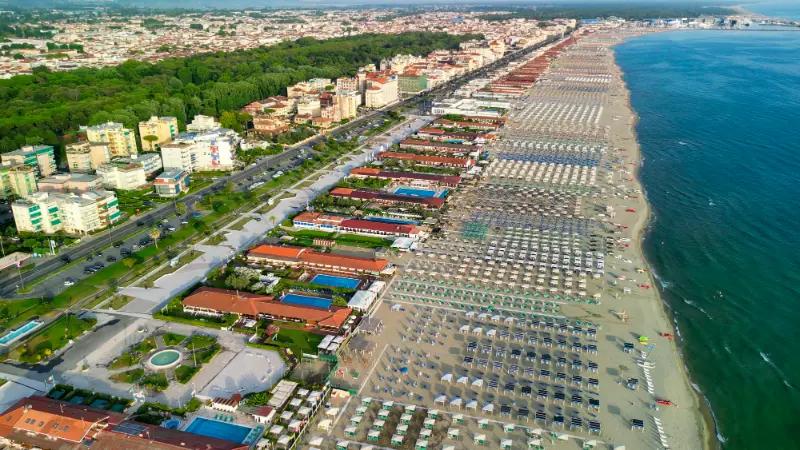
Expect a walk and fewer services than at a lido. It is ideal if you are staying in Viareggio but want one day that feels more natural.
7. Forte dei Marmi and Marina di Pietrasanta
These beaches represent the polished side of Tuscany’s coast: broad sand, established bathing clubs, restaurants and easy summer infrastructure, all with the Apuan Alps rising behind the coastal plain.
Beach-club prices and availability vary widely, so reserve if you want a specific establishment. Free-beach areas exist but are more limited than on wilder stretches of coast.
8. Sansone Beach, Elba
Near Portoferraio, Sansone is known for white pebbles and clear turquoise water that is excellent for snorkelling in calm conditions.
The access path is not the same as walking onto a city beach. Wear practical footwear and carry only what you need.
9. Fetovaia, Elba
Fetovaia combines fine sand, clear water and a sheltered setting on the island’s south-western coast. It is one of Elba’s most photographed beaches for good reason.
Popularity is the trade-off. Go early or in shoulder season if you want to appreciate the bay without spending the day focused on parking.
10. Cannelle and Arenella, Giglio
Giglio’s coves offer pale water and an island atmosphere that feels distinct from mainland Tuscany. Cannelle is convenient and family-friendly; Arenella is attractive for swimming and snorkelling.

Ferry timetables and island transport shape the day. If you are visiting only for one day, choose one or two beaches rather than trying to circle the island.
How to plan it well
A coastal road trip works best when you choose one zone rather than hopping randomly between famous names. Versilia, the Etruscan Coast, Maremma and the islands each deserve their own base. Driving from Viareggio to Monte Argentario for a beach day wastes the very thing you came for: time by the sea.
If you are travelling with children, look for easy sandy access, nearby shade and services. If you are after snorkelling or dramatic water, Elba and rocky promontories are stronger. For quiet, natural beaches, accept that you may need to walk and carry your own supplies.
Best time to go
June and September often give the best compromise between warm water and manageable crowds. July and August are lively but require more booking and earlier starts. Spring and autumn are beautiful for coastal walks even when swimming is not the main goal.
How to choose a Tuscan beach without wasting the day
Think about a beach day in Tuscany as part of the wider itinerary rather than a standalone box to tick. The coast ranges from organised lidos to protected coves where access is deliberately limited, so the right choice depends on how much comfort and walking you want. A day becomes much easier when you decide in advance what the main experience is and what can remain optional. That matters in Tuscany because short distances on a map can hide slow roads, parking outside historic centres, queues at famous sites or long walks from the car. Give the main stop enough room to breathe, then add only one or two secondary ideas nearby. If everything goes smoothly you can always do more; if not, the day still feels complete.
For transport, use a car for the most flexible coastal exploration, but verify parking or seasonal shuttles before setting out for protected beaches. Before leaving your accommodation, save the exact parking area, station, meeting point or trailhead rather than only the attraction name. This small habit prevents navigation apps from sending you through restricted streets or onto roads that are technically correct but impractical. In rural Tuscany, fuel, shade, public toilets and food options can be less frequent than visitors expect, while city centres often require the opposite strategy: leave the car outside and walk. The best choice is usually the simplest one, not the route with the most stops.
Booking is worth handling selectively. Beach clubs and regulated sites may need reservations in high summer; a simple free beach usually needs less planning but more self-sufficiency. Reserve what would genuinely disappoint you if unavailable, but do not schedule every hour. Tuscany is full of places where a long lunch, a sudden viewpoint or a small church can alter the plan for the better. Leave gaps between timed activities, especially if driving, and avoid stacking two high-demand reservations with no buffer. When opening hours or access rules matter, check the official source the evening before rather than relying on screenshots or old travel posts saved weeks earlier.
Timing can transform the same place. Early morning and late afternoon are calmer and kinder in midsummer, while shoulder-season beach walks can be wonderful even when swimming is secondary. Early starts are useful for popular sites, but not every day needs to begin at dawn. Sometimes the better choice is a slow morning followed by a later visit when tour groups are leaving. In summer, use the hottest hours for lunch, museums or rest; in cooler months, make the most of shorter daylight. If photography matters, remember that Tuscany’s strongest light is often at the edges of the day, when stone, hills and water gain depth and the atmosphere becomes calmer.
The most common mistake is choosing a famous cove without reading how you actually reach it. A stronger approach is to choose quality over quantity and let the location set the pace. Wear shoes suited to uneven paving, gravel, wet surfaces or trails where relevant, carry water, and keep a light layer in the car because hill and coastal weather can change quickly. If travelling with children or anyone with limited mobility, check the final approach rather than assuming a place labelled accessible on a map is effortless in practice. Historic Tuscany is beautiful precisely because it was not designed around modern convenience.
Finally, families should prioritise shade and easy access, while snorkellers and hikers can accept rougher approaches for clearer water and wilder scenery. This is where personal travel style matters more than rankings. A visitor who loves art may happily spend three hours in one museum; another will remember the market outside more vividly. Some travellers want a polished spa or organised beach club, while others prefer a rough path to a natural pool or quiet cove. Use guides to understand the options, then choose the version that matches your energy, budget and route. The goal is not to reproduce someone else’s perfect Tuscany, but to make your own days feel coherent and enjoyable.
Useful booking tools for this trip
Tours & experiences: For guided visits, attraction tickets and bookable experiences in Tuscany, See tours & tickets
Car rental: If this trip works better with your own wheels, Compare car rental prices before choosing the pickup point.
Useful official information
The official regional tourism overview of the most beautiful beaches in Tuscany is useful for current access notes, including seasonal regulation at Cala Violina.
Where to stay for this trip: Where to Stay in Maremma: Coast, Countryside, Hot Springs and Wild Tuscany; Where to Stay on Elba Island: Best Towns and Beaches for Your Trip. Check prices & availability
Final thoughts
Tuscany’s coast is too varied for one winner. Choose Maremma for wilderness, Versilia for comfort, Baratti for history and sea together, or Elba for the widest choice of coves and colours.