
Best Thermal Baths in Tuscany: Hot Springs, Spa Towns and Natural Pools
Thermal water is one of Tuscany’s most enjoyable surprises. The region’s hot springs are not one single experience: some are wild and free, some sit inside historic villages, and others are organised spa complexes where you can spend half a day in warm pools and wellness areas. Choosing the right one depends on whether you want scenery, comfort, silence, easy access or the thrill of bathing outdoors.
Why this experience belongs in your Tuscany trip
For a first visit, Saturnia gives the most dramatic natural setting; Bagno Vignoni is best for atmosphere and a beautiful historic village; Bagni San Filippo feels more wooded and informal; Rapolano is convenient if your route is centred on Siena. Do not assume every thermal pool you see can be entered: the famous water-filled square in Bagno Vignoni, for example, is for looking at rather than swimming in.
1. Cascate del Mulino, Saturnia
Saturnia is the image most travellers have in mind when they think of Tuscan hot springs: warm sulphurous water flows through pale limestone pools beside an old mill in the Maremma countryside. The official regional tourism site describes the water as emerging at about 37.5°C and the Cascate del Mulino as free open-air baths.

Arrive early or outside peak weekend hours if you want a calmer experience. Surfaces are slippery, facilities are basic compared with a spa, and parking conditions can change. Never leave valuables visible in a car.
2. Bagni San Filippo
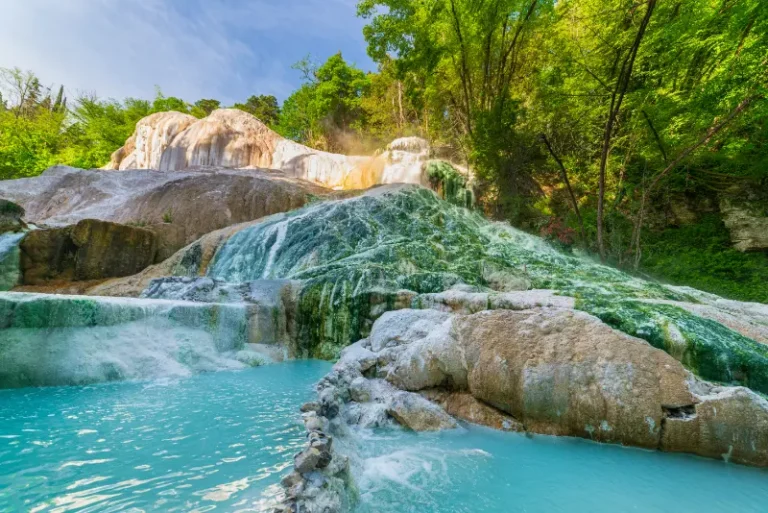
On the slopes between Val d’Orcia and Monte Amiata, Bagni San Filippo combines hot water, woodland and extraordinary white mineral formations. The best-known formation is the Balena Bianca, created by deposits from the thermal water.
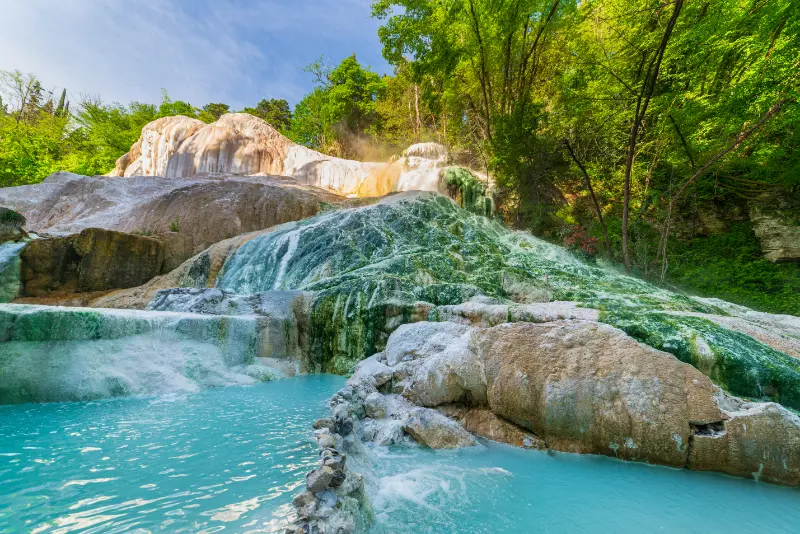
The woodland path can be muddy and uneven. Wear shoes you do not mind getting wet and respect any barriers around fragile formations. Parking is limited along the village roads in busy periods.
3. Bagno Vignoni
Bagno Vignoni is unique because the centre of the village is dominated by a historic thermal pool, turning the main square into a sheet of steaming water. The surrounding spa hotels and wellness facilities let you bathe in thermal water without entering the protected central basin.
Come early morning or near dusk for the quietest atmosphere around the square. If your priority is bathing, reserve a spa facility rather than arriving expecting to swim in the historic pool.
4. Rapolano Terme
Rapolano is one of the easiest thermal stops to combine with Siena and the Crete Senesi. Its established thermal centres offer organised pools and services, making it a good choice for travellers who prefer changing rooms, loungers and a predictable half-day rather than a natural spring.
Check the chosen facility’s admission rules and reserve on weekends or holidays. The town works well as a restorative stop after several days of city sightseeing.
5. San Casciano dei Bagni
This elegant hill town has been associated with thermal water since antiquity and sits in a quieter corner of southern Tuscany. The appeal is the combination of landscape, archaeological history and wellness rather than one single Instagram-famous pool.

It suits travellers who are already exploring the Valdichiana or southern Val d’Orcia and want a slower spa experience. Check whether the facility you want requires advance booking.
6. Montecatini Terme
Montecatini represents the grand spa-town tradition rather than the wild-spring experience. Its historic architecture, parks and thermal culture are part of the transnational UNESCO site “The Great Spa Towns of Europe,” giving the town a very different character from Saturnia.
Choose Montecatini if you enjoy architecture and old European spa-town atmosphere as much as bathing. It is also practical by train from Florence and Lucca.
7. Venturina Terme and the Val di Cornia
Near the Etruscan Coast, Venturina offers thermal facilities that fit naturally into an itinerary mixing sea, archaeological sites and wine country. It is less famous internationally, which can be an advantage if your route already includes Baratti, Populonia or Suvereto.
This is a good wet-weather alternative on a coastal holiday. Check day-access options at individual facilities before driving there.
8. Equi Terme in Lunigiana
Equi Terme sits beneath the Apuan Alps in a rugged northern landscape, pairing thermal traditions with caves and mountain scenery. It feels far removed from the classic cypress-road image of Tuscany.
Distances in Lunigiana are deceptive on the map because mountain roads slow journeys. Combine Equi with a focused northern-Tuscany itinerary rather than trying to reach it as a quick add-on from Siena or Val d’Orcia.
How to plan it well
Natural hot springs and paid spas solve different needs. Free outdoor sites are atmospheric but can mean slippery access, changing in the car and limited services. Spa complexes cost more but make sense in cold weather, with children, or when you want a proper half-day of relaxation.
Build thermal time into the geography of your trip. Saturnia belongs naturally with Pitigliano and Maremma; Bagno Vignoni and Bagni San Filippo fit Val d’Orcia and Monte Amiata; Rapolano works with Siena and the Crete Senesi. This avoids spending several hours driving for a one-hour soak.
Best time to go
Cooler months are wonderful because warm water feels especially good and outdoor sites are often less crowded. Summer still works, but midday heat can make thermal bathing less appealing. After heavy rain, natural sites can look and feel different, so check current conditions.
How to choose the right thermal experience
Think about Tuscan thermal baths as part of the wider itinerary rather than a standalone box to tick. A free natural spring, a historic spa town and a full-service wellness centre can all be excellent, but they solve very different needs. A day becomes much easier when you decide in advance what the main experience is and what can remain optional. That matters in Tuscany because short distances on a map can hide slow roads, parking outside historic centres, queues at famous sites or long walks from the car. Give the main stop enough room to breathe, then add only one or two secondary ideas nearby. If everything goes smoothly you can always do more; if not, the day still feels complete.
For transport, a car is usually easiest for natural springs in southern Tuscany, while spa towns such as Montecatini can work well by train. Before leaving your accommodation, save the exact parking area, station, meeting point or trailhead rather than only the attraction name. This small habit prevents navigation apps from sending you through restricted streets or onto roads that are technically correct but impractical. In rural Tuscany, fuel, shade, public toilets and food options can be less frequent than visitors expect, while city centres often require the opposite strategy: leave the car outside and walk. The best choice is usually the simplest one, not the route with the most stops.
Booking is worth handling selectively. Paid spas often need reservations at weekends, whereas natural springs require more attention to parking, weather and current access conditions. Reserve what would genuinely disappoint you if unavailable, but do not schedule every hour. Tuscany is full of places where a long lunch, a sudden viewpoint or a small church can alter the plan for the better. Leave gaps between timed activities, especially if driving, and avoid stacking two high-demand reservations with no buffer. When opening hours or access rules matter, check the official source the evening before rather than relying on screenshots or old travel posts saved weeks earlier.
Timing can transform the same place. Cool mornings, evenings and shoulder seasons make hot water more appealing and often reduce the pressure at famous outdoor pools. Early starts are useful for popular sites, but not every day needs to begin at dawn. Sometimes the better choice is a slow morning followed by a later visit when tour groups are leaving. In summer, use the hottest hours for lunch, museums or rest; in cooler months, make the most of shorter daylight. If photography matters, remember that Tuscany’s strongest light is often at the edges of the day, when stone, hills and water gain depth and the atmosphere becomes calmer.
The most common mistake is assuming every thermal site has changing rooms, showers, lockers and easy paths. A stronger approach is to choose quality over quantity and let the location set the pace. Wear shoes suited to uneven paving, gravel, wet surfaces or trails where relevant, carry water, and keep a light layer in the car because hill and coastal weather can change quickly. If travelling with children or anyone with limited mobility, check the final approach rather than assuming a place labelled accessible on a map is effortless in practice. Historic Tuscany is beautiful precisely because it was not designed around modern convenience.
Finally, choose comfort if you want a restorative half-day, and choose a natural site if scenery and spontaneity matter more than facilities. This is where personal travel style matters more than rankings. A visitor who loves art may happily spend three hours in one museum; another will remember the market outside more vividly. Some travellers want a polished spa or organised beach club, while others prefer a rough path to a natural pool or quiet cove. Use guides to understand the options, then choose the version that matches your energy, budget and route. The goal is not to reproduce someone else’s perfect Tuscany, but to make your own days feel coherent and enjoyable.
Useful booking tools for this trip
Tours & experiences: For guided visits, attraction tickets and bookable experiences in Tuscany, See tours & tickets
Useful official information
For official regional information on Saturnia, see Cascate del Mulino; for Bagni San Filippo use the current Visit Tuscany destination page before travelling.
Where to stay for this trip: Where to Stay in Maremma: Coast, Countryside, Hot Springs and Wild Tuscany. Check prices & availability
Final thoughts
The best thermal bath is the one that fits your route and travel style. Choose Saturnia for spectacle, Bagno Vignoni for atmosphere, Bagni San Filippo for nature, or an organised spa when comfort matters more than wilderness.