Most Romantic Places to Stay in Tuscany: Beautiful Hotels for Couples
Tuscany is naturally suited to a romantic trip because so much of the experience happens between the official sights: a quiet breakfast in a garden, the drive back from a hill town at sunset, a long dinner where nobody is checking the time. The best romantic hotels understand this and give you reasons not to rush out every morning.
For couples, I would choose atmosphere and setting before a long list of amenities. A city palazzo works for art and restaurants; a vineyard estate suits wine and slow afternoons; a spa in southern Tuscany can make the accommodation the destination. The important thing is to match the property to the kind of days you actually want together.
Florence: art, river walks and two genuinely special city stays
Florence works best for couples who want the hotel to sit inside the rhythm of the city: museums in the morning, a pause before dinner and a walk along the Arno after dark. Staying very central is worth paying for on a short romantic trip because it makes spontaneous returns to the room easy.
Santa Maria Novella – WTB Hotels — Piazza Santa Maria Novella 1. The location is especially useful if you arrive by train, while the historic square gives the stay more atmosphere than a purely station-side hotel. Check Santa Maria Novella prices & availability
Brunelleschi Hotel — Piazza Santa Elisabetta 3, a few steps from the Duomo. Its medieval tower and extremely central setting make it one of the more distinctive choices for a couple focused on art and evening walks. Check Brunelleschi Hotel prices & availability
For neighbourhood-by-neighbourhood advice, see Where to Stay in Florence: Best Neighborhoods and Hotels for a First Visit.
Siena and its countryside: medieval evenings or a quiet estate
Siena feels particularly romantic after the day visitors leave. Staying inside or just outside the walls lets you see Piazza del Campo late in the evening and gives a very different impression from a rushed day trip.
Grand Hotel Continental Siena — Via Banchi di Sopra 85, in the historic centre. This is the choice for couples who want a polished city stay with Siena literally outside the door. Check Grand Hotel Continental Siena prices & availability
Hotel Palazzo di Valli — Via Enea Silvio Piccolomini 135, just outside the densest part of the centre. Its villa setting and garden make it a calmer alternative, especially useful for couples combining Siena with a road trip. Check Palazzo di Valli prices & availability
Compare the city’s different bases in Where to Stay in Siena: Best Areas for Medieval Atmosphere, Parking and Views.
Chianti: vineyards, slow afternoons and borgo hotels
Chianti is a stronger choice than Florence if the romantic idea is wine country, long lunches and time at the property itself. A car is usually essential, and the best stay is often one where you are happy to spend half a day without going anywhere.
Borgo San Felice — Località San Felice, Castelnuovo Berardenga. A restored historic borgo surrounded by vineyards, it works especially well for couples who want the landscape and hotel to feel like one experience. Check Borgo San Felice prices & availability
COMO Castello Del Nero — Strada Spicciano 7, Barberino Tavarnelle. This is a more resort-like luxury option, with a countryside setting that still keeps Florence and Siena within reasonable reach by car. Check COMO Castello Del Nero prices & availability
Before choosing the estate, compare villages and driving trade-offs in Where to Stay in Chianti: Best Villages, Wine Estates and Country Hotels.
Val d’Orcia: Pienza, Montalcino and the landscape people dream about
For classic Tuscan scenery, Val d’Orcia is hard to beat. Couples who want evening strolls should stay in a town such as Pienza or Montalcino; those who want privacy, pools and sunrise views will usually prefer a countryside estate.
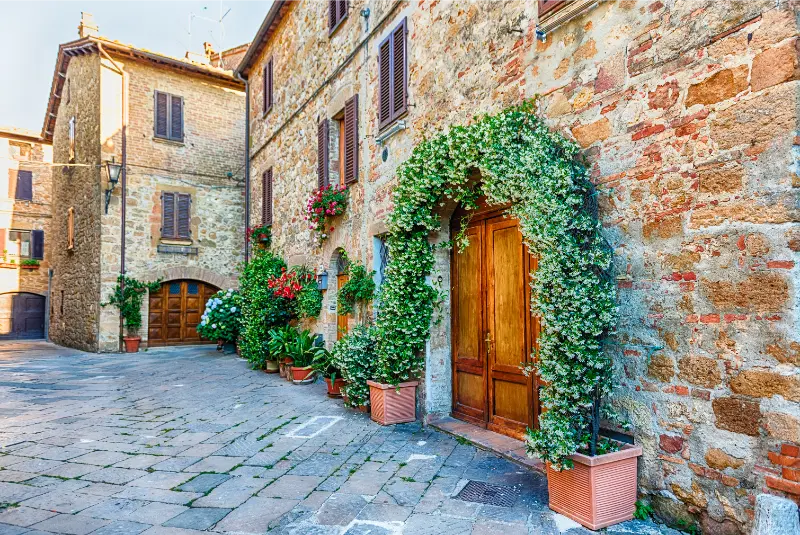
Relais Il Chiostro di Pienza — Corso il Rossellino 26, in Pienza’s historic centre. It is a practical romantic choice if you want to walk to dinner and see the town before and after the day-trip crowds. Check Il Chiostro di Pienza prices & availability
Castiglion del Bosco, A Rosewood Hotel — near Montalcino. This is a destination-style luxury estate for couples who want the property, vineyards and countryside to be a major part of the trip rather than simply a base for sightseeing. Check Castiglion del Bosco prices & availability
For the practical differences between Pienza, Montalcino, San Quirico and rural estates, read Where to Stay in Val d’Orcia: Pienza, Montalcino, San Quirico or the Countryside?.
Southern Tuscany and Maremma: thermal water, wild coast and more privacy
Maremma suits couples who want fewer crowds and more space. It can mean a thermal stay around Saturnia, a countryside resort near Castiglione della Pescaia or a coastal base where the sea becomes part of the trip.
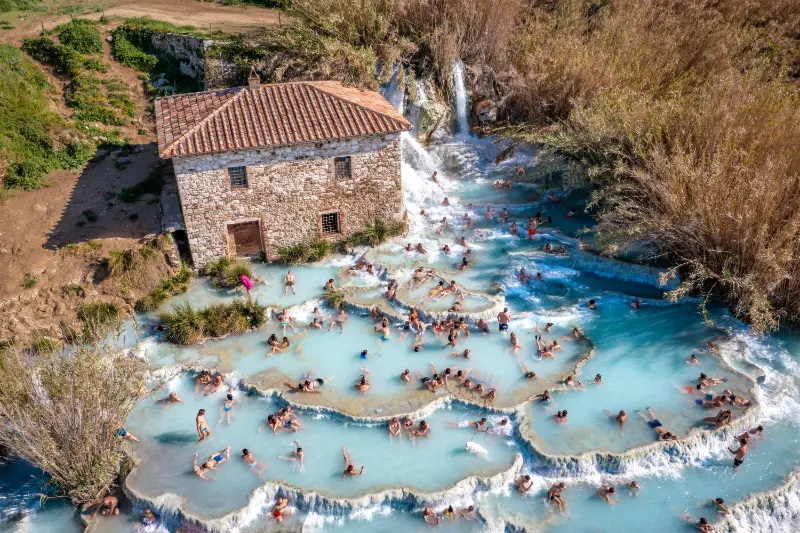
Terme di Saturnia Natural Spa & Golf Resort — Via della Follonata, Saturnia. Choose it when thermal pools and spa time are central to the trip; staying on site avoids having to drive after treatments. Check Terme di Saturnia prices & availability
The Sense Experience Resort — Viale Italia 315, Follonica. This is the sea-first option, with a beach setting that works especially well if you want to combine a romantic resort stay with northern Maremma. Check The Sense Experience Resort prices & availability
For Saturnia, the coast, Argentario and inland villages, use Where to Stay in Maremma: Coast, Countryside, Hot Springs and Wild Tuscany.
How I would choose between them
For a first romantic trip, a very effective combination is two or three nights in Florence or Siena plus two or three nights in the countryside. This gives you art, restaurants and evening walks first, then space, wine and slower days. If the trip is mainly about relaxation, skip the city entirely and choose Val d’Orcia, Chianti or Maremma according to whether landscape, wine or thermal water matters most.
The properties above are deliberately different rather than a ranking. Rates and availability vary greatly by season, so compare the total cost for your exact dates before booking.
Useful booking tools for this trip
Car rental: If this trip works better with your own wheels, Compare car rental prices before choosing the pickup point.
Useful official information
For a romantic itinerary, combine one city stay with one countryside stay rather than trying to make every night a different special hotel.
How to choose the right base
The strongest Tuscany itineraries usually begin with the right base rather than the longest list of places. If you want museums, restaurants and evening walks, stay in a city and use trains for day trips. If you want hill towns, vineyards and sunrise drives, choose the countryside and accept that a car becomes part of the experience. Coast and island trips work differently again: the quality of the beach, parking and ferry logistics can matter more than proximity to Florence. Before booking, write down the three places you most want to see and check the real travel time from your accommodation at the hour you expect to travel. Tuscany looks compact on a map, but winding roads, ZTL zones and hill-town parking can turn a short distance into a slow transfer.
What to check before booking
Do not choose accommodation only from room photographs. Check the exact location, whether breakfast and parking are included, the final access road, air conditioning if travelling in summer, and whether there is a lift if stairs are difficult. In rural properties, ask how far the nearest restaurant is and whether dinner is available on site. In historic centres, verify whether taxis can reach the door and whether the property lies inside a restricted traffic zone. Cancellation conditions matter too, especially if your trip includes ferries or several prepaid activities. A beautiful stay is much easier to enjoy when the practical details match the way you actually travel.
A note on prices and seasonality
Accommodation prices in Tuscany can change dramatically by season, day of the week and local events. Florence during major fairs, Siena around the Palio, the coast in August and wine areas during harvest can all behave differently from an ordinary midweek stay. Rather than quoting a fixed nightly price that will soon be wrong, compare the total cost for your exact dates, including parking, breakfast, city tax and any resort fees. Booking a slightly more expensive room in the right location can be cheaper overall if it removes taxis, parking charges or hours of driving. Spring and autumn often offer the best balance of atmosphere and availability, but popular countryside properties can still fill months ahead.
How many nights should you stay?
For a first trip, changing hotel every night usually creates more work than value. Two or three nights in one base lets you experience evenings and mornings when day trippers have gone, and it gives you flexibility if weather changes. Florence deserves at least two nights if museums are important; Siena works well for one or two; countryside areas such as Val d’Orcia or Chianti become much more rewarding with two or three. If you have a full week, a city base plus a countryside base is often more satisfying than trying to sleep in four different towns. The point is not to minimise driving at all costs, but to keep packing and check-in from becoming the main rhythm of the holiday.
Final thoughts
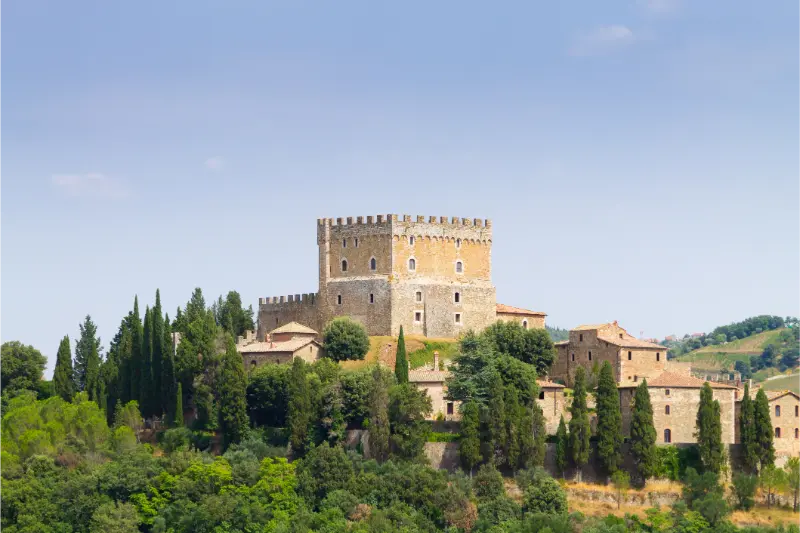
The best place to stay in Tuscany is not automatically the most famous hotel or the prettiest village. It is the place that makes your days easier and your evenings enjoyable. Choose location first, then atmosphere, then amenities. When those three fit your itinerary, even a simple room can feel like the right decision. When they do not, a spectacular property can leave you spending too much of the trip in the car. Use the accommodation as part of the route, not as an isolated purchase, and Tuscany becomes much easier to explore at a human pace.
Planning your stay around real travel days
Accommodation choices become clearer when you sketch two or three real days rather than thinking in abstract categories. Imagine where you will wake, how long breakfast takes, whether you need to collect a car, where the first parking area or station is, and how you will return after dinner. This simple exercise exposes awkward locations quickly. A hotel that looks central to the region may still be inconvenient if every road begins with twenty minutes of narrow lanes, while a city hotel that appears less picturesque may give you effortless evenings and more time on foot. The best base supports the itinerary quietly: it should reduce friction rather than become another attraction you have to manage.
Also think about the final day. If you have an early flight or train, spending the last night closer to Florence, Pisa or a main station can be smarter than forcing a dawn departure from the countryside. Conversely, if your trip ends with several quiet days, moving out of the city can make the holiday feel as if it is slowing down rather than simply stopping. Tuscany rewards this kind of sequencing. Begin with the places where timed museums and transport matter, then finish somewhere where the schedule can loosen. The accommodation becomes part of the emotional shape of the trip, not just a list of beds.
Finally, read recent guest comments for practical patterns rather than individual complaints. Repeated mentions of road noise, difficult parking, weak air conditioning, steep access, excellent staff or unusually good breakfasts are more useful than a single dramatic review. Compare room categories too: an old villa may have wonderful suites and very small standard rooms, while a modern hotel may be more consistent. If a particular feature matters—balcony, pool view, twin beds, connecting rooms, accessible shower—request it explicitly and confirm it with the property. A little precision before arrival is often what turns a good stay into an easy one.