Where to Stay in Tuscany Without a Car: Best Bases for Trains and Easy Day Trips
You can have an excellent Tuscany trip without renting a car, but the accommodation strategy needs to change. Instead of choosing the prettiest farmhouse, choose a base with strong train or bus connections and a historic centre you enjoy in the evening. Florence is the obvious hub, but Pisa, Lucca, Arezzo and Siena can all play useful roles depending on the route.
The key is to stay close enough to transport that day trips remain easy without sleeping directly beside a noisy station. A ten-minute walk is usually ideal: near enough for an early departure, far enough to feel part of the city. Rural Tuscany can then be added through organised day tours, private transfers or carefully chosen bus routes rather than forcing every village into the rail network.
Florence: the strongest all-round base
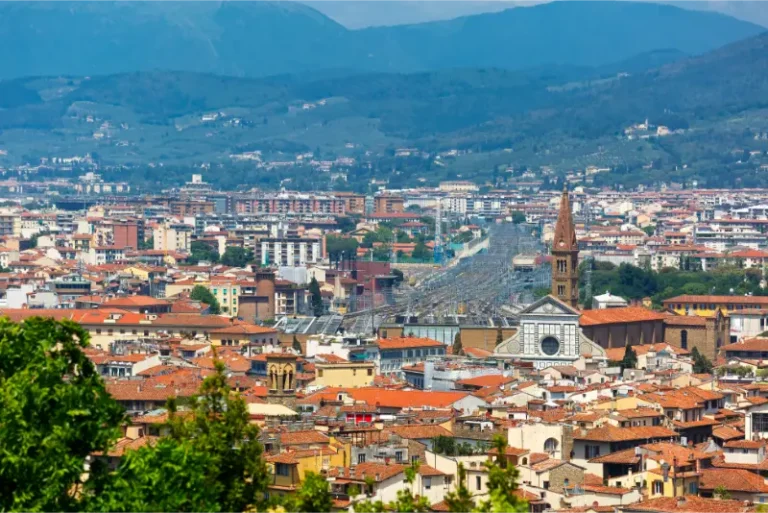
Florence Santa Maria Novella is one of Tuscany’s most useful rail hubs. Direct regional trains make Pisa, Lucca, Arezzo and Prato straightforward, while high-speed services connect the city to Rome, Bologna, Milan and Venice.

Stay between the station and the historic centre rather than far outside the city. This gives you both transport and evening atmosphere. The Santa Maria Novella district is particularly practical for travellers with luggage.
Accommodation details: Where to Stay in Florence: Best Neighborhoods and Hotels for a First Visit.
Pisa: excellent for airport and western Tuscany
Pisa works well if you fly into Pisa Airport or plan to explore Lucca and the coast. The station is a major regional hub, and the city is compact enough that you can stay between Pisa Centrale and the historic centre.
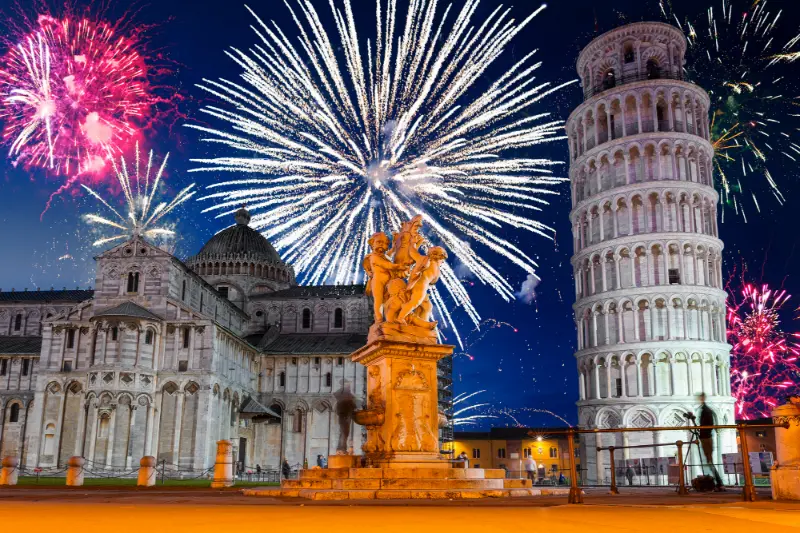
For a short trip, this can be more efficient than travelling immediately to Florence after a late flight. Pisa also gives you easy access to Lucca without changing hotels.
See current stays: Compare hotels on Booking.com
Lucca: a beautiful slow base
Lucca station sits just outside the walls, making the city unusually easy for rail travellers. You can walk into the historic centre with luggage and spend evenings on the walls or in the compact old town.
Connections are not as broad as Florence’s, but Lucca is a rewarding base for a few nights if your trip focuses on north-western Tuscany. Our Lucca guide explains the city layout.
See current stays: Compare hotels on Booking.com
Arezzo: underrated and well connected
Arezzo is on the main rail line between Florence and Rome and is an excellent choice for travellers who want fewer crowds and easy access to a real historic centre.
Staying here works particularly well for a second Tuscany base after Florence. Cortona is accessible via the Camucia-Cortona station plus local transport, though hill-town connections require more planning than direct city trains.
See current stays: Compare hotels on Booking.com
Siena: beautiful but bus logic matters
Siena is not on the main Florence-Rome rail line, and its station lies outside and below the historic centre. Buses can be more convenient from Florence because they arrive closer to the old town.
If you stay in Siena without a car, choose accommodation inside or near the walls and accept that some day trips will be easier by organised tour. The reward is having Siena itself after day visitors leave.
Accommodation details: Where to Stay in Siena: Best Areas for Medieval Atmosphere, Parking and Views.
What not to choose without a car
An isolated agriturismo, remote winery or country villa can be wonderful, but not if every meal requires an expensive taxi that may need advance booking. Do not assume a property offering ‘transfers’ provides an on-demand shuttle to towns all day.
If you want one countryside night, arrange the transfer before booking the room. Otherwise, enjoy rural Tuscany through a guided experience and keep your accommodation where trains and restaurants are effortless.
Places worth considering
Hotel Santa Maria Novella — is particularly convenient for Florence Santa Maria Novella station while still facing one of the city’s historic squares. Check rates and availability prices & availability
Hotel Athena — can work in Siena for travellers arriving by bus or taxi who want to stay inside the walls and explore on foot. Check rates and availability prices & availability
These are examples rather than a fixed ranking. Availability, services and rates change, so compare the location and conditions for your dates before booking.
Useful official information
Read our Tuscany by train and Tuscany without a car guides, and verify current timetables with Trenitalia and Autolinee Toscane.
How to choose the right base
The strongest Tuscany itineraries usually begin with the right base rather than the longest list of places. If you want museums, restaurants and evening walks, stay in a city and use trains for day trips. If you want hill towns, vineyards and sunrise drives, choose the countryside and accept that a car becomes part of the experience. Coast and island trips work differently again: the quality of the beach, parking and ferry logistics can matter more than proximity to Florence. Before booking, write down the three places you most want to see and check the real travel time from your accommodation at the hour you expect to travel. Tuscany looks compact on a map, but winding roads, ZTL zones and hill-town parking can turn a short distance into a slow transfer.
Useful booking tools for this trip
Trains & buses: Compare trains & buses when building the transport part of the trip.
What to check before booking
Do not choose accommodation only from room photographs. Check the exact location, whether breakfast and parking are included, the final access road, air conditioning if travelling in summer, and whether there is a lift if stairs are difficult. In rural properties, ask how far the nearest restaurant is and whether dinner is available on site. In historic centres, verify whether taxis can reach the door and whether the property lies inside a restricted traffic zone. Cancellation conditions matter too, especially if your trip includes ferries or several prepaid activities. A beautiful stay is much easier to enjoy when the practical details match the way you actually travel.
A note on prices and seasonality
Accommodation prices in Tuscany can change dramatically by season, day of the week and local events. Florence during major fairs, Siena around the Palio, the coast in August and wine areas during harvest can all behave differently from an ordinary midweek stay. Rather than quoting a fixed nightly price that will soon be wrong, compare the total cost for your exact dates, including parking, breakfast, city tax and any resort fees. Booking a slightly more expensive room in the right location can be cheaper overall if it removes taxis, parking charges or hours of driving. Spring and autumn often offer the best balance of atmosphere and availability, but popular countryside properties can still fill months ahead.
How many nights should you stay?
For a first trip, changing hotel every night usually creates more work than value. Two or three nights in one base lets you experience evenings and mornings when day trippers have gone, and it gives you flexibility if weather changes. Florence deserves at least two nights if museums are important; Siena works well for one or two; countryside areas such as Val d’Orcia or Chianti become much more rewarding with two or three. If you have a full week, a city base plus a countryside base is often more satisfying than trying to sleep in four different towns. The point is not to minimise driving at all costs, but to keep packing and check-in from becoming the main rhythm of the holiday.
Final thoughts
The best place to stay in Tuscany is not automatically the most famous hotel or the prettiest village. It is the place that makes your days easier and your evenings enjoyable. Choose location first, then atmosphere, then amenities. When those three fit your itinerary, even a simple room can feel like the right decision. When they do not, a spectacular property can leave you spending too much of the trip in the car. Use the accommodation as part of the route, not as an isolated purchase, and Tuscany becomes much easier to explore at a human pace.
Planning your stay around real travel days
Accommodation choices become clearer when you sketch two or three real days rather than thinking in abstract categories. Imagine where you will wake, how long breakfast takes, whether you need to collect a car, where the first parking area or station is, and how you will return after dinner. This simple exercise exposes awkward locations quickly. A hotel that looks central to the region may still be inconvenient if every road begins with twenty minutes of narrow lanes, while a city hotel that appears less picturesque may give you effortless evenings and more time on foot. The best base supports the itinerary quietly: it should reduce friction rather than become another attraction you have to manage.
Also think about the final day. If you have an early flight or train, spending the last night closer to Florence, Pisa or a main station can be smarter than forcing a dawn departure from the countryside. Conversely, if your trip ends with several quiet days, moving out of the city can make the holiday feel as if it is slowing down rather than simply stopping. Tuscany rewards this kind of sequencing. Begin with the places where timed museums and transport matter, then finish somewhere where the schedule can loosen. The accommodation becomes part of the emotional shape of the trip, not just a list of beds.
Finally, read recent guest comments for practical patterns rather than individual complaints. Repeated mentions of road noise, difficult parking, weak air conditioning, steep access, excellent staff or unusually good breakfasts are more useful than a single dramatic review. Compare room categories too: an old villa may have wonderful suites and very small standard rooms, while a modern hotel may be more consistent. If a particular feature matters—balcony, pool view, twin beds, connecting rooms, accessible shower—request it explicitly and confirm it with the property. A little precision before arrival is often what turns a good stay into an easy one.