
7 Days in Tuscany: The Best First-Trip Itinerary by City and Countryside
7 Days in Tuscany: The Best First-Trip Itinerary by City and Countryside is designed as a realistic route rather than a list of places that merely fit on a map.
A week is the sweet spot for a first Tuscany trip. It is long enough to include Florence, Siena, a real countryside stay and the western cities of Pisa and Lucca, yet short enough that every hotel change still needs a reason. The route below balances famous places with slower moments and avoids the most common mistake: driving back and forth across the region because every night was booked before the itinerary was mapped.
Itinerary at a glance
Use three bases: Florence for two nights, Siena/Val d’Orcia for three, and Lucca or Pisa for the final two. Collect the car after Florence, use it through Chianti and southern Tuscany, then return it before or after reaching the west depending on your departure airport. This creates a loop rather than a series of day trips from one city.
Travel times in Tuscany are shaped by hills, traffic, parking and the final walk into historic centres. A route that looks short in kilometres can still fill a morning once you include coffee, a scenic stop and ten minutes finding the right car park. The schedules below deliberately leave margin for those real moments.
Day-by-day Tuscany itinerary
Day 1: Arrive and meet Florence on foot
Keep the arrival day simple. Walk from Santa Maria Novella toward the Duomo, continue to Piazza della Signoria and reach the Arno without committing to a major museum unless you arrive early. The first hours are better used understanding the compact centre and adjusting to the city’s pace. Cross into Oltrarno for dinner and save the biggest museum reservation for the next morning.
If you arrive by air at Florence, the tram connection makes the centre easier than collecting a car. If you land at Pisa, the train route to Florence is still generally more practical than driving into the historic centre. This first night should reduce logistics, not create them.
Day 2: Florence’s masterpieces and a sunset view
Reserve either the Uffizi or Accademia, then build the rest of the day around that fixed time. Add Santa Croce, San Lorenzo or Palazzo Pitti according to your interests, but leave two unplanned hours. Florence becomes tiring when every church and museum is turned into an appointment. A relaxed lunch and a walk along the Arno restore the sense of place between major works.
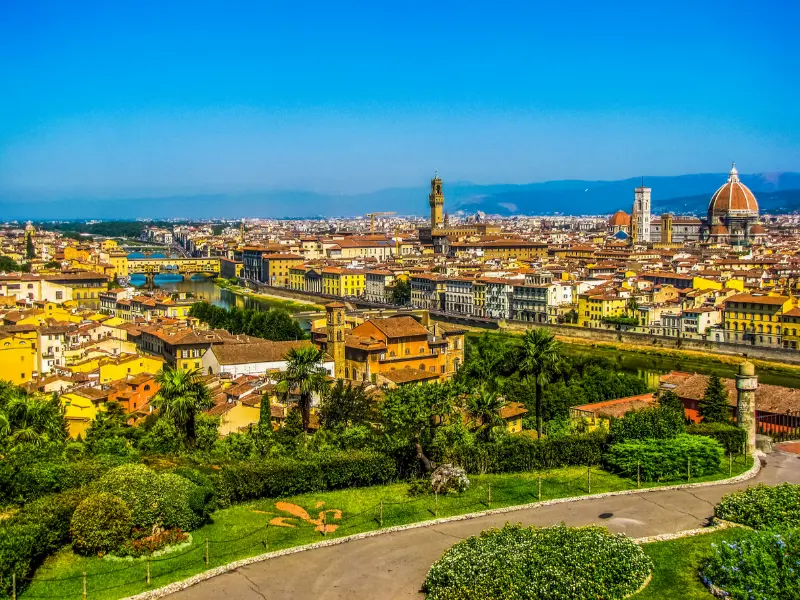
For the final light, go toward Piazzale Michelangelo and San Miniato al Monte. If your legs are tired, take transport uphill and walk down. The skyline gives you a visual summary of the day: dome, towers, river and the hills beyond the walls. That transition is useful because the next morning you will leave the dense city for Chianti.
Day 3: Chianti on the way to Siena
Collect the car and take the SR222 Chiantigiana south. Stop at Greve, then choose Panzano plus either Castellina or Radda. The objective is not to visit the maximum number of wine towns; it is to make the transfer to Siena itself an experience. A booked lunch or winery visit provides a natural pause and prevents the day from becoming a sequence of car parks.
Arrive in Siena in the late afternoon, park outside the restricted traffic zone and check in. Piazza del Campo at dusk is a completely different experience from a midday dash. If you have energy, walk to the Duomo exterior after dinner; otherwise save the formal sightseeing for the morning.
Day 4: Siena, then south to Val d’Orcia
Give Siena the morning and early afternoon. See Piazza del Campo, the cathedral complex and at least one contrada street away from the main pedestrian flow. The city’s medieval identity lives in these neighbourhoods, not only in the monuments. Lunch near the centre, then drive south once the busiest visiting hours are ending.

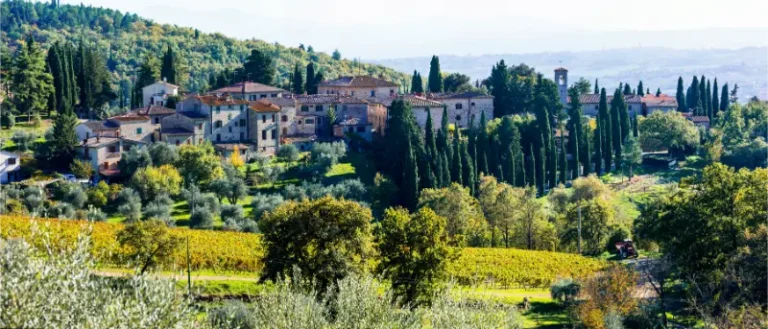
Aim for Pienza or San Quirico d’Orcia before sunset. The approach roads begin to open into the broad clay hills and cypress-lined ridges that define the popular image of Tuscany. Sleep in the valley rather than driving back to Siena; the next morning is one of the best reasons to stay overnight.
Day 5: Val d’Orcia at human speed
Start in Pienza, continue to Monticchiello and then decide between Bagno Vignoni or Montalcino. A common error is trying to fit Pienza, Montepulciano, Montalcino, Bagno Vignoni and San Quirico into one day. You can physically drive the loop, but you lose the reason for being here. Choose three stops at most and give the landscape time to work.
If Montepulciano is a priority, use it as the final stop on the eastern side of the route. It lies in Valdichiana Senese rather than within the UNESCO Val d’Orcia core, but combines naturally with the valley. Park below the historic centre and expect a climb to Piazza Grande.
Day 6: Cross Tuscany toward Lucca
Drive northwest, using the transfer as a reset day. If you want one major stop, choose San Gimignano or Volterra, not both. San Gimignano is easier to understand quickly, while Volterra feels more layered and rewards extra museum time. From there continue to Lucca, return the car if your remaining plan is rail-based, and walk the walls in the evening.
Lucca is one of Tuscany’s most pleasant overnight cities because the old centre remains lively after day visitors leave. The walls form a broad green promenade rather than a defensive ruin, so an evening circuit by foot or bicycle is a gentle contrast to the steep hill towns of the previous days.
Day 7: Lucca and Pisa before departure
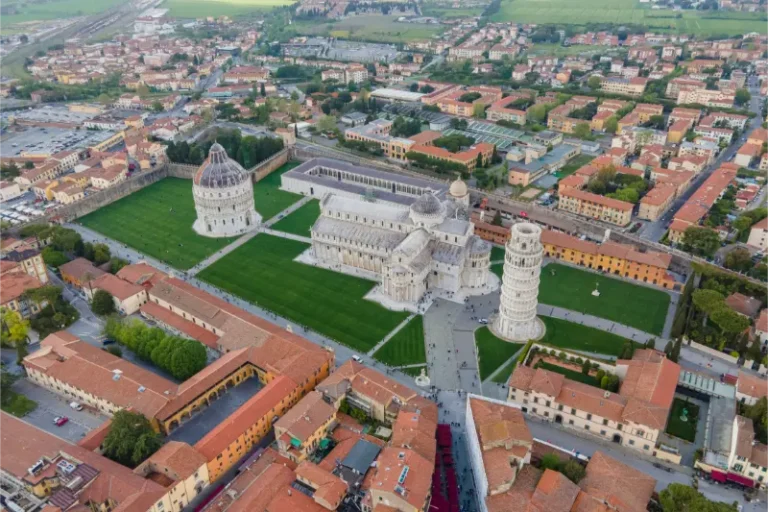
Spend the morning in Lucca around Piazza dell’Anfiteatro, San Martino and the walls. Then take the short rail journey or drive to Pisa depending on where you returned the car. Piazza dei Miracoli deserves more than a hurried tower photograph; the cathedral, baptistery and monumental cemetery create one of Italy’s great ensembles.
If you fly from Pisa, this is a particularly efficient final day. If your flight leaves from Florence, reverse the order of western Tuscany or return by train the previous evening. See our Pisa guide and our Lucca guide for details.
Where to stay
A practical pattern is Florence nights 1–2, Siena or Val d’Orcia nights 3–5, and Lucca nights 6–7 if your departure allows. Staying in three bases gives each zone an evening and morning, which is worth more than adding two extra day trips. Travellers who dislike packing can use Florence, Pienza and Lucca as the three anchors.
When comparing accommodation, look at the route before the room photographs. Check the exact driving or walking time to the next morning’s first stop, whether parking is truly on site or simply “nearby”, and whether you can walk to dinner. In rural Tuscany, a beautiful property can be inconvenient if every meal requires a night drive on unfamiliar lanes. In cities, the opposite can happen: a plain-looking hotel beside a station may save hours across the trip.
Getting around
The itinerary intentionally mixes train-friendly cities with car-dependent countryside. You do not need a car for Florence, and you may not need one after reaching Lucca/Pisa. The car is most valuable from Chianti through Val d’Orcia and for the cross-region transfer. One-way rental fees can vary, so compare total cost before deciding where to return it.
Before departure, recheck transport and access details on Trenitalia, Autolinee Toscane and the relevant municipal or attraction websites. Timetables, restricted-traffic rules, ferry schedules and seasonal access can change, and a ten-minute check before a travel day is more useful than relying on an old screenshot.
Useful booking tools for this trip
Tours & experiences: For guided visits, attraction tickets and bookable experiences in Tuscany, See tours & tickets
Car rental: If this trip works better with your own wheels, Compare car rental prices before choosing the pickup point.
Flights: For arrival planning, Search flights to Tuscany
Trains & buses: Compare trains & buses when building the transport part of the trip.
Parking, ZTLs and arrival strategy
Every art city on this route has a different parking logic, but the safe principle is consistent: historic centre equals caution. Use public parking outside walls or ZTL boundaries, save the car park location in your phone and walk in. Hill towns often involve uphill approaches. Pack light enough that a ten-minute walk with luggage does not become a crisis.
For every historic city or hill town, search for the official parking information before you leave the previous stop, not when you are already at the gate. Save the car park in your navigation app and screenshot the route. This tiny habit prevents the most common arrival problem: following a blue line directly into a restricted street because the hotel address sits inside the old centre.
Food and memorable places to stop
Use each region for a different food memory: lampredotto or bistecca in Florence, pici and panforte traditions in Siena, pecorino around Pienza, Brunello near Montalcino, and the lighter coastal influence as you move west. Do not book a formal lunch every day; one winery lunch and one destination dinner are enough to give the week structure without chaining you to reservations.
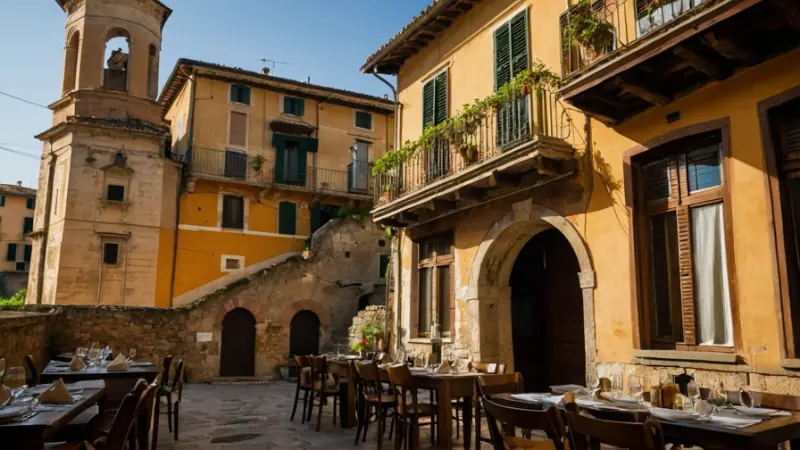
Restaurant hours and weekly closing days can change by season, so confirm them on the venue’s official site or by phone. A useful rule for itineraries is to reserve dinner only when the restaurant itself is part of the experience. On transfer days, flexibility is often more valuable than a reservation that forces you to leave a town just when you are enjoying it.
Best time for this itinerary
A week in May, June, September or early October offers the easiest balance. Summer brings longer daylight but also heat and busier parking areas. Winter makes Florence, Siena, Pisa and Lucca appealingly calm, while countryside days become more about towns, food and atmosphere than long outdoor stops.
Local events can change hotel prices, parking availability and opening patterns even outside the main tourist season. Siena around the Palio, Florence during major fairs, coastal towns in August and wine areas during harvest all need more advance planning than an ordinary weekday. Check the calendar before fixing non-refundable accommodation.
How to adapt the route
For families, reduce the number of hill towns and give Lucca more time. For art lovers, add a third Florence night and remove the western loop. For wine-focused travellers, keep Chianti and Val d’Orcia but finish in Maremma rather than Pisa. If you travel entirely by public transport, use the separate Tuscany without a car guide instead of forcing this driving route onto trains and buses.
Do not be afraid to remove a stop after booking. A good Tuscany itinerary has priorities and optional places. If weather, fatigue or a long lunch changes the day, skip the optional town instead of shortening every remaining visit. The region is unusually rewarding at the edges of the schedule: early streets, late squares, an unexpected viewpoint and an evening walk often become stronger memories than the attraction that was originally highlighted in bold.
What to book before you go
Book the things that can genuinely sell out or create long waits: major Florence museum slots, special restaurants, popular winery tours, high-season ferries with a vehicle, and distinctive countryside accommodation. Leave ordinary lunches, minor churches and most village walks flexible. This gives the itinerary structure without making it brittle.
Where to stay for this trip: Where to Stay in Tuscany: The Best Areas for Every Kind of Trip. Check prices & availability
Final thoughts
Seven days gives Tuscany enough space to show its contrasts: urban art, medieval streets, vineyard roads, open southern valleys and a gentler western finish. The route works because each move changes the landscape and because no single day is asked to carry four towns. Keep that discipline and a week feels generous rather than rushed.