5 Days in Tuscany: Florence, Siena and Val d’Orcia at the Right Pace
5 Days in Tuscany: Florence, Siena and Val d’Orcia at the Right Pace is designed as a realistic route rather than a list of places that merely fit on a map.
Five days is where Tuscany starts to feel like a journey rather than a weekend. You still have to choose, but you can combine Florence’s art with Siena’s medieval centre and the open landscapes of Val d’Orcia without turning every morning into a departure. The key is to use only two bases: Florence first, then southern Tuscany. This itinerary assumes you want a classic first trip and are willing to rent a car for the countryside portion.
Itinerary at a glance
Spend two full days in Florence, move to Siena on day three, then use days four and five for Val d’Orcia. Pick up the rental car after Florence, not before. Sleep in Siena on night three or continue to Pienza/San Quirico d’Orcia if you prefer waking in the countryside. On the final day, finish near Montepulciano or Montalcino depending on your onward route.
Travel times in Tuscany are shaped by hills, traffic, parking and the final walk into historic centres. A route that looks short in kilometres can still fill a morning once you include coffee, a scenic stop and ten minutes finding the right car park. The schedules below deliberately leave margin for those real moments.
Day-by-day Tuscany itinerary
Day 1: Florence’s monumental core
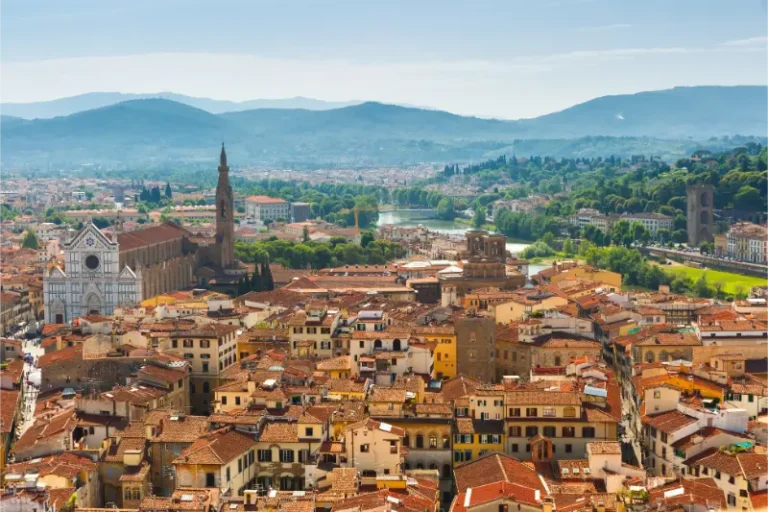
Start with the Duomo area, then move through Piazza della Repubblica to Piazza della Signoria. Choose one major museum for the afternoon—Uffizi if painting is your priority, Accademia if Michelangelo’s David is the essential work for you—and reserve it rather than waiting in a long same-day queue. Florence rewards walking between monuments as much as entering them, so leave room for small churches, courtyards and views of the Arno.
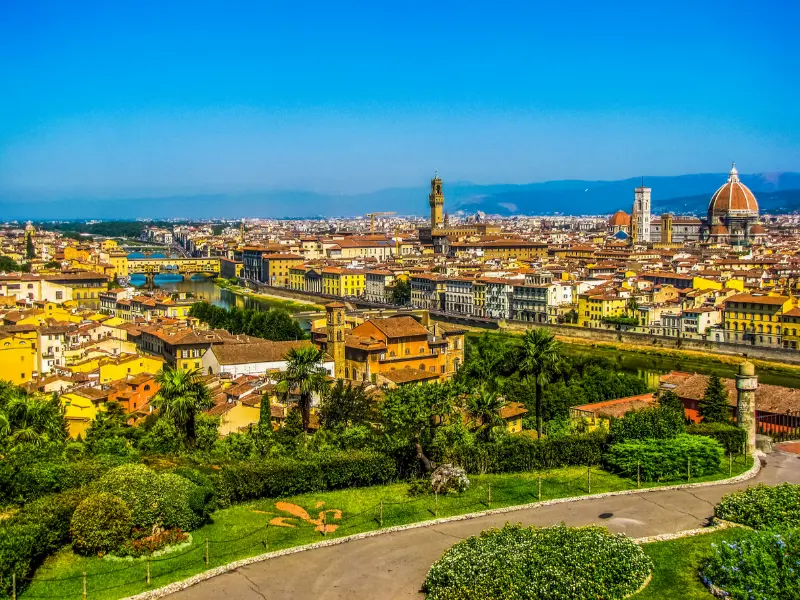
End in Oltrarno. Crossing the river changes the texture of the day from monumental Florence to workshops, neighbourhood squares and evening restaurants. If energy allows, walk to Piazzale Michelangelo or take a bus/taxi up and descend on foot. Do not schedule a formal dinner immediately after a late museum slot; give yourself an hour to wander.
Day 2: Florence in greater depth
Use the second day for the Florence that a one-day visitor misses. Santa Croce, San Lorenzo, the Medici Chapels, Palazzo Pitti or the Boboli Gardens can each become the centre of a half-day depending on your interests. A market visit works well around lunch, but avoid turning the day into a shopping marathon. If the weather is clear, a walk along quieter stretches of the Arno gives a break from museum interiors.
This is also the day to avoid overbooking. A second museum plus a palace is enough for most travellers. Florence’s historical density can make people feel they are failing if they are not constantly entering something; the opposite is often true. Sit in a square, notice stone façades changing in the late light and let the city become a place rather than a syllabus. See the Florence city guide for alternatives.
Day 3: Siena and the move south
Check out of Florence, collect the car outside the tightest centre if possible, and drive toward Siena. Park outside the restricted zone and enter the old city on foot. Piazza del Campo, Palazzo Pubblico and the Duomo form the obvious triangle, but do not neglect the streets between them. Siena’s medieval form survived unusually well, and the climb-and-drop pattern of its neighbourhoods is part of the experience.

Stay through late afternoon. If you sleep in Siena, Hotel Athena on Via P. Mascagni 55 is one practical example because it sits inside the historic walls but outside the LTZ access problem described by the hotel, with parking available for direct-booking guests. If you prefer countryside evenings, continue toward Pienza after dinner or before sunset and settle into Val d’Orcia.
Day 4: Pienza, Monticchiello and Bagno Vignoni
Begin in Pienza before tour groups build. The Renaissance centre is small, so the best part is not the number of sights but the relationship between architecture and landscape. Step onto the viewpoints behind the cathedral and you immediately understand why this valley became a model of harmonious scenery. Drive to Monticchiello for a smaller medieval atmosphere, then continue to Bagno Vignoni, where the thermal-water basin occupies the central square.
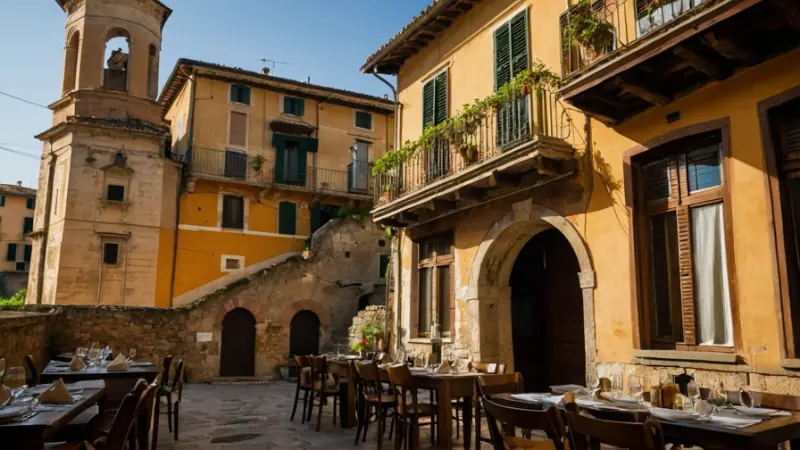
Do not squeeze Montepulciano into the same morning simply because it looks close. Hill-town parking, walking and lunch slow the day in a good way. Use the afternoon for one long meal, a farm visit or the landscape roads around San Quirico d’Orcia. Our Val d’Orcia travel guide has more detail on viewpoints and villages.
Day 5: Montalcino and the final countryside day
Drive west to Montalcino, park below or near the historic centre and walk up to the fortress area. The town is known globally for Brunello, but it is also a satisfying final stop because the views open toward a different side of southern Tuscany. If you want a winery visit, book one property rather than hopping between tasting rooms; a scheduled cellar experience gives the day structure and keeps driving decisions clear.

Onward routes matter. If you are heading to Rome, southern Tuscany puts you in a sensible position to continue via the A1 after returning the car in an appropriate city or airport location. If you must fly from Florence or Pisa early the next morning, do not sleep too deep in the countryside on the final night. Move closer to the departure hub instead of turning a beautiful last evening into a dawn logistics problem.
Where to stay
Two bases are ideal. Nights one and two in Florence keep the art-city section simple. Nights three and four can be in Siena, Pienza, San Quirico d’Orcia or the countryside depending on how much evening atmosphere you want. La Bandita Townhouse, Corso Il Rossellino 111 in Pienza, is a verified 12-room boutique property in the historic centre and is especially well placed for travellers who want to step directly into village life rather than drive to dinner.
When comparing accommodation, look at the route before the room photographs. Check the exact driving or walking time to the next morning’s first stop, whether parking is truly on site or simply “nearby”, and whether you can walk to dinner. In rural Tuscany, a beautiful property can be inconvenient if every meal requires a night drive on unfamiliar lanes. In cities, the opposite can happen: a plain-looking hotel beside a station may save hours across the trip.
Getting around
The first half of the trip does not need a car. Florence is easier without one, and Siena can also be reached by bus if you prefer to delay the rental. The car becomes valuable from Siena south because Val d’Orcia’s villages, scenic roads and rural properties are not designed around frequent point-to-point public transport. Read our Tuscany car-rental guide before deciding where to collect it.
Before departure, recheck transport and access details on Trenitalia, Autolinee Toscane and the relevant municipal or attraction websites. Timetables, restricted-traffic rules, ferry schedules and seasonal access can change, and a ten-minute check before a travel day is more useful than relying on an old screenshot.
Useful booking tools for this trip
Tours & experiences: For guided visits, attraction tickets and bookable experiences in Florence, See tours & tickets
Car rental: If this trip works better with your own wheels, Compare car rental prices before choosing the pickup point.
Flights: For arrival planning, Search flights to Tuscany
Trains & buses: Compare trains & buses when building the transport part of the trip.
Parking, ZTLs and arrival strategy
Do not enter Florence or Siena ZTL streets unless your accommodation has explicitly explained authorised access. In Pienza, Montalcino and other hill towns, follow signs for public parking outside the walls and walk uphill. The walk may be ten minutes, but that is usually easier than circling narrow streets. Keep luggage out of sight when parked between hotel changes.
For every historic city or hill town, search for the official parking information before you leave the previous stop, not when you are already at the gate. Save the car park in your navigation app and screenshot the route. This tiny habit prevents the most common arrival problem: following a blue line directly into a restricted street because the hotel address sits inside the old centre.
Food and memorable places to stop
Five days lets you build food into the route without making every meal a reservation. Florence suits a market lunch and one memorable dinner; Siena is a good place for pici and local dishes; Pienza makes pecorino unavoidable; Montalcino is the obvious place to explore Brunello with food. Reserve any winery lunch or formal tasting in advance, particularly during harvest season and weekends.
Restaurant hours and weekly closing days can change by season, so confirm them on the venue’s official site or by phone. A useful rule for itineraries is to reserve dinner only when the restaurant itself is part of the experience. On transfer days, flexibility is often more valuable than a reservation that forces you to leave a town just when you are enjoying it.
Best time for this itinerary
April, May, early June, September and October are excellent for this mix of city walking and countryside driving. In summer, schedule Florence’s indoor sights and start Val d’Orcia days earlier; the open hill towns can feel exposed at midday. Late autumn brings shorter days but beautiful atmosphere, while winter is calm and works best for travellers more interested in towns, food and spas than vineyard colour.
Local events can change hotel prices, parking availability and opening patterns even outside the main tourist season. Siena around the Palio, Florence during major fairs, coastal towns in August and wine areas during harvest all need more advance planning than an ordinary weekday. Check the calendar before fixing non-refundable accommodation.
How to adapt the route
If you do not drive, keep three nights in Florence and two in Siena, then use a guided Val d’Orcia day tour rather than trying to connect Pienza, Montalcino and Bagno Vignoni by local buses. If you have already seen Florence, replace day two with Chianti or San Gimignano. If art is your priority, keep day two in Florence exactly as written and skip one southern village rather than reducing both city days to half-day sprints.
Do not be afraid to remove a stop after booking. A good Tuscany itinerary has priorities and optional places. If weather, fatigue or a long lunch changes the day, skip the optional town instead of shortening every remaining visit. The region is unusually rewarding at the edges of the schedule: early streets, late squares, an unexpected viewpoint and an evening walk often become stronger memories than the attraction that was originally highlighted in bold.
What to book before you go
Book the things that can genuinely sell out or create long waits: major Florence museum slots, special restaurants, popular winery tours, high-season ferries with a vehicle, and distinctive countryside accommodation. Leave ordinary lunches, minor churches and most village walks flexible. This gives the itinerary structure without making it brittle.
Where to stay for this trip: Where to Stay in Florence: Best Neighborhoods and Hotels for a First Visit; Where to Stay in Siena: Best Areas for Medieval Atmosphere, Parking and Views; Where to Stay in Val d’Orcia: Pienza, Montalcino, San Quirico or the Countryside?. Check prices & availability
Final thoughts
Five days is a strong first taste because it gives Tuscany room to change character. You begin in dense Renaissance streets, pass through Siena’s medieval brick and end among roads where the landscape becomes the attraction. Two bases, one carefully timed car rental and fewer village stops make the trip feel far longer than five hurried nights.