
Renting a Car in Tuscany: When You Need One and What to Know Before You Drive
Renting a car in Tuscany is one of those decisions that can either make a trip beautifully flexible or add costs and stress for no real benefit. If you are sleeping in Florence and taking day trips to Pisa and Lucca, you probably do not need one. If you are staying in a farmhouse outside Pienza, touring wineries in Chianti or exploring the villages of Maremma, a car is often the simplest way to turn the itinerary you imagined into the trip you actually experience.
Rent only for the days that benefit from a car
The biggest planning mistake is renting a car for the whole holiday simply because Tuscany is associated with road trips. Cars are unnecessary in central Florence and often inconvenient in other historic centres. Parking costs, ZTL restrictions and unused rental days can add up.
A strong first-time itinerary might be three nights in Florence without a car, then four nights driving through Chianti and Val d’Orcia, followed by a final train-based city. This gives you the freedom of a road trip without paying for a vehicle while it sits in a garage.
If you are undecided, compare the routes in our Tuscany by train guide before booking.
Airport pickup versus city pickup
Florence and Pisa airports are natural rental locations. Airport offices can offer long opening hours, straightforward motorway access and a large fleet. They are particularly useful if you land and immediately head into the countryside.
City pickup is often smarter when you want to spend time in Florence first. Collect the car on the morning you leave rather than driving it into central Florence. Check the exact depot and the route out of town; not every “Florence” office is equally convenient for avoiding the ZTL.
In Pisa, the excellent airport–station connection means you can also spend a car-free night or two before renting. Your best pickup point is the one that reduces parking and restricted-zone exposure, not necessarily the one closest to your hotel.
Choose a smaller vehicle than your instincts suggest
A compact car is usually the sweet spot for Tuscany. It is easier to fit into village parking spaces, old garages and narrow roads, while still being comfortable for normal regional driving. A large SUV can be pleasant on the motorway but awkward in a hill town.
The real constraint is luggage. Make sure the boot will hold your bags out of sight. If four people travel with four large hard-shell suitcases, a tiny car may be impractical. The solution is often lighter luggage rather than a much bigger vehicle.
If you require an automatic transmission, reserve it specifically. Manuals remain common, and “automatic or similar” should be checked carefully in the booking details.
Driving licence and document basics
Bring the original driving licence accepted for driving in Italy, your passport or ID as required, and the payment card specified by the rental company. Travellers whose licences are issued outside the EU/EEA may need an International Driving Permit or an official Italian translation depending on the licence and applicable convention. Check the current official requirements rather than relying on a rental forum.
The Automobile Club d’Italia publishes information for foreign motorists. Rental companies can also apply their own minimum-age, licence-duration and payment-card rules on top of legal driving requirements.
Do not discover at the desk that the main driver has the wrong card type or an unsupported document. Read the rental conditions before paying.
Insurance and excess: understand what you bought
Rental pricing can look simple until excess, theft protection, glass, tyres and roadside assistance are added. Read the coverage rather than buying or rejecting every option automatically. The important number is often the amount you could be responsible for if the car is damaged.
If you rely on insurance from a credit card or third party, understand how claims work. Some policies reimburse after you pay the rental company, which is different from having the excess reduced at the desk.
Photograph or video every side of the car at pickup, including wheels and windscreen, and make sure existing damage is recorded. Repeat the process at return. It takes two minutes and removes ambiguity.
Fuel policies and refuelling
Full-to-full is easy to understand: collect the car with a full tank and return it full. Other policies exist, so check what your booking says. Keep the last fuel receipt if the company asks for it and photograph the gauge at return.
Confirm whether the car uses petrol, diesel or another powertrain before leaving the lot. The fuel type should be shown on the paperwork and near the filler cap. Never guess based on the model.
In rural Tuscany, fill up before a long mountain or countryside day rather than searching for a station when the tank is nearly empty. Self-service pumps may operate differently outside staffed hours, so having a working bank card is useful.
The ZTL risk with a rental car
A rental car does not make you invisible to restricted-traffic cameras. If the vehicle is recorded entering a ZTL without authorisation, the fine can reach the rental company, which may then charge an administrative fee for identifying the driver in addition to the authority’s process.
The solution is simple: do not drive toward the historic centre unless you know the route is permitted. Set your navigation to a car park outside the restricted area. If your hotel has authorised access arrangements, contact it before entering and follow its instructions exactly.
Read our ZTL guide before pickup. It is more useful than trying to understand a camera sign when traffic is behind you.
Where a rental car gives the biggest return
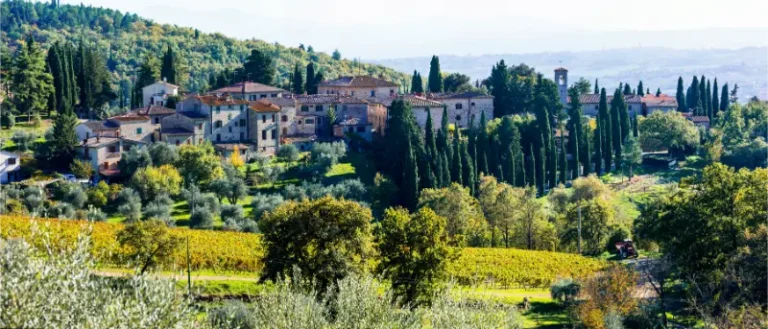
Chianti is far easier with a car because wineries, villages and rural stays are spread across a landscape rather than concentrated along one rail line. Val d’Orcia is another classic case: Pienza, Montalcino, Bagno Vignoni and panoramic roads become a natural sequence instead of separate bus-planning exercises.

Maremma, Monte Amiata, Garfagnana and many countryside areas also reward independent driving. On Elba, a car can be valuable for reaching beaches away from the principal towns, although summer traffic and parking need planning.
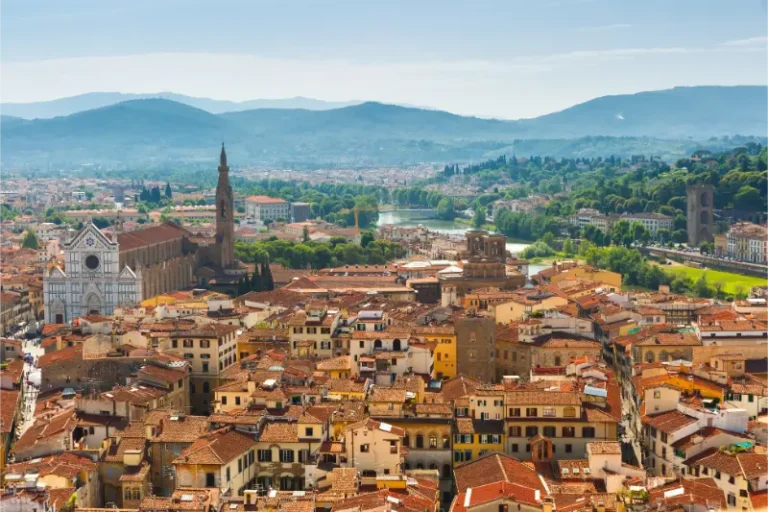
By contrast, Florence, Pisa and Lucca are excellent examples of places where the car can wait. Use the right tool for the right section of the trip.
Useful booking tools for this trip
Car rental: If this trip works better with your own wheels, Compare car rental prices before choosing the pickup point.
Pickup inspection: five minutes that matter
Before leaving, adjust mirrors and seat, locate the lights, understand the parking brake and check how reverse gear works. If the car has unfamiliar driver-assistance systems, ask rather than figuring them out on a narrow street.
Walk around the vehicle in good light. Photograph scratches, wheel damage and the windscreen. Check that the fuel level and mileage match the paperwork. Save the rental company’s emergency number somewhere accessible offline.
Finally, look at your first destination before moving. If the navigation route appears to cut directly through central Florence, Siena or another historic centre, stop and verify the parking destination.
Returning the car without stress
Plan the return as part of the itinerary. Airport rental returns can have different road entrances from passenger drop-off. City offices may close for periods during the day or have limited after-hours procedures. Check before the final morning.
Refuel with enough time to keep the receipt, remove belongings, photograph the vehicle and inspect the boot. If an employee checks the car, keep any return confirmation.
Do not schedule the return so tightly that a petrol-station queue threatens your flight. Tuscany teaches a slower rhythm; keep it for the final transfer too.
A hybrid itinerary is often the best itinerary
One of the most satisfying patterns is train + car + train. Arrive in Florence by air or high-speed rail, spend the city days walking, collect a compact car when leaving, explore rural Tuscany, then return the car near a rail-friendly city or airport.
This approach often costs less than a full-trip rental and avoids the two situations visitors dislike most: city parking and rural bus dependence.
If your priority is countryside freedom, our driving in Tuscany guide covers road rules and scenic-drive habits in more detail.
One-way rentals can be worth the fee
A one-way rental can make sense when it prevents major backtracking. For example, you might collect a car after Florence, drive through Chianti and Val d’Orcia, then return it in another well-connected city before continuing by train. There may be an extra one-way charge, and not every vehicle category can be returned everywhere, so compare the fee with the time, fuel and tolls you would spend returning to the original depot. On a short holiday, paying a modest relocation fee can buy back half a day of travel.
Where to stay for this trip: How to Choose an Agriturismo in Tuscany: What to Look For Before You Book; Where to Stay in Tuscany: The Best Areas for Every Kind of Trip. Check prices & availability
Final thoughts
Renting a car in Tuscany is worthwhile when it changes what you can experience: a farmhouse outside a village, a sunset road through Val d’Orcia, a winery reached without checking the last bus. Keep the car compact, collect it at the right moment, understand the insurance and documents, stay out of ZTLs and return it with time to spare. The best rental plan is not the longest one — it is the one that adds freedom exactly where Tuscany needs it.