
How to Get to Tuscany: The Easiest Routes by Plane, Train, Car and Ferry
Tuscany is easy to reach, but the best route depends much more on where you plan to spend your first few days than on the name of the nearest airport. Florence and Pisa are the region’s two principal air gateways, fast trains bring travellers from Rome, Bologna, Milan and other Italian cities, motorways enter Tuscany from every direction, and ferries connect the mainland with islands such as Elba. The useful question is therefore not simply how to get to Tuscany, but how to arrive in the part of Tuscany that fits your itinerary without wasting the first day on unnecessary transfers.
Start with your first destination, not with the cheapest ticket
If your trip begins in Florence, arriving at Florence Airport or by high-speed train at Firenze Santa Maria Novella is usually the cleanest start. If you are heading to Pisa, Lucca, the Versilia coast or western Tuscany, Pisa Airport can be remarkably convenient. For a road trip through Chianti, Val d’Orcia or Maremma, either airport can work, but the place where you collect a rental car and the direction of your first overnight stay matter more than a difference of a few kilometres.
A useful habit is to map the first two nights before booking transport. Tuscany looks compact on a map, yet a journey that combines an airport, a city-centre rental office, a restricted traffic zone and a hill town can become tiring after a flight. If you arrive late, spend the first night in a well-connected city and start the countryside drive the following morning. It is often a calmer beginning than collecting a car in the dark and immediately navigating unfamiliar rural roads.
The official regional tourism portal lists Florence Amerigo Vespucci and Pisa Galileo Galilei as Tuscany’s main airports, while the national rail network makes Florence one of the easiest gateways from the rest of Italy.
Flying into Florence Airport
Florence Airport is the natural choice for travellers whose itinerary is centred on Florence, northern Chianti, Prato or the eastern side of central Tuscany. The airport is only a short distance from the city and the T2 tram links the terminal with the area around Firenze Santa Maria Novella in roughly twenty minutes under normal conditions. That means you can land, reach the historic centre without a car and postpone driving until the day you actually leave Florence.
That last point is worth considering. A rental car is not useful while you are visiting central Florence, and taking one into the historic centre creates the additional problem of the camera-controlled ZTL. A much smoother plan is often to spend two or three nights in Florence, then collect the car from an office outside the most complicated central streets before continuing towards Chianti, Siena or Val d’Orcia.
If Florence is your first stop, see our guide to what to see in Florence before deciding how many nights to stay.
Flying into Pisa Airport
Pisa Airport is particularly practical for western Tuscany. The PisaMover links the terminal with Pisa Centrale in only a few minutes, giving you immediate access to regional trains towards Florence, Lucca, Livorno and the coast. For travellers who want to start in Pisa and Lucca, this can be easier than flying into Florence and crossing the region immediately after arrival.
It is also a good gateway for a trip that includes Versilia, the Etruscan Coast or ferry connections from the Tuscan ports. If you are renting a car, compare the full rental cost at Pisa and Florence rather than the airfare alone. Airport rental locations may have longer opening hours and a broader vehicle selection, while city-centre offices can sometimes be cheaper or more convenient for a one-way itinerary.
If you arrive in Pisa, you can comfortably spend a night there rather than treating the city as an airport stop. Our Pisa city guide goes well beyond the Leaning Tower.
When Bologna or Rome can make sense
Not every good Tuscany itinerary has to begin inside Tuscany. Bologna Airport can be a sensible alternative if flights are much better and your first destination is Florence: Bologna Centrale and Florence are connected by frequent high-speed trains, although you must still allow time to reach the station from the airport. Rome is farther away, but it has a huge choice of international flights and fast rail links to Florence.
The advantage of these alternatives is choice; the disadvantage is an extra transfer. Do not compare only flight duration. Add the airport-to-station journey, waiting time and train connection. A flight that looks cheaper can become less attractive after extra tickets and a late arrival are included. Conversely, an open-jaw itinerary — arriving in Florence and flying home from Rome, for example — can avoid retracing your route if Tuscany is part of a longer Italian trip.
Arriving in Tuscany by train
For many European or Italy-based travellers, train is the most pleasant way to arrive. Florence is the region’s main rail hub and sits on the high-speed corridor between northern and southern Italy. From there, regional trains spread towards Pisa, Lucca, Livorno, Arezzo, Cortona and other destinations. Siena has rail service too, although bus connections can sometimes be more direct depending on where you start.
If you are coming from Rome, Bologna, Milan, Venice or Naples, compare high-speed services to Florence before considering a domestic flight. You arrive in the city rather than at an airport, avoid security queues and can walk or take public transport to many hotels.
Once inside Tuscany, regional rail works best for cities and larger towns. Hill villages often require a train-plus-bus combination. Our detailed Tuscany by train guide explains which routes are easy and where a car is genuinely useful.
Driving into Tuscany
Tuscany is crossed by major roads including the A1, which runs north-south past Florence and Arezzo, and the A11/A12 system serving the north-west and coast. The FI-PI-LI expressway links Florence, Pisa and Livorno. If you are arriving from another Italian region with a car, these routes make access straightforward, but the final kilometres can be very different from motorway driving.
Historic centres are frequently protected by ZTL restricted-traffic zones. The safest strategy is to set your navigation to a confirmed car park, not to the hotel address, unless the hotel has specifically told you how vehicle access works. In Florence in particular, electronic signs and cameras control entry. Read our guide to ZTLs in Tuscany before driving into any major historic centre.
For rural itineraries, a car becomes one of the best ways to experience Tuscany. It lets you link wine roads, small villages and landscapes that would otherwise require several bus connections. The key is to use it where it adds freedom, not where it adds stress.
Useful booking tools for this trip
Car rental: If this trip works better with your own wheels, Compare car rental prices before choosing the pickup point.
Flights: For arrival planning, Search flights to Tuscany
Trains & buses: Compare trains & buses when building the transport part of the trip.
Ferries: For Elba crossings, Check ferry times & prices
Coming by ferry or arriving through a Tuscan port
Sea travel matters more in Tuscany than many first-time visitors realise. Livorno is a major passenger port, Piombino is the principal gateway to Elba, and ferries also serve smaller islands from selected mainland ports. If you are arriving with your own car on a ferry, check vehicle booking rules and boarding times carefully because port procedures vary by route and season.
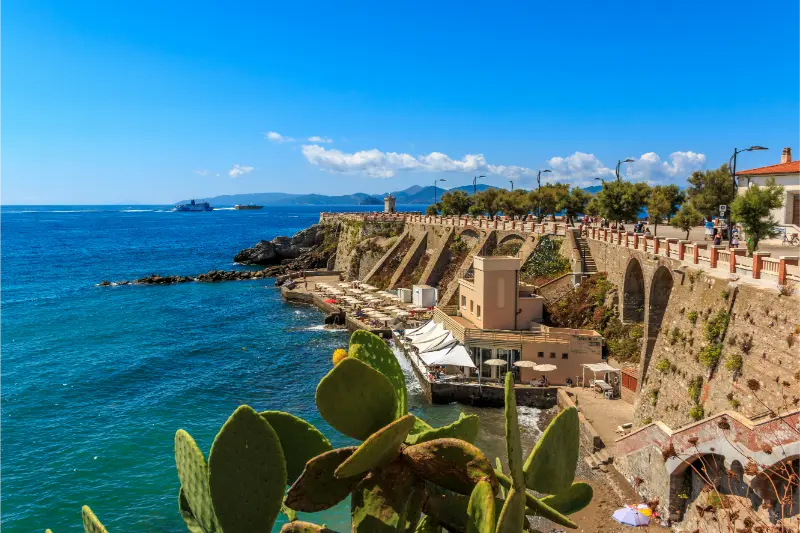
For Elba, Piombino is the important name to know. Travellers without a car can reach the port area by rail and connecting services, then continue by ferry. If the island is one of the main reasons for your trip, it may be smarter to build the mainland itinerary around the coast rather than repeatedly returning to Florence. Our Elba Island travel guide can help with that decision.
Which gateway is best for each part of Tuscany?
There is no universal winner, but a simple geographic rule helps. Florence is usually the strongest gateway for Florence itself, Prato, Mugello, Chianti and much of central/eastern Tuscany. Pisa is excellent for Pisa, Lucca, Versilia, Livorno and western Tuscany. Siena and Val d’Orcia can work from either airport; the best choice often depends on flight times and whether you plan to rent a car.
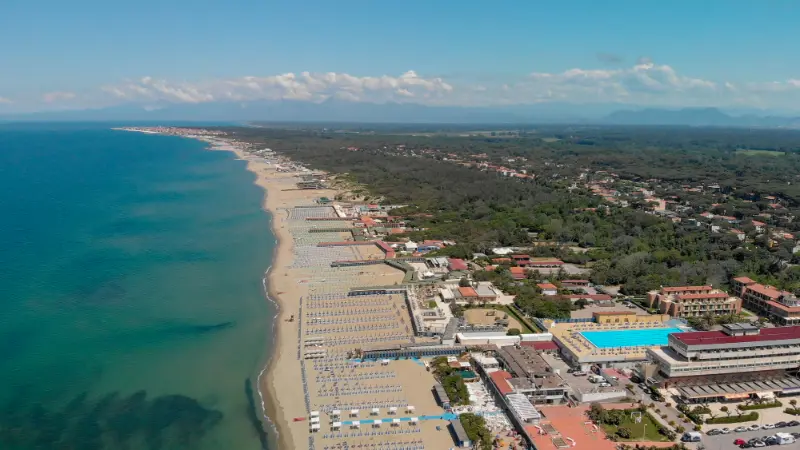
For Maremma, travellers sometimes assume Florence is automatically best, but Pisa, Rome or a train connection can also be logical depending on the exact destination. For northern mountain areas such as Lunigiana and parts of Garfagnana, Pisa can be particularly practical. The point is to think in zones rather than treating Tuscany as one destination with one entrance.
A smoother arrival day
Keep the first day deliberately simple. Save offline maps, the address of your accommodation and the exact name of the station or car-rental office. If you need a bus after a train, check the connection before boarding the first leg. If you are collecting a rental car, photograph the vehicle and understand the fuel policy before leaving the lot.
Travelling with children or heavy luggage changes the equation. A route involving two train changes and a bus may look elegant on paper but be exhausting in practice. In that case, paying for a direct transfer or collecting a car earlier can be worthwhile. On the other hand, dragging luggage through a medieval centre after parking far outside the walls can be equally inconvenient. Ask your accommodation where guests normally arrive; good local instructions are often more useful than a generic navigation app.
Useful official sources before you travel
Transport schedules, road works and seasonal services change, so use guides for strategy and official sites for the final check. For trains, consult Trenitalia Toscana. For regional buses, the Autolinee Toscane site and app provide routes, tickets and service information. For current regional arrival options, Visit Tuscany’s official transport pages are a useful overview.
Build a little slack into the day if your flight, train and ferry are on separate tickets. Tuscany rewards slow travel; there is little point beginning the holiday by creating a connection so tight that a small delay ruins the afternoon.
Where to stay for this trip: Where to Stay in Tuscany: The Best Areas for Every Kind of Trip. Check prices & availability
Final thoughts
The easiest way to reach Tuscany is the one that matches the geography of your trip. Use Florence for a city-first itinerary, Pisa for much of the west, trains for well-connected urban stops and a car when the countryside becomes the focus. If you plan the first two nights and the last transfer before buying tickets, the journey into Tuscany can feel like the beginning of the holiday rather than an obstacle to it.