
Parking in Tuscany: How to Park in Cities, Villages, Hill Towns and on the Coast
Parking in Tuscany becomes much easier once you stop expecting to park beside the attraction you came to see. Historic centres were built for people, horses and carts, not rental cars. Florence, Siena and many hill towns are best approached from the perimeter: leave the car in a legal space or visitor car park, then walk. On the coast, the challenge shifts from ZTLs to seasonal demand. In rural areas, parking is simpler but viewpoints and narrow roads create their own temptations. A few habits make all of these situations manageable.
The basic colour system — and why signs still matter
In Italy, blue road markings typically indicate paid parking, white spaces can indicate free parking where local signs allow it, and yellow spaces are generally reserved for authorised categories or specific uses. This is a useful first visual clue, not a complete rule.
Always read the vertical sign. It tells you payment hours, resident restrictions, time limits, street-cleaning rules or other conditions. A white space is not automatically available to every visitor, and a blue space may be free outside charging hours depending on the local sign.
Keep the parking receipt if the system issues one, and display it as instructed. Many towns also use apps or number-plate-based payment, but do not assume the same platform is used everywhere.
Florence: avoid searching the historic centre
Central Florence is the place where having a parking strategy matters most. The historic centre has a camera-controlled ZTL, so driving toward your hotel or the Duomo without a confirmed access plan is a poor idea. Use garages or park-and-ride options outside the restricted core and continue on foot or by tram.
The official FeelFlorence driving and ZTL information is worth checking before arrival. If your hotel recommends a specific garage, ask for the exact route.
For a city-only visit, consider not bringing the car at all. Florence is one of Tuscany’s easiest places to reach by train, and central parking rarely adds value to a sightseeing day.
Siena: choose the side of town before the car park
Siena’s shape and hills mean the “nearest” car park is not always the easiest. Look at where you are approaching from and which part of the centre you want to reach. Several visitor parking areas sit around the historic core, and some approaches involve escalators or climbs.
If you are staying overnight, ask the accommodation which car park guests actually use. A hotel may be only a few hundred metres from a garage on a map but separated by a steep street or a restricted gate.
For a day trip, arrive earlier rather than spending the busiest late-morning period circling. Once parked, Siena is a city to experience on foot; see our Siena guide rather than moving the car between sights.
Pisa: rail can be easier, but parking is manageable
Pisa is flat and comparatively easy to walk. If you are coming from Florence or Lucca, train may be simpler than driving. If you arrive by car, choose a legitimate public car park outside restricted central streets and walk toward Piazza dei Miracoli.
Do not be tempted by a navigation route that promises to get you very close to the Leaning Tower without understanding local restrictions. Popular attractions create exactly the kind of traffic pressure that ZTL and resident parking systems are designed to control.
If Pisa is one stop on a larger road trip, parking on the correct side of the centre for your onward route can save time when you leave.
Lucca: let the walls guide you
Lucca has one of the clearest visual parking strategies in Tuscany: the Renaissance walls tell you where the historic centre is. Visitor car parks around the perimeter allow you to enter through a gate and explore on foot. The railway station is also outside the walls, another reason the city works well without a car.
If you are sleeping within the walls, confirm whether the property has parking arrangements before arrival. Do not assume a hotel address inside the centre means you can drive there.
Once parked, rent a bicycle or walk the walls instead of moving the car. Our Lucca guide is designed around that slower rhythm.
Hill towns: parking below the walls is normal
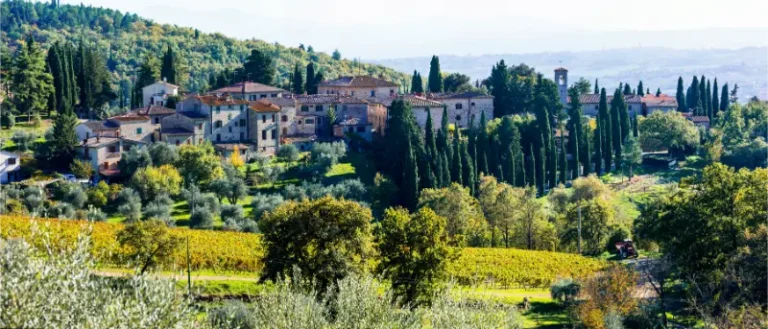
In San Gimignano, Pienza, Montepulciano, Montalcino, Cortona and similar hill towns, visitor parking is frequently positioned outside or below the historic core. Expect a climb. The effort is usually modest compared with the stress of trying to drive deeper into narrow streets.
Choose the first well-signposted visitor facility that makes sense for your route rather than passing it in search of a miraculous empty space beside the main piazza. In famous towns, the spaces closest to the centre fill first.
If mobility is a concern, research accessible parking and local shuttle options in advance; do not assume the steepest hill town will be easy from every car park.
Beach parking is a different problem
Along the Versilia coast and other popular seaside areas, summer demand is the main challenge. Spaces that are easy to find in spring can be scarce on a sunny weekend in July or August. Paid seafront parking, private facilities and streets farther inland can all be options depending on the town.
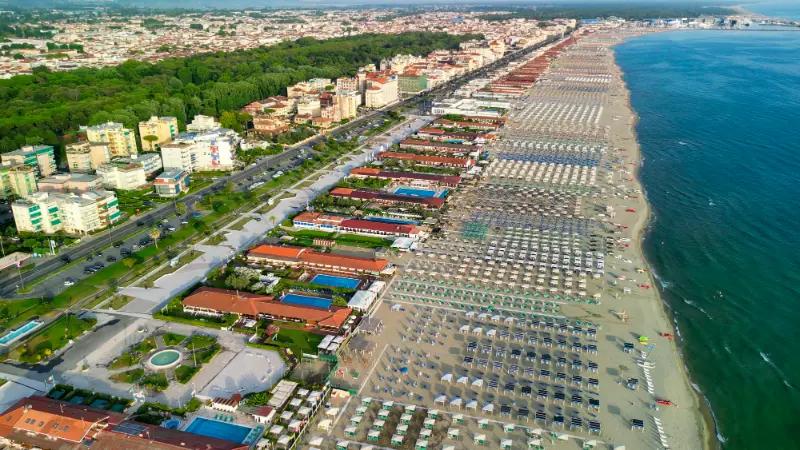
Arrive earlier for beach days, especially if you need a specific accessible or family-friendly location. Read seasonal signs carefully because rules can change during the bathing season.
In more natural coastal areas, never improvise by parking on dunes, verges or access tracks. Protected landscapes often have specific parking points and shuttle arrangements. Our Versilia guide helps with the geography of the northern coast.
Useful booking tools for this trip
Car rental: If this trip works better with your own wheels, Compare car rental prices before choosing the pickup point.
Market days, festivals and events
A legal space on Tuesday evening may be needed for a market early Wednesday morning. Temporary no-parking signs can be placed for markets, street cleaning, festivals and events. Check the sign nearest your car, especially when leaving it overnight.
This matters in smaller towns where a central square can transform from parking area to market space. During major festivals, normal access routes can also be closed or diverted.
If staying several nights, ask your accommodation whether anything changes during your stay. Local hosts usually know which streets become problematic on market morning.
Parking overnight
For overnight parking, prioritise a well-lit, legal location recommended by your accommodation. Do not leave passports, electronics or visible luggage in the car. Even in a quiet town, a boot full of suitcases is better unloaded at the hotel than stored on the street.
If using a paid garage, check opening hours before assuming you can retrieve the car at dawn. Some facilities are 24-hour; others are not. If the ticket system uses your number plate, enter it carefully.
In rural accommodation, parking is often included and simple, but ask whether the final access road is paved or narrow if you are arriving after dark.
Parking apps, meters and payment
Some municipal parking systems accept contactless cards or apps, while older meters may still be easier with coins. Carrying a small amount of change is useful even if you normally pay by phone.
When using an app, verify the zone number and number plate before confirming. If the app allows extending parking remotely, that can be helpful during a long lunch, but only where local rules permit extensions.
Do not rely on mobile reception in every rural location. If a meter prints a paper ticket, follow the display instructions rather than assuming digital proof is enough.
Viewpoints: never turn a beautiful road into a dangerous car park
Tuscany’s landscapes encourage spontaneous stops, particularly in Val d’Orcia and Chianti. The view may be irresistible, but a narrow shoulder or farm entrance is not a parking space. Continue until you find a proper lay-by or safe area, then walk back if needed.
Do not block gates, vineyard access or agricultural tracks. Farmers and residents use these roads for work, not as scenic pull-offs.
A good road-trip day includes fewer viewpoints with safe stops rather than constant braking every time a cypress row appears. See our driving guide for a more relaxed route-planning approach.
A parking routine that works everywhere
Before leaving in the morning, choose the parking area for your first major stop. Save its map pin and, if possible, a backup nearby. As you approach town, follow official parking signs rather than fighting navigation instructions that lead toward the centre.
Photograph the level or street name in large garages. Save the parked-car location on your phone. Read the restriction sign before walking away. These small actions remove most of the friction visitors associate with driving in Tuscany.
Above all, accept that a ten-minute walk is often part of the visit. In a hill town, that walk is usually more pleasant than another fifteen minutes circling in traffic.
Where to stay for this trip: Where to Stay in Tuscany: The Best Areas for Every Kind of Trip. Check prices & availability
Final thoughts
Parking in Tuscany is not difficult when you treat the edge of the historic centre as the destination. Read the local sign, respect reserved spaces, plan around ZTLs, expect climbs in hill towns and arrive earlier on summer beach days. The goal is not to find the closest possible space; it is to park legally once, forget the car and enjoy the place you came to see.