
Driving in Tuscany: Roads, Tolls, Speed Limits and the Scenic Routes Worth Taking
Driving in Tuscany can be the most rewarding way to reach vineyards, small villages and landscapes that public transport only touches lightly. It can also be the least enjoyable way to move around central Florence or hunt for parking inside a medieval hill town. The difference comes down to using the car where it gives you freedom and leaving it behind where streets, ZTL restrictions and parking make it a burden. With a little preparation, Tuscany is a comfortable region to drive and one of the best places in Italy for a road trip.
Do you actually need a car?
If your itinerary is Florence, Pisa, Lucca and Arezzo, you can travel very well without one. If your trip revolves around Chianti, Val d’Orcia, rural Maremma, mountain villages or an agriturismo in the countryside, a car can transform the experience. The most efficient itineraries often combine both approaches: city days by train, countryside days by car.
Before renting, check where your accommodation is. “Near Siena” may mean a farmhouse fifteen kilometres from the nearest useful bus. “Florence centre” may mean a street inside the ZTL where a car is actively inconvenient. A map pin tells you more than the destination name.
Our Tuscany without a car guide helps decide whether you can skip driving for part of the trip.
Understand the main road types
Autostrade are motorways, normally identified by an A-number and green signs. They are designed for fast intercity travel and many sections use tolls. The A1 is the great north-south spine that passes Florence and Arezzo. The A11 serves the Florence–Prato–Pistoia–Lucca direction, while the A12 follows parts of the north-western coast.
Tuscany also has important expressways and ordinary state or provincial roads. The FI-PI-LI connects Florence with Pisa and Livorno and is used heavily by local traffic. Rural roads can be narrow and winding, especially in hill country, but that is also where the landscape becomes memorable.
Do not judge travel time by distance alone. Forty kilometres through the countryside can take longer than twice that distance on a motorway, particularly if you stop for photographs or meet agricultural traffic.
Tolls and motorway habits
On toll motorways, you generally take a ticket when entering and pay when leaving, unless you are using an electronic toll system. Choose the lane that matches your payment method and avoid entering a reserved Telepass-only lane if you do not have the device. Card and cash payment availability is indicated at the booth.
Keep the ticket somewhere safe and easy to reach. If you are driving a rental car, do not assume electronic tolls are included unless the rental agreement specifically says so.
Motorways are useful for covering ground, but they are not where Tuscany looks most Tuscan. Use them to reach the right area efficiently, then leave them for slower roads when the journey itself becomes part of the day.
Speed limits: know the general framework
Posted signs always take priority, but the general Italian maximum limits are commonly 130 km/h on motorways, 110 km/h on main extra-urban roads, 90 km/h on secondary/local extra-urban roads and 50 km/h in built-up areas. Limits can be lower for weather, road conditions, vehicle categories or specific stretches.
Speed cameras are common, and limits can change quickly as you enter a town or approach an intersection. Do not treat an empty rural road as permission to drive at the speed that feels comfortable. The Automobile Club d’Italia is a useful official source for Italian driving rules.
On narrow roads, the legal limit may still be faster than the speed that is sensible. Blind bends, cyclists and farm vehicles are normal features of the Tuscan countryside.
The ZTL is the rule visitors must take seriously
ZTL means Zona a Traffico Limitato, a restricted traffic zone used in many historic centres. Cameras can read licence plates at entry points. Florence has an extensive camera-controlled system, and Siena, Pisa, Lucca and many smaller towns also restrict central vehicle access in various ways.
Do not follow a navigation app blindly to a hotel in an old centre. Set the route to a verified car park unless the accommodation has given you specific instructions. Electronic signs can indicate whether access is currently restricted, and rules vary by place and time.
Read our dedicated ZTL in Tuscany guide before your first city drive. In Florence, the official FeelFlorence ZTL page should be checked for current details.
Fuel, service stations and electric charging
Fuel stations are common along major roads and around towns, but do not wait until the warning light appears before heading into a remote mountain area. Many Italian stations offer both serviced and self-service pumps. Payment systems differ, so carry a bank card and understand which pump you have selected before authorising a large pre-payment.
Rental cars may be petrol, diesel, hybrid or electric. Confirm the fuel type at pickup — ideally by checking the label near the filler cap — rather than relying on memory from the desk. Putting the wrong fuel into a car can become a very expensive mistake.
If you are using an electric vehicle, plan charging around overnight stays and larger towns. Rural Tuscany has charging points, but a relaxed road trip is easier when charging is part of the itinerary rather than an emergency search at the end of the day.
Why a small car is often the best car
Tuscan roads do not require a tiny vehicle, but a compact car is easier in village car parks, narrow streets and old parking garages. Larger SUVs may feel comfortable on motorways yet become awkward in a stone town where spaces were never designed for modern dimensions.
Automatic cars are available but can cost more and may be in shorter supply than manuals. If you need an automatic, reserve it clearly rather than assuming the rental category will provide one.
A small car also reduces the temptation to take more luggage than you need. For a multi-stop itinerary, being able to fit bags securely in the boot without stacking valuables visibly is useful.
Useful booking tools for this trip
Car rental: If this trip works better with your own wheels, Compare car rental prices before choosing the pickup point.
Scenic drives that justify having a car
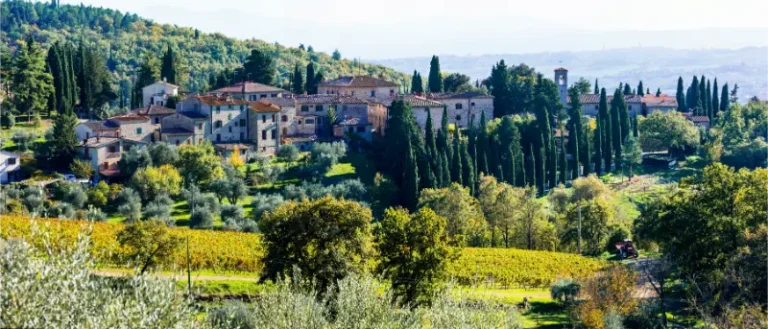
The road between the villages of Chianti, the rolling landscapes around Pienza and San Quirico d’Orcia, the approaches to Monte Amiata and the quieter stretches of Maremma are where a car becomes part of the experience. The value is not just getting from A to B; it is being able to stop at a viewpoint, change lunch plans or take a small road that a bus would never use.

In Val d’Orcia, build fewer destinations into the day than you think you need. Light, viewpoints and village walks slow you down. In Chianti, winery visits and lunch can easily fill the middle of the day. Our Chianti guide and Val d’Orcia guide are better starting points than a list of ten villages.
Never stop on a narrow road simply because the view is beautiful. Look for a proper lay-by or safe parking area and walk back if necessary.
Parking strategy: aim for the edge, not the piazza
The easiest habit in Tuscan towns is to park on the edge of the historic centre and walk in. Many hill towns have clearly signed visitor car parks below or outside the walls. Trying to save five minutes of walking by driving deeper into an old centre often leads to ZTL cameras, tight turns or full spaces.
Typically, blue-marked spaces are paid, white spaces may be free where local signs allow it, and yellow spaces are reserved for specific users or purposes. Always read the nearby sign because local restrictions, resident rules and time limits take priority over colour alone.
Our parking in Tuscany guide goes into city-by-city patterns and practical habits.
Driving at night, in rain and in the mountains
Country roads can be very dark after sunset. If your farmhouse is reached by a narrow lane, arrive in daylight the first time if possible. Save the exact map pin and any check-in instructions offline. In heavy rain, slow down and expect standing water or reduced visibility, particularly on secondary roads.
Mountain areas such as Garfagnana, Casentino and Monte Amiata require extra care in colder months. Weather can change quickly with elevation, and winter equipment rules may apply on designated roads and periods. Check local requirements if your itinerary includes higher terrain.
The pleasure of a Tuscany road trip comes from not rushing. If a road is unfamiliar, let faster local traffic pass when safe rather than feeling pressured to match it.
A realistic road-trip rhythm
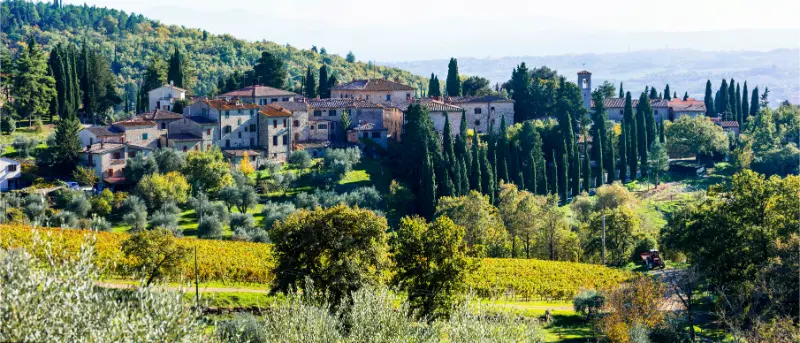
Two substantial stops in a day are often enough. For example: Pienza in the morning, lunch, a scenic drive and Montalcino in the afternoon. Or Greve in Chianti, a winery visit and a quieter village later. Constantly getting in and out of the car turns Tuscany into a parking exercise.
Start earlier than tour-bus peaks if you are visiting famous villages, but leave room for spontaneity. Make restaurant or winery reservations where needed, then let the rest of the route breathe.
On your final day with the car, refuel and allow extra time for the rental return. Photograph the fuel gauge and vehicle condition. A calm handover is a better ending than reaching the desk with five minutes to spare.
Where to stay for this trip: Where to Stay in Tuscany: The Best Areas for Every Kind of Trip. Check prices & availability
Final thoughts
Driving in Tuscany is at its best when the car opens the countryside rather than follows you into every historic centre. Learn the road categories, respect posted limits, treat ZTL signs seriously, park on the edge of towns and keep the daily route modest. Do that and the road becomes one of Tuscany’s attractions: cypress bends, vineyards, mountain horizons and villages that appear exactly when you decide to slow down.