
Truffle Hunting in Tuscany: San Miniato, Val d’Elsa & Chianti Experiences
A genuine truffle hunt is not a staged walk to a guaranteed fungus. It is a search in real habitat with a licensed or experienced truffle hunter and trained dog, and the result depends on season, soil, weather and the dog’s work. That uncertainty is part of the point. The strongest experiences explain ecology, dog training and local tradition while keeping the food component—tasting, lunch or cooking class—as a separate second act rather than pretending every guest will unearth a white truffle.
Verification note: the concrete tour examples and practical details below were checked against current operator, marketplace or official Tuscany tourism pages in September 2026. I separate stable geography from product-specific conditions because schedules, prices, minimum ages and inclusions can change.
Where the main Tuscany truffle experiences differ
| Area | Typical experience | Best reason to choose it |
|---|---|---|
| San Miniato | Hunt plus local tasting/lunch; strong white-truffle identity | You want the most famous Tuscan truffle town and autumn atmosphere |
| Val d’Elsa | Woodland hunt with hunter, dog and environmental interpretation | You want a focused 1–2 hour field experience between Florence and Siena |
| San Gimignano/Chianti | Hunt combined with winery lunch or wine tasting | You want food, wine and truffles in one longer excursion |
| Private farm experience | Hunt + cooking or judging lesson | You want a deeper, smaller-group format |
A verified Val d’Elsa experience is refreshingly specific
Visit Tuscany currently lists an experience in the countryside near Colle Val d’Elsa led by professional truffle hunters, an environmental guide and trained dogs. It explains that the habitat changes with the season and offers one- or two-hour packages, with optional lunch or dinner collaborations afterward. The meeting point is at Bar La Speranza in Colle Val d’Elsa. That level of detail is a good sign because it tells you the hunt itself is the product, not merely a meal labelled “truffle experience.”
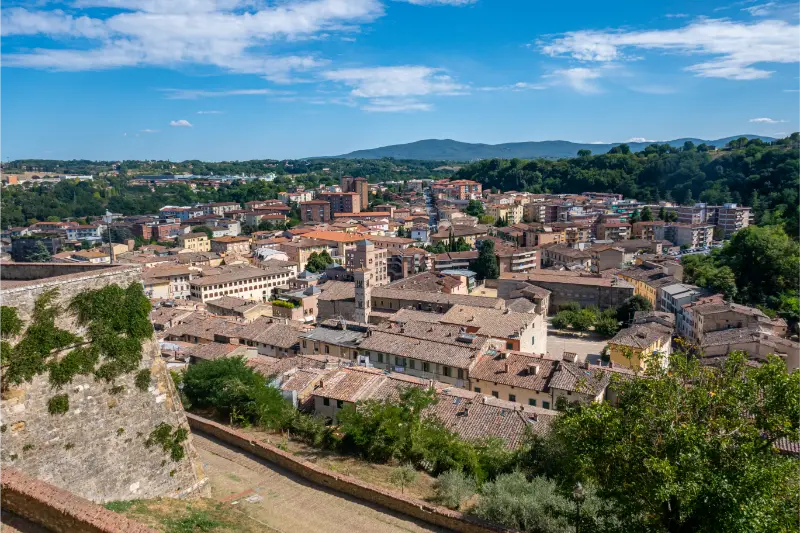
The listing also states that the activity is available in Italian and English and that weather can trigger organizer cancellation. Woodland conditions matter: mud, heat and heavy rain affect both comfort and where the hunt can take place.
San Miniato: why the name matters
San Miniato, between Florence and Pisa, is one of Tuscany’s best-known truffle centres and is especially associated with prized white truffles in autumn. If your trip falls in the main autumn season, combining a hunt with the town and its truffle culture makes sense. Outside that period, operators may search for other truffle species that are legally in season.

Do not book from a photo of a white truffle and assume that is what you will find. Ask which species is in season on your date and whether the tasting menu uses fresh local truffle, preserved products or truffle-flavoured oil. Those are very different culinary experiences.
Val d’Elsa and Chianti: easier to combine with a Florence itinerary
The hills between Florence and Siena are practical if you are based in Florence, Siena or San Gimignano. Current GetYourGuide products combine a woodland hunt with a winery meal and wine, and there are private products that add San Gimignano. These longer formats can be efficient, but they should still devote meaningful time to the hunter and dogs.
A two-hour focused hunt is often more educational than a seven-hour sightseeing tour where “truffle hunting” occupies a short segment. Choose based on your priority: field craft and ecology, or an all-day Tuscan food-and-wine excursion.
What happens during a real hunt
Expect a walk on uneven woodland or field paths rather than a manicured vineyard stroll. The truffle hunter watches the dog, reads changes in behaviour and manages the excavation so the underground fungus and surrounding ground are treated correctly. A good guide explains why certain trees and soils matter, how dogs are trained and why harvesting is regulated.
You are a guest in that process. Do not distract the dog, dig independently or expect to keep whatever is found. Ownership and use of the truffle are determined by the organizer and land arrangements. If the experience ends with a meal, ask how the truffle is incorporated and whether the amount depends on what is found that day.
Shoes, clothing and mobility
Closed walking shoes with grip are far more appropriate than sandals or city trainers with smooth soles. In autumn the ground can be wet and muddy. Long trousers protect against vegetation, insects and scratches. Bring a light waterproof layer if the forecast is unstable.
If you have limited mobility, ask for the exact terrain. “One-hour walk” does not tell you gradient, mud, roots or distance. A tasting-only truffle experience in town may be a better option for someone who cannot handle uneven woodland.
How to judge the food component
Fresh truffle is aromatic and expensive, so portions are naturally modest. A credible meal may shave truffle over eggs, pasta or another simple dish that lets the aroma dominate. Be cautious when every course is described as “truffle” without explaining whether fresh truffle, preserved sauce or flavoured oil is used.
- Ask which truffle species is expected in season.
- Ask whether the hunt is on private land and led by a professional hunter.
- Confirm actual hunt duration separately from transfer and lunch.
- Check whether lunch, wine and transport are included.
- For severe allergies or vegetarian needs, contact the operator directly.
Seasonal reality: the species changes
Tuscany has several edible truffle species with different legal harvesting periods, so the word “truffle season” is too simplistic. Autumn is famous for white truffle, but summer and winter experiences may search for different species. A knowledgeable operator should tell you what is realistically in season rather than promise the most expensive type year-round.
Weather in the weeks before your visit can affect production. This is another reason a professional hunt may be educational even on a day with a modest find: watching the dog work and learning habitat can be the core experience.
If the menu advertises a specific fresh truffle, ask whether it is guaranteed as an ingredient independent of the morning’s hunt. Some organizers source additional truffles for the meal; others base the dish on the day’s result.
When I would book each area
Choose San Miniato if autumn white-truffle culture is central to your trip. Choose Val d’Elsa for a focused countryside search with minimal extras. Choose Chianti or San Gimignano if you want to combine truffles with wine and a longer meal. If you are travelling outside autumn, choose the operator for its educational quality rather than chasing a specific prestige species that may not be in season.

Compare a current Tuscany truffle experience
Check the season, actual hunting time, meal inclusion and meeting point. The linked product combines a hunt with a winery meal; other formats may be shorter or private.
See current truffle-hunting optionAffiliate link: Tuscany Explorer may earn a commission at no extra cost to you. Prices, schedules and availability can change.
Frequently asked questions
Are truffles guaranteed?
No genuine woodland search can honestly guarantee that guests will find a particular species. Season, weather, habitat and the dog all matter.
When is white-truffle season?
Autumn is the key period associated with Tuscan white truffles, but legal seasons are species-specific. Ask the operator which species is actually in season on your date.
Can children join?
Some operators accept families, but terrain and duration vary. Confirm the child policy and whether the youngster is comfortable walking quietly in woodland.
What should I wear?
Closed shoes with grip and long trousers are sensible; add rain protection in unstable weather.
Is a truffle lunch the same as a truffle hunt?
No. A hunt is an outdoor activity with hunter and dog. A tasting or lunch may be added afterward but should be described separately.
A final booking strategy
For truffle hunting in Tuscany, I would shortlist no more than three products and compare them side by side. Open the full inclusion list, cancellation policy and meeting-point map rather than deciding from the headline. Write down actual activity time, transfer time, group size, physical requirements and what happens if weather changes. This catches the most common mismatch between what a traveller imagines and what the operator is selling.
Then check the newest date-specific availability. Marketplace pages aggregate products from different suppliers, so two activities with almost identical names can have completely different rules. Screenshot or save the final voucher after booking, including the emergency contact and meeting instructions. On rural Tuscany tours, being at the correct meeting point ten to fifteen minutes early is more important than it sounds because guides may not be able to delay the whole group.
Finally, keep the rest of that day realistic. Experiences become disappointing when they are squeezed between timed attractions with no buffer. Allow for rural traffic, weather adjustments, a meal that runs long and the simple fact that good guides sometimes spend a few extra minutes answering questions. The purpose of booking an experience rather than merely transporting yourself through the landscape is to have enough time to understand what you are seeing.
Operational details were checked in September 2026. Tour products, prices, meeting points and weather policies can change, so re-check the booking page for your date.