Horseback Riding in Tuscany: Chianti, San Gimignano & Val d’Orcia Tours
Horseback riding is one of the few Tuscany tours where “beginner friendly” needs to be read very carefully. A calm one-hour walk on trained horses is different from a multi-hour trail ride, and every stable can set its own age, weight and experience limits. The landscape may be the selling point, but the quality of the experience depends on horse welfare, group size, guide supervision, terrain and whether the advertised duration refers to saddle time or the entire tour with transfers and lunch.
Verification note: the concrete tour examples and practical details below were checked against current operator, marketplace or official Tuscany tourism pages in September 2026. I separate stable geography from product-specific conditions because schedules, prices, minimum ages and inclusions can change.
Horse-riding formats you will see in Tuscany
| Format | Actual riding | Typical extras | Best for |
|---|---|---|---|
| Ranch ride | About 1 hour | Briefing, helmet | First-timers and short itineraries |
| Ride + winery lunch | About 1–1.5 hours within a 4–6 hour program | Wine tasting, lunch, transfers | Couples and food/wine travellers |
| Long trail | 2–4 hours or more | Sometimes picnic/estate visit | Experienced or fit riders |
| Private ride | Custom | Transfer or winery can be added | Mixed-ability couples/groups |
Use actual saddle time, not tour duration, to compare products
A current Florence product on GetYourGuide lasts five hours but includes a 1.5-hour horseback ride, transfers and a winery visit with lunch and four wines. That can be excellent value if you want the whole day format, but it is not a five-hour ride. Likewise, a Visit Tuscany listing around San Gimignano combines about one hour of riding with lunch and wine tasting. Always separate “experience duration” from “time on horseback.”
If riding is the main reason you are booking, ask for approximate saddle time and whether pace is walk-only, mixed walk/trot or adapted to the group. A beginner group will usually move at the pace of its least experienced rider, which is the correct safety choice.
Chianti and San Gimignano: easiest for a combined experience
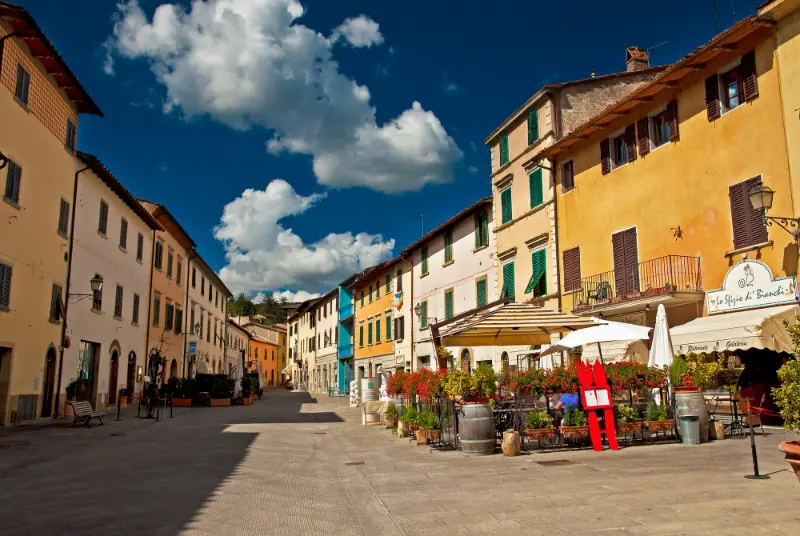
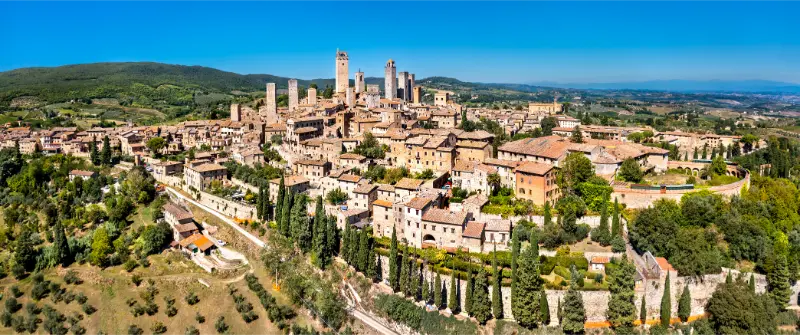
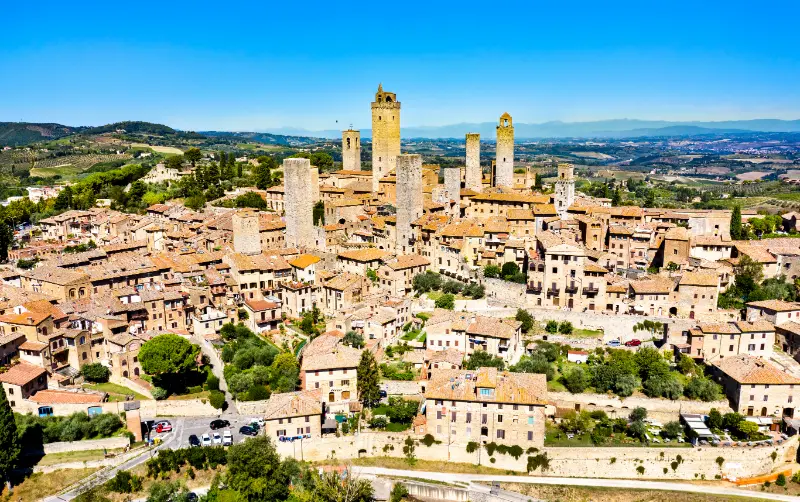
The Chianti countryside gives you vineyard roads, olive groves and woodland within easy reach of Florence and Siena. The verified Tuscany on Wheels listing near San Gimignano is designed even for first-time riders and combines the ride with wine and food. Current Florence products also offer round-trip transfer to a riding centre south of the city before moving on to a historic wine estate.
This hybrid format works well for couples where only one person is passionate about horses: the riding segment is meaningful but does not dominate the day. If both travellers are experienced riders, a dedicated stable or private trail is likely to be more satisfying.
Val d’Orcia: beautiful, but logistics are different
Val d’Orcia is visually ideal for riding, with open agricultural landscapes and long views, but it is farther from Florence. If you specifically want Pienza, San Quirico or Montalcino countryside, stay locally and book a nearby stable rather than spending much of the day in transfers. The same principle applies to any southern Tuscany experience: proximity improves the day.
Ask whether the route uses estate tracks, local lanes or mixed road sections. Photographs of cypress roads do not tell you the actual trail. Operators may change the route according to weather, ground conditions and rider ability.
Beginner does not mean zero requirements
A responsible beginner ride still expects you to follow instructions, mount and dismount, maintain balance and remain calm around the animal. Current examples provide helmets and a short basic lesson or arena assessment. Pregnant travellers and people with certain mobility or back issues may be excluded by individual operators.
Weight limits are common because horse welfare matters. The Visit Tuscany San Gimignano/Chianti listing currently states a maximum of 110 kg and a minimum age of 15 for that specific product. Do not apply those numbers to every stable, but use them as a reminder to check the product-specific rules before booking.
What to wear and bring
Wear closed shoes with a secure sole and long trousers. Avoid loose bags, scarves or clothing that can catch. Helmets should be provided by a professional operator; if the listing is unclear, ask. Sun protection matters on exposed rides, while spring and autumn mornings can be cool.
- Tell the guide your honest riding level.
- Disclose relevant injuries or balance problems before the ride.
- Do not assume your child can participate because another stable allows the same age.
- If wine follows the ride, the sequence is safer than drinking before riding.
- Check whether transfers are included or you must reach a rural ranch independently.
Horse welfare is part of tour quality
Look for calm, appropriately matched horses, correctly fitted tack, rest and water, and guides who are willing to say no when a rider is unsuitable. A good operator does not promise speed or advanced riding to a mixed novice group. Reviews can help, but observe how the listing talks about the animals and safety—not only scenery and wine.
If the experience includes photography, never pressure a guide to stop in an unsafe road or slope. The best images usually come from designated viewpoints where horses can stand calmly.
Questions to ask the stable before a serious ride
If you are an experienced rider, give concrete information: years of riding, recent frequency, whether you are comfortable at trot/canter and what disciplines you know. “Advanced” means different things to different people. The stable can then match you to a horse and route more responsibly.
For novice riders, ask how much instruction is included before leaving the arena. A five-minute explanation may be enough for a slow walk on a very quiet horse, but not for mixed terrain. Also ask how many guides accompany the group and whether the route returns to the same ranch or uses a transfer.
If animal welfare is important to you, it should be, observe body condition, tack fit and how guides handle reluctant horses. Professionalism is visible before the trail starts.
Who should choose a riding-and-wine tour?
It is ideal for travellers who want an active countryside segment but do not need a technical equestrian day. If you want several hours in the saddle, contact a riding centre directly and describe your experience precisely. If you are nervous around horses, an e-bike or Vespa passenger tour gives a similar open-air countryside feeling without animal handling.
Compare current horseback riding experiences
Check actual saddle time, rider level, age/weight rules, transfer arrangements and whether lunch or wine is included.
Compare Tuscany horse-riding toursAffiliate link: Tuscany Explorer may earn a commission at no extra cost to you. Prices, schedules and availability can change.
Frequently asked questions
Can complete beginners ride in Tuscany?
Yes on products explicitly designed for beginners, after a briefing and assessment. Do not book an advanced trail simply because the scenery appeals to you.
How long will I actually ride?
Check saddle time. A five-hour tour may include only 1–1.5 hours on horseback plus transfers, winery and lunch.
Are there weight limits?
Often yes, and they are operator-specific. One current San Gimignano/Chianti listing states 110 kg; always check your exact tour.
Can children join?
Age rules vary widely. One verified product uses a minimum age of 15, while other stables may offer family rides.
What shoes should I wear?
Closed, secure footwear and long trousers are the safest default. Helmets should be supplied by the operator.
A final booking strategy
For horseback riding in Tuscany, I would shortlist no more than three products and compare them side by side. Open the full inclusion list, cancellation policy and meeting-point map rather than deciding from the headline. Write down actual activity time, transfer time, group size, physical requirements and what happens if weather changes. This catches the most common mismatch between what a traveller imagines and what the operator is selling.
Then check the newest date-specific availability. Marketplace pages aggregate products from different suppliers, so two activities with almost identical names can have completely different rules. Screenshot or save the final voucher after booking, including the emergency contact and meeting instructions. On rural Tuscany tours, being at the correct meeting point ten to fifteen minutes early is more important than it sounds because guides may not be able to delay the whole group.
Finally, keep the rest of that day realistic. Experiences become disappointing when they are squeezed between timed attractions with no buffer. Allow for rural traffic, weather adjustments, a meal that runs long and the simple fact that good guides sometimes spend a few extra minutes answering questions. The purpose of booking an experience rather than merely transporting yourself through the landscape is to have enough time to understand what you are seeing.
Operational details were checked in September 2026. Tour products, prices, meeting points and weather policies can change, so re-check the booking page for your date.