Family Farm Experiences in Tuscany: Animals, Cheese, Olive Oil & Rural Days
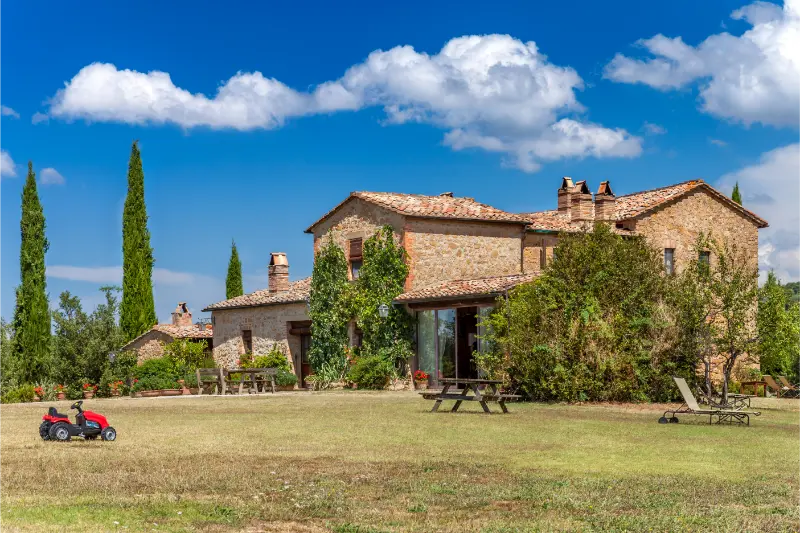
A Tuscany farm experience can be one of the best family activities in the region because children get something more immediate than another church or wine cellar: animals, eggs, gardens, cheese, olive trees and a meal connected to the place. The problem is that ‘farm experience’ is used for everything from a ten-minute animal stop to a structured half-day agricultural visit. Families should read the activity description with the same care they would use for a theme park ticket.
Current 2026 examples show the range. Fattoria San Michele a Torri offers a guided farm-life experience with vineyards, gardens, olive groves, feeding hens, collecting eggs and planting seasonal vegetables. Fattoria di Maiano advertises a donkey activity suitable from age three. Near Cortona, a cheese-making experience teaches pecorino, raveggiolo and ricotta and includes a farm visit and tasting. Those are three very different days.
Family farm experiences compared
| Experience | What children do | Best age profile | Adult interest |
|---|---|---|---|
| General farm-life day | Feed animals, collect eggs, garden, learn about wine/oil | Young children through teens depending on program | Agriculture, lunch and estate history |
| Donkey experience | Feed, groom and build confidence around animals | Current Maiano product: from age 3 | Botanic garden and estate setting |
| Cheese-making | Hands-on production, animals, tasting | Older children often engage more with the process | Strong food/craft content |
| Family wine/farm tour | Animals, honey/cheese, farm products while adults taste | Mixed-age family groups | Wine without making the entire day adult-only |
Fattoria San Michele a Torri: a useful benchmark
The current Visit Tuscany listing for Fattoria San Michele a Torri is unusually clear about activities: a guided route through vineyards, gardens and olive groves; feeding hens; collecting fresh eggs; planting seasonal vegetables; and learning about winemaking and olive-oil production. It is explicitly presented as family friendly and includes an authentic Tuscan lunch in the on-site restaurant. This is the kind of listing families should look for because it tells you what children actually do.
When comparing another farm, ask whether animal interaction is guaranteed or simply possible if the farm schedule allows. Real farms prioritise animal welfare and work, so activities can change. A good operator will explain that rather than stage-manage every minute like an attraction.
Donkeys at Fattoria di Maiano
Fattoria di Maiano currently offers a specific experience with Amiata donkeys. Guests feed and groom the donkey as part of a gradual interaction, and the listing states that the activity is suitable for adults and children from age three. Entry to the Botanic Garden is included for participants, extending the visit beyond the animal session.
For very young children this focused format can be better than a long farm tour. Ask how long the donkey activity itself lasts, whether an adult must accompany each child, what footwear is required and what happens in heavy rain. Animal encounters should always be supervised; children should not be encouraged to chase, hug or feed animals outside the guide’s instructions.
Cheese making near Cortona
Visit Tuscany currently lists a farm-based cheese course near Cortona where participants learn traditional methods for pecorino, raveggiolo and ricotta, meet farm animals and finish with a tasting that includes local foods and wine. This is a much more hands-on food experience than a normal cheese tasting and works especially well for curious older children and teenagers.
If booking cheese-making with children, ask about hot liquids, sharp tools, hygiene rules and how much of the process guests actually perform. ‘Workshop’ can mean watching the producer demonstrate while you stir once, or it can mean a genuinely participatory class. Neither is necessarily wrong, but parents should know which one they are buying.
Wine on a family farm day
Parents do not have to avoid every wine estate when travelling with children, but the day should not be designed solely around adults sitting through multiple tastings. A current Visit Tuscany family tour around San Gimignano combines a farm with animals, honey and cheese with local-product tastings, while still including wine for adults. That model works because children have an activity and story of their own.
Check transport carefully if wine is included. A guided minivan tour removes the drink-driving issue, while a self-drive farm day requires one adult to remain fit to drive. The easiest family logistics often come from a single farm with lunch rather than visiting three wineries and expecting children to wait through each tasting.
Browse current Tuscany family and farm experiences
Compare age limits, activity length and what children actually do. Availability at working farms can be seasonal.
Browse Tuscany family experiencesAffiliate link: Tuscany Explorer may earn a commission at no extra cost to you.
What to pack for a farm experience
- Closed shoes that can get dusty or muddy
- Sun hat and sunscreen
- Water bottle
- Light rain layer outside high summer
- Spare clothes for younger children
- Hand wipes, while still following farm hygiene rules
- Any allergy medication your family normally carries
- Small bag rather than a large suitcase
- Questions about animals/food to keep children engaged
- Patience: real farms do not run like timed theme-park rides
Food allergies and animal allergies
Contact the operator in advance for serious allergies. Cheese-making obviously involves milk; farm lunches may include nuts, eggs, gluten and cured meats; animal areas can expose visitors to hay, dust and dander. A generic dietary field on a booking form is not enough for a severe allergy. Get written confirmation of what can and cannot be accommodated.
Frequently asked questions
What age is best for a Tuscany farm experience?
There is no single age. Current examples range from donkey interaction from age three to food-production activities better suited to older children. Match the activity rather than the label.
Can we visit a farm without booking?
Some agriturismi have shops or restaurants, but guided farm activities normally require a reservation because staff and animal routines must be organised.
Are farm experiences available year-round?
Many are, but the content changes with season. Harvest, garden work and animal routines vary. Ask what will actually happen on your date.
Do family farm tours include lunch?
Some do and some do not. Fattoria San Michele a Torri’s current farm-life offer includes a Tuscan lunch, while other activities may end with only a tasting.
Can adults still taste wine?
Yes on many products, but family-friendly design means wine should not be the only purpose of the visit. If self-driving, one adult needs to remain fit to drive.

Operational details were checked in September 2026. Prices, schedules, minimum ages, meeting points and inclusions can change, so re-check the booking page for your date.
How to make the experience work in a real Tuscany itinerary
Treat family farm experiences Tuscany as a fixed part of the day rather than squeezing it between timed museums, long restaurant reservations and another distant town. Rural Tuscany travel is slower than the map suggests, while Florence workshops often require you to arrive before the stated start time. Keep at least thirty to sixty minutes of buffer around transport and parking when the meeting point is outside a railway station or major attraction.
Read the final voucher after booking. Marketplace pages summarise the product, but the voucher normally contains the definitive meeting instructions, emergency contact, what to bring and last-minute supplier notes. Save it offline because mobile reception can be inconsistent in rural areas. If the operator changes the meeting point or route because of weather, reply promptly so there is a written record of the new arrangement.
Finally, compare the cost of the organised experience with the independent alternative honestly. A tour price may look high until you add rental-car costs, fuel, parking, winery appointments, equipment hire, a guide and the value of not having to navigate. On the other hand, a simple museum or town visit may be far cheaper and more flexible independently. Pay for the parts you cannot reproduce easily on your own: specialist access, instruction, equipment, safe transport or meaningful contact with a producer or artisan.
Independent alternative: when you do not need an organised tour
Families with a rental car can often book farm activities directly and build a relaxed half-day around them. This is usually better than a long regional coach tour because children get fewer transfers and more time with animals, gardens or food preparation. An organised transfer is useful when the farm is remote, when both adults want to taste wine, or when the experience is combined with several producers. Do not select a farm only because it is closest to Florence; select the activity that matches your child’s attention span and interests.
Ask what children actually do. Feeding animals, collecting eggs, kneading pasta or making fresh cheese is fundamentally different from standing through an adult farm-and-wine explanation. Also ask how long the structured activity lasts and how much is free time or lunch. For toddlers, shade, toilets, stroller terrain and hand-washing matter more than the number of products tasted. For older children, a concrete task and a result they can eat or take home usually makes the visit more memorable.
Accessibility, timing and the final booking check
Do not rely on a generic accessibility icon. Historic centres have steps and uneven paving; farms and vineyards have gravel and slopes; boats use gangways and ladders; workshops may be upstairs in old buildings. If someone in your group has reduced mobility, contact the supplier with the exact limitation and ask about the entire route from meeting point to toilet, seating and activity area. The same applies to pregnancy, back problems and other restrictions on active experiences: the operator’s written answer is more useful than a marketplace category label.
Recheck the supplier message 24–48 hours before the activity for the actual meeting point, start time and weather note. Tuscany experiences often depend on small businesses, seasonal timetables and working farms rather than mass-attraction infrastructure. That is part of their appeal, but it means punctuality and communication matter. Build the day around the booked experience instead of assuming it will function like a museum where you can arrive whenever you like.