
Tuscan Olive Oil: Toscano IGP, Chianti Classico DOP and Frantoio Visits
Good Tuscan olive oil is easy to romanticise and surprisingly easy to misread. “Extra virgin” is a product category; Toscano IGP and Chianti Classico DOP add protected geographic rules. A dark green colour is not, by itself, proof of quality, and a Tuscan-looking bottle does not necessarily mean the olives were grown, milled and packed under a Tuscan protected designation. The most useful visitor experience is therefore part tasting, part label-reading lesson.
Fact-check note: denomination rules, producer visits and practical information in this article were checked against primary or official tourism sources in September 2026. Where a price or opening time is mentioned, treat it as a dated reference rather than a permanent tariff.
Quick facts that matter
| Toscano IGP protected since | 1998 |
|---|---|
| Key Toscano IGP rule | Harvest, milling and packaging take place in Tuscany under the specification |
| Harvest year | Mandatory on Toscano IGP label |
| Chianti Classico DOP oil | Protected DOP since 2001 |
| Colour | Not a reliable quality indicator |
What Toscano IGP guarantees
The Consorzio for Toscano IGP states that the designation has been protected since 1998 and that all phases — from olive harvest and milling through packaging — must take place in Tuscany under the production specification. The current rules also allow specific additional geographic mentions such as Colline Senesi, Colline di Firenze, Montalbano, Monti Pisani, Seggiano and others when their requirements are met.
One practical detail is especially useful for shoppers: the specification requires the production/harvest year to appear on the label of Toscano IGP. That gives you a concrete way to distinguish a recent harvest from an older bottle. It is more informative than judging by bottle shape or a farm illustration.
The consortium describes typical Toscano IGP sensations as fresh vegetal notes — olive, artichoke or almond — with varying bitterness and pungency. Those bitter and peppery sensations are not defects in themselves.
Chianti Classico DOP oil is a different protected designation
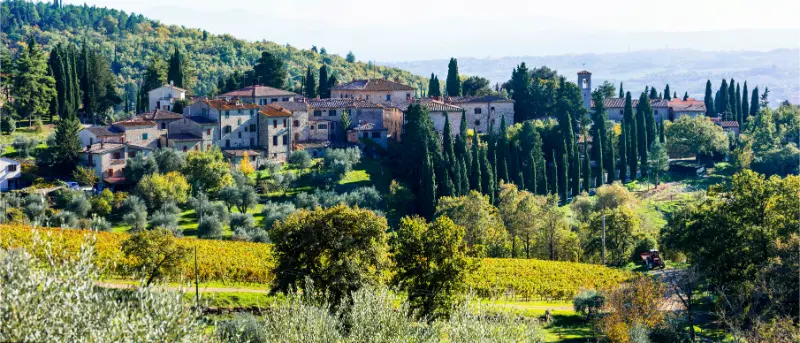
Chianti Classico DOP extra-virgin olive oil is protected by its own rules and consortium. The Chianti Classico organisation says the DOP has been protected since 2001 and characterises the oil by fruity flavour, raw artichoke and fresh-herb notes, with a pleasant peppery finish.
Do not use “Chianti oil,” “Tuscan oil” and “Toscano IGP” interchangeably. A producer in Chianti may make excellent extra-virgin oil that does not carry the DOP, while a Toscano IGP bottle follows a different protected specification. The label tells you which guarantee applies.
Colour is not a quality test
One of the most persistent olive-oil myths is that greener means better. Producers such as Pruneti explicitly point out that colour is not a guarantee of quality. Professional sensory evaluation often uses coloured tasting glasses precisely so colour does not bias the taster.
Focus instead on freshness, aroma, balance, absence of defects, harvest information and storage. Oil oxidises with time, heat, light and oxygen. Dark glass or other protective packaging and sensible storage matter. Once opened, do not keep a special bottle for years waiting for a perfect occasion; use it while its aromas are still vivid.
Where to learn through a tasting
Pruneti operates its Extra Gallery in Greve in Chianti and an oil mill at San Polo in Chianti. The company describes the Greve space as an olive-oil education and tasting concept, and its restaurant project is built around pairing different extra-virgin oils with food. This is a useful stop if you want to taste monovarietal and blended oils side by side rather than simply buying a bottle.
Fattoria di Maiano, about 5 km from Florence near Fiesole, has an estate olive mill and describes guided oil-mill experiences that move from olive groves through milling, storage and bottling to tasting. Its olive-harvest activity is seasonal, normally tied to the October–November milling period. Current availability varies, so contact the farm before planning a special journey.
If you visit during harvest, ask whether the mill will actually be operating on your date. Watching a silent mill in August and seeing freshly harvested olives processed in autumn are very different experiences.
How to taste extra-virgin olive oil
Pour a small amount into a tasting cup, warm it gently in your hand, smell first, then sip enough to coat the mouth. Draw in a little air and notice fruitiness, bitterness and the peppery sensation at the back of the throat. Between samples, use water and a neutral food such as apple if offered.
Do the first tasting without bread. Bread is excellent for enjoying oil but can hide subtle differences during comparison. After you have tasted the oil alone, try it on unsalted Tuscan bread, beans, grilled vegetables or a simple soup to see how it behaves as an ingredient.
If an oil smells stale, waxy, rancid or like old nuts, do not let a beautiful bottle or intense green colour persuade you otherwise.
Buying oil to take home
- For Toscano IGP, check the protected name and harvest year.
- Prefer packaging that protects the oil from light.
- Buy a size you will actually finish after opening.
- Keep bottles away from a hot stove and direct sunlight.
- Ask whether the oil is filtered; filtered versus unfiltered is a production choice, not a simple quality ranking.
- If flying, pack bottles carefully and check airline baggage rules.
Useful booking links for this trip
Browse Chianti tours and tastings
Compare rental cars for Chianti
Build this into a Tuscany itinerary
The regulatory and visit details below were checked against official consortium, municipal, tourism-board or producer pages in September 2026. Opening times, prices and bookable experiences can change, so confirm directly before travelling.
Questions worth asking at a frantoio
Ask the harvest date, olive varieties, how soon after harvest the olives were milled, whether the oil is filtered and how it is stored before bottling. Ask which protected designation, if any, the bottle carries. A producer may make both certified Toscano IGP or Chianti Classico DOP and non-certified estate oils. Tasting them side by side is useful because certification and sensory preference are related but not identical questions.
Before you set out
Check the producer or official consortium page again within 24–48 hours of travel. Rural opening times can change for harvest, private events and seasonal closures. Save the phone number and exact address, and allow extra driving time rather than scheduling tastings back-to-back. If alcohol is part of the experience, decide transport before the first pour, not afterwards. For food allergies or dietary restrictions, contact the producer directly because a tasting described simply as “local products” may include nuts, dairy, gluten, cured meats or other allergens.
Keep receipts and labels for products you want to remember. A photograph of the bottle or cheese label is more reliable than trying to reconstruct the producer name later. When an experience teaches you a regulation — grape percentage, ageing rule, protected mark or production area — compare that information with the official source linked at the end of this guide. That is the easiest way to separate a producer’s house style from the rules that apply to the whole denomination.
How much time to allow
Do not measure this experience only by the tasting duration. Add time for parking, check-in, questions, purchases and the transfer to your next stop. A listed 60-minute tasting can easily occupy 90 minutes door to door, while a farm or cellar tour may run longer during harvest. For a food-focused day, one major morning visit and one afternoon visit is usually more useful than three appointments. It leaves enough time to eat, take notes and understand the landscape connecting the producers.
When choosing between a guided tour and an independent visit, consider transport first. Guided options cost more but remove the driving problem when wine is involved and can connect rural addresses that are awkward by public transport. Independent travel is better for travellers who want to stop at villages and viewpoints, provided one person remains alcohol-free. Either way, reserve the key producer first and build the rest of the day around that fixed appointment.
How this guide was verified
The regulatory facts were taken from the relevant protection consortium or official regional/municipal source rather than copied from commercial travel blogs. Named farms, wineries, markets and restaurants were included only where a current official page confirmed that the place exists and describes the relevant experience or product. Dynamic details such as prices and opening times are presented as a September 2026 snapshot and are deliberately separated from permanent denomination rules.
This distinction matters in food and wine travel. A DOCG grape percentage is a rule until the production specification changes; a €35 tasting price can change tomorrow. A municipal market schedule is stronger evidence for opening patterns than an old review; a producer page is stronger evidence for its current tour than a third-party list. Recheck the dynamic details, but you should not have to second-guess the underlying definitions in this article.