What to See in Pisa Beyond the Leaning Tower: A City Worth More Than a Photo
Pisa is often treated as a one-photograph destination: arrive, see the Leaning Tower, take the obligatory picture and leave. That is the quickest way to miss the city. The tower is extraordinary, but Pisa was once one of the Mediterranean’s most powerful maritime republics, and traces of that wealth stretch far beyond Piazza dei Miracoli. The Arno river, Romanesque churches, medieval lanes, university courtyards and street art give the city a personality that deserves at least a full day.
The best way to visit is to see the famous square early, then walk away from it. Within fifteen minutes the crowds thin, café tables fill with students and Pisa starts to feel like a real Tuscan city rather than a backdrop for a single monument.
See Piazza dei Miracoli before the day-trippers arrive
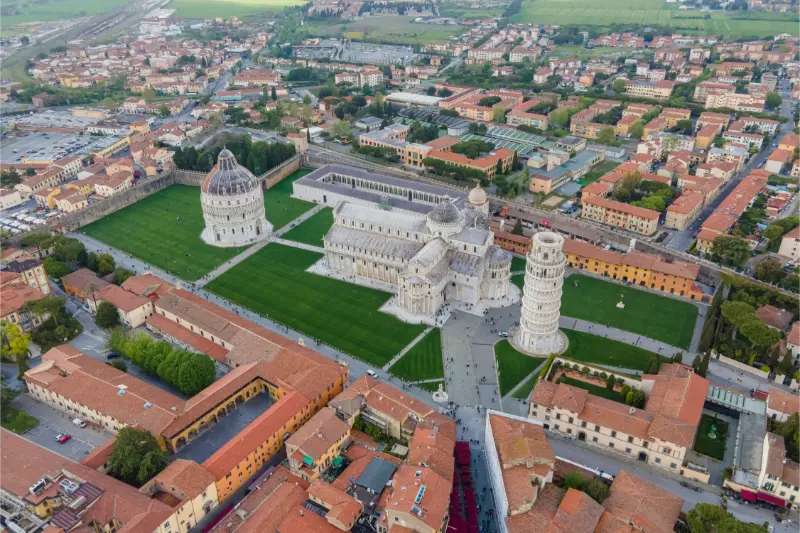
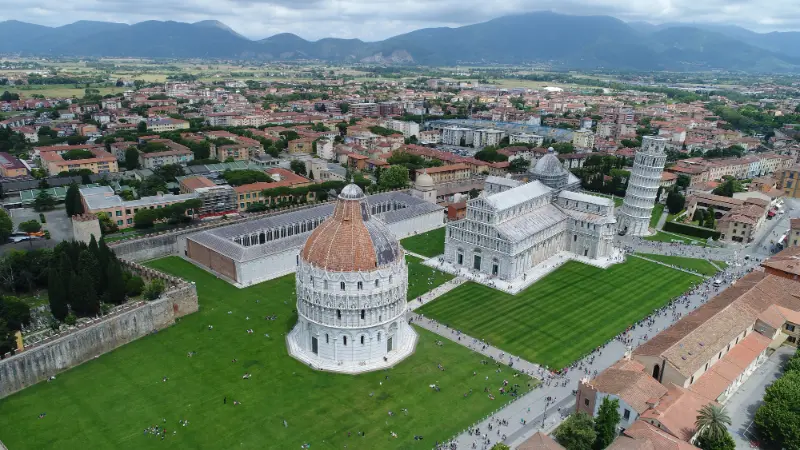
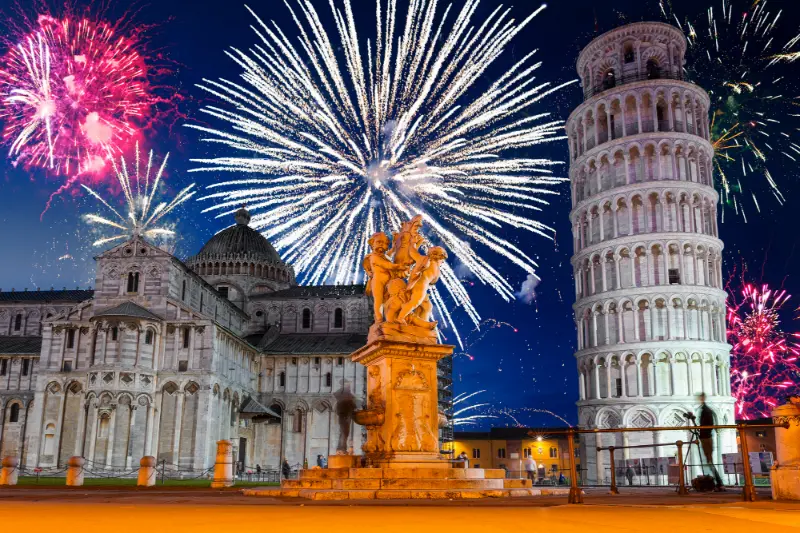
Piazza dei Miracoli is one of those places whose scale is difficult to understand from photographs. The Cathedral, Baptistery, Camposanto and Leaning Tower form a remarkably unified group of pale marble buildings floating above a wide green lawn.
The tower began leaning during construction because of unstable ground, but its architectural beauty matters as much as the tilt. If you plan to climb it, book a timed entry and travel light because access rules are strict. The climb spirals upward through the bell tower, and the sensation of the lean becomes surprisingly physical as you move.
Do not let the tower overshadow the Cathedral. Pisa’s Romanesque style influenced churches across Tuscany, and the interior reflects the wealth the maritime republic accumulated through Mediterranean trade.
Listen to the Baptistery
The Baptistery is the largest in Italy and is famous not only for its architecture but also for its acoustics. When staff demonstrate the resonance, a single voice can seem to multiply within the huge circular space. It is a small moment, but one that often becomes more memorable than another photograph of the tower.
Next door, the Camposanto Monumentale is calmer and more contemplative. Its long cloister encloses a lawn and contains medieval frescoes, tombs and fragments that survived wartime damage. If Piazza dei Miracoli feels hectic outside, the Camposanto offers a surprisingly peaceful contrast.
Walk along Via Santa Maria toward the river
Leave the square via Via Santa Maria and walk south. The street connects Pisa’s monumental zone with the everyday city and leads naturally toward Piazza dei Cavalieri. This is an easy route to follow and far more rewarding than returning directly to the station.
Piazza dei Cavalieri was the political heart of medieval Pisa and was later reshaped by Giorgio Vasari. Palazzo della Carovana, now part of the Scuola Normale Superiore, gives the square an elegant Renaissance character. Because it is slightly removed from the tower route, it often feels much calmer.
Follow the Lungarni at golden hour
Pisa’s riverfront deserves time. The Lungarni are lined with palaces, churches and university buildings, and the Arno reflects their façades beautifully in late afternoon. Walk between Ponte di Mezzo and the smaller bridges, crossing from one bank to the other when a view catches your eye.
On the south bank, the tiny Gothic church of Santa Maria della Spina sits almost at river level. Its ornate marble exterior looks more like a jewel box than a conventional church. It is easy to miss if you move around Pisa only between the station and the tower.
See Keith Haring’s Tuttomondo
Near Pisa Centrale station, on the exterior wall of the Church of Sant’Antonio Abate, is Tuttomondo, the large mural Keith Haring painted in 1989. Its bright interlocking figures feel completely different from medieval Pisa, yet the work belongs naturally to the city because it is integrated into an ordinary urban street rather than isolated inside a museum.
If you arrive by train, it makes sense to see the mural either at the beginning or end of your day. It takes only a few minutes and immediately expands the image of Pisa beyond marble monuments.
Walk a section of Pisa’s medieval walls
The medieval walls offer a different viewpoint over the city and, where access is available, allow you to see Piazza dei Miracoli from above rather than only from the lawn. The route also reveals how the famous monuments fit into the wider urban landscape. Check access points before your visit, because entrances and opening arrangements can vary.
If you prefer to stay at street level, explore the lanes around Borgo Stretto. Arcades, cafés and shops make this one of the most pleasant parts of the centre for an unplanned walk.
Where to park in Pisa
If you are arriving specifically for Piazza dei Miracoli, the official parking area on Via Carlo Salomone Cammeo 51 is only a short walk from the monumental complex. It is much easier than trying to edge deeper into the historic centre and worrying about restricted streets.
For a longer visit, consider parking outside the most central zone and exploring the city on foot. Pisa is flat, compact and particularly easy to walk compared with hillier Tuscan cities.
Where to eat and where to stay
For a simple, characterful meal away from the tower-side tourist menus, Trattoria Da Stelio at Piazza Dante Alighieri 11 is a well-known local address in the university area. The location puts you close to Piazza dei Cavalieri and the river rather than only the monumental square.
For accommodation close to Piazza dei Miracoli without sleeping on its busiest streets, The Rif Boutique Hotel at Via Andrea Pisano 23 is an interesting option in a historic villa setting. From there, the tower complex is within easy walking distance. Check The Rif Boutique Hotel prices & availability
Useful booking tools for this trip
Tours & experiences: For guided visits, attraction tickets and bookable experiences in Pisa, See tours & tickets
How much time should you give Pisa?
Three hours is enough for Piazza dei Miracoli, but not for Pisa. A full day lets you see the monumental complex, Piazza dei Cavalieri, the Lungarni, Santa Maria della Spina and Tuttomondo without rushing. If you stay overnight, the city becomes noticeably quieter after day-trippers leave, and an evening walk along the Arno can be one of the nicest parts of the visit.
A practical route is Piazza dei Miracoli → Via Santa Maria → Piazza dei Cavalieri → Borgo Stretto → Lungarni → Santa Maria della Spina → Tuttomondo → Pisa Centrale. It is easy, mostly flat and shows several different sides of the city.
Discover more ideas in our Tuscany destination guides.
Spend time in the university quarter
Pisa is one of Italy’s historic university cities, and students give the centre an energy that has little to do with the Leaning Tower. Around Piazza Dante, Via Oberdan and the streets near Borgo Stretto you will find inexpensive cafés, bookshops and places that stay lively after many day visitors have left.
This is also a useful part of town for lunch. Instead of eating beside Piazza dei Miracoli, walk fifteen minutes toward the university streets. The change in atmosphere is immediate, and prices and menus generally feel less tied to sightseeing traffic.
Look for the Church of San Paolo a Ripa d’Arno
West of the centre, near the river, San Paolo a Ripa d’Arno is a Romanesque church sometimes nicknamed the “Old Cathedral.” Its striped façade and quiet position make it worth the detour for travellers who enjoy architecture. Nearby, the small Chapel of Sant’Agata adds another unusual medieval detail.
This area also works well if you want to continue toward the less touristy western riverfront before returning to the station.
What to eat in Pisa
Pisan cooking shares many Tuscan foundations but has its own local accents. Look for soups, game, grilled meats and dishes based on river or coastal fish. Cecina, a thin chickpea-flour pancake, is a simple snack found across this part of Tuscany and neighbouring Liguria. It is excellent when eaten hot and requires no formal restaurant stop.
At dessert, local bakeries may offer torta co’ bischeri, a traditional tart associated with the Pisa area, filled with rice, chocolate, pine nuts and spices. It is much more distinctive than ordering a generic dessert from a tourist menu.
See the city from both sides of the Arno
Many first-time visitors remain north of the river except for the walk to the station. Cross deliberately into the southern districts and you will find a quieter urban texture around Sant’Antonio and San Martino. The river itself is the best connector: rather than choosing a single bank, cross at Ponte di Mezzo, walk a section, then cross again farther west.
At dusk, stand on a bridge rather than immediately searching for a restaurant. Pisa’s palaces are not as grand as Florence’s, but their warm façades and reflections create a calm river scene that is one of the city’s most underrated pleasures.
Should you stay overnight?
If Pisa is only one stop on a fast Tuscany trip, a full day is enough. If your itinerary allows it, however, an overnight stay gives you two advantages: Piazza dei Miracoli early in the morning and the Lungarni after dinner. Both are far more relaxed outside the main day-trip hours.
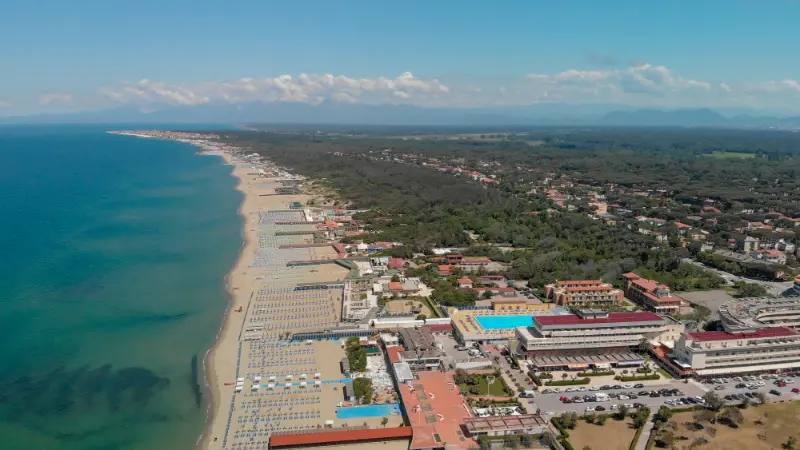
Pisa also works as a practical base for Lucca and the coast because of its railway connections and airport. That can be useful if you prefer fewer hotel changes. Instead of sleeping in a different town every night, you can spend two or three nights here and make short excursions while enjoying the city when it is at its quietest.
Want more accommodation options? Where to Stay in Tuscany: The Best Areas for Every Kind of Trip compares the best bases and makes it easier to choose the right location before you book.