
7 Days in Tuscany Without a Car: A Train-and-Bus Itinerary That Actually Works
7 Days in Tuscany Without a Car: A Train-and-Bus Itinerary That Actually Works is designed as a realistic route rather than a list of places that merely fit on a map.
Tuscany without a car is not a compromise if you build the trip around the region’s strongest rail and bus corridors. Florence, Pisa, Lucca and Arezzo are easy to combine by train, while Siena is often more convenient by direct bus from Florence. The mistake is trying to reproduce a Val d’Orcia road trip with public transport. This seven-day plan chooses places that are genuinely practical without a car and uses organised excursions only where rural transport would otherwise consume the day.
Itinerary at a glance
Use Florence as the main base for four nights, then Lucca or Pisa for two, with the final night positioned according to your airport. Day trips cover Siena and Arezzo. The western section links Pisa and Lucca by regional train. If you want one countryside experience, book a Chianti or Val d’Orcia tour from Florence or Siena rather than stitching together infrequent local services.
Travel times in Tuscany are shaped by hills, traffic, parking and the final walk into historic centres. A route that looks short in kilometres can still fill a morning once you include coffee, a scenic stop and ten minutes finding the right car park. The schedules below deliberately leave margin for those real moments.
Day-by-day Tuscany itinerary
Day 1: Florence arrival
Arrive by train, tram from Florence Airport or rail connection from Pisa and stay within walking distance of Santa Maria Novella or the historic centre. Spend the day on the Duomo, Piazza della Signoria, the Arno and Oltrarno. Without a car, your hotel location becomes the transport strategy, so a central room can save more time than a cheaper property on the edge of town.
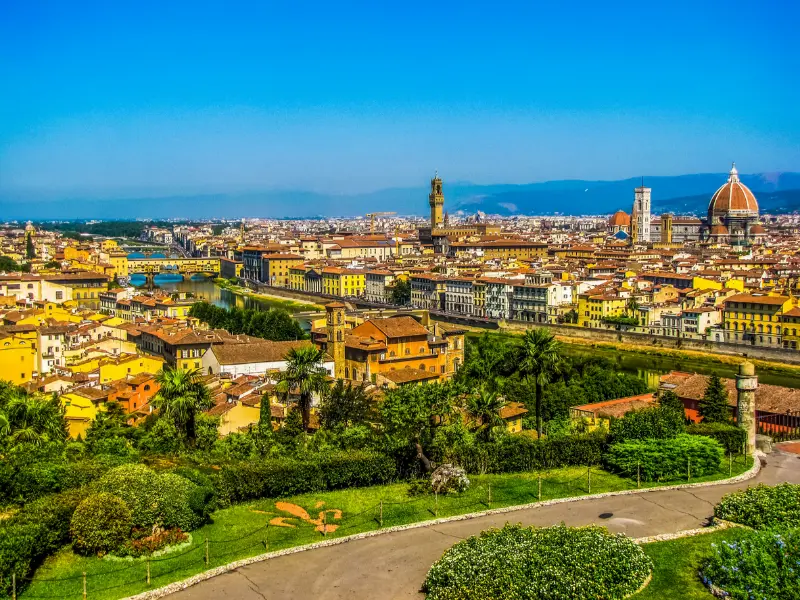
Hotel Santa Maria Novella at Piazza Santa Maria Novella 1 is a verified example directly in the area that works well for rail travellers. It is not the only good choice; the point is the location.
Day 2: Florence museums and viewpoints
Reserve a major museum, then explore the adjacent district. The absence of a car is a benefit today because Florence’s centre is designed for walking. Use local buses or taxis only for hillier viewpoints such as Piazzale Michelangelo if necessary.
Check tomorrow’s Siena bus departure in the evening. Timetables vary, and knowing the departure point before morning removes unnecessary stress.
Day 3: Siena by bus
Take a direct bus from Florence to Siena. The bus often has an advantage over rail for a day trip because it reaches the upper city area more conveniently than Siena’s train station below the centre. Walk to Piazza del Campo, the Duomo and contrada streets, and give yourself a long lunch before returning.
Do not book the final bus of the night as your only acceptable option. Keep an earlier backup in case a meal runs long or service changes. Use Autolinee Toscane for current regional bus information.
Day 4: Arezzo by train
Arezzo sits on the main rail corridor south of Florence and makes an excellent car-free day. Walk from the station to Piazza Grande, San Francesco and the historic centre. Compared with the previous days, Arezzo often feels calmer, and the rail geometry is simple enough that you can travel without a complicated connection.
Return to Florence for your final night there. This gives you one more evening in a city you now understand rather than another hotel change.
Day 5: Florence to Pisa, then Lucca
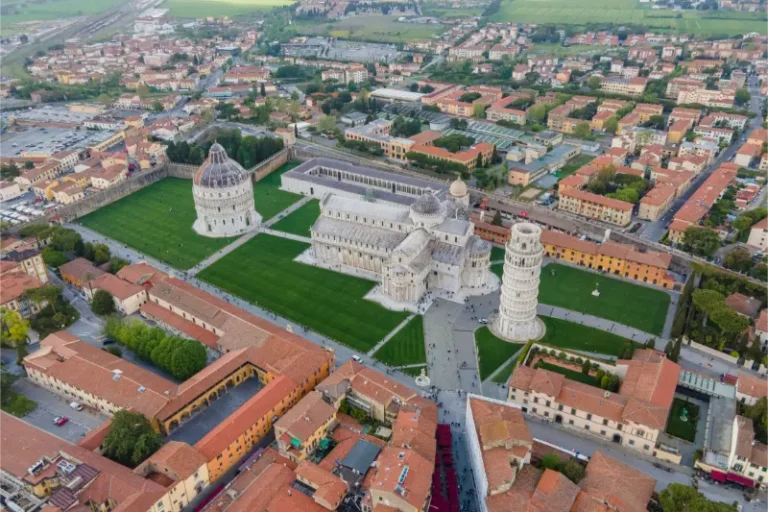
Take a regional train toward Pisa. See Piazza dei Miracoli and, if time allows, walk along the Lungarni or visit Tuttomondo near the station side of the centre. In the afternoon continue by train to Lucca, where the station is just outside the city walls.
Sleep in Lucca. You can walk from the station into the historic centre, which makes the arrival unusually easy with light luggage.
Day 6: Lucca at slow pace
Give Lucca a full day: walls, Piazza dell’Anfiteatro, San Martino, San Michele and neighbourhood streets. Renting a bicycle for the walls can be fun, but it is not necessary. A car would add almost nothing to this day.
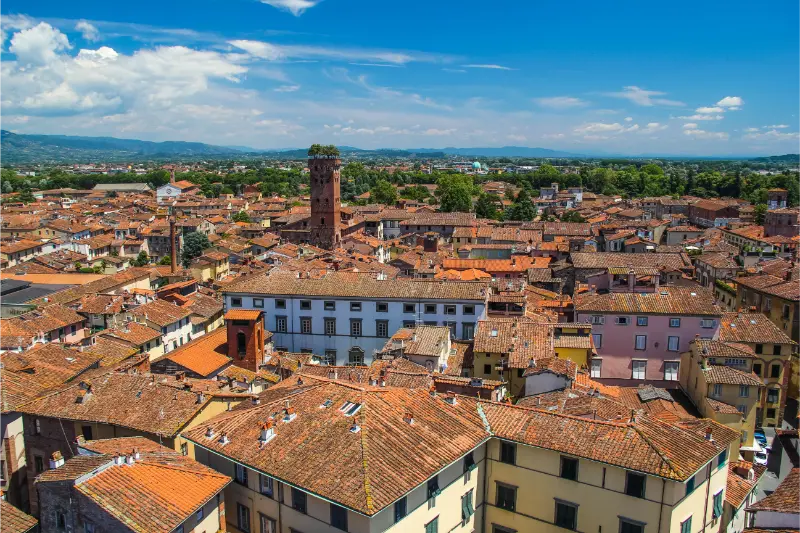
If you want sea air, Viareggio is reachable by train and can replace part of the afternoon. Otherwise stay in Lucca and enjoy the evening after day visitors leave.
Day 7: Pisa or Florence departure day
If you fly from Pisa, return by train and keep the final day there. If you fly from Florence, travel back the previous evening or choose a morning train with a very generous buffer. If departure is late, use the final hours for a second Pisa neighbourhood rather than attempting a rural detour.
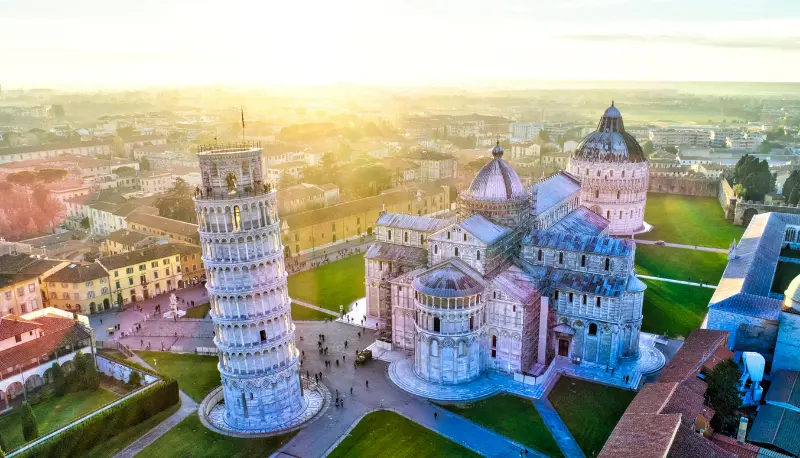
The final day is intentionally simple. Car-free trips work best when connections are protected rather than squeezed around one last attraction.
Where to stay
Two main bases are enough: Florence and Lucca/Pisa. This minimises luggage moves and takes advantage of Tuscany’s rail network. Siena works as a day trip; Arezzo works as a day trip; Pisa and Lucca combine naturally. The route is much more efficient than sleeping in a different city every night.
When comparing accommodation, look at the route before the room photographs. Check the exact driving or walking time to the next morning’s first stop, whether parking is truly on site or simply “nearby”, and whether you can walk to dinner. In rural Tuscany, a beautiful property can be inconvenient if every meal requires a night drive on unfamiliar lanes. In cities, the opposite can happen: a plain-looking hotel beside a station may save hours across the trip.
Getting around
Regional trains generally do not require the same advance commitment as high-speed services, but ticket validation rules and digital-ticket procedures can change, so read the current instructions when you buy. Use Trenitalia for live schedules. For buses, use Autolinee Toscane. Our Tuscany by train guide explains the network in more depth.
Before departure, recheck transport and access details on Trenitalia, Autolinee Toscane and the relevant municipal or attraction websites. Timetables, restricted-traffic rules, ferry schedules and seasonal access can change, and a ten-minute check before a travel day is more useful than relying on an old screenshot.
Useful booking tools for this trip
Tours & experiences: For guided visits, attraction tickets and bookable experiences in Tuscany, See tours & tickets
Trains & buses: Compare trains & buses when building the transport part of the trip.
Parking, ZTLs and arrival strategy
There is no parking problem, but there is a luggage problem. Cobblestones, stairs and station platforms make a medium suitcase more pleasant than a huge one. Choose hotels within a manageable walk of stations or use a taxi on transfer days. Do not assume every historic property has a lift.
For every historic city or hill town, search for the official parking information before you leave the previous stop, not when you are already at the gate. Save the car park in your navigation app and screenshot the route. This tiny habit prevents the most common arrival problem: following a blue line directly into a restricted street because the hotel address sits inside the old centre.
Food and memorable places to stop
A car-free itinerary gives you freedom to enjoy wine at dinner without worrying about driving, but it also makes late rural restaurants less practical. Eat in city centres where you can walk back to the hotel. In Siena, Osteria Le Logge at Via del Porrione 33 is a central established option; always check current opening days and reserve if the evening matters to you.
Restaurant hours and weekly closing days can change by season, so confirm them on the venue’s official site or by phone. A useful rule for itineraries is to reserve dinner only when the restaurant itself is part of the experience. On transfer days, flexibility is often more valuable than a reservation that forces you to leave a town just when you are enjoying it.
Best time for this itinerary
Spring and autumn make station walks and city days especially comfortable. Summer trains can be busy around weekends and coastal routes, so travel earlier when possible and protect yourself from midday heat. Winter works very well for this particular itinerary because every major stop has indoor attractions and reliable city infrastructure.
Local events can change hotel prices, parking availability and opening patterns even outside the main tourist season. Siena around the Palio, Florence during major fairs, coastal towns in August and wine areas during harvest all need more advance planning than an ordinary weekday. Check the calendar before fixing non-refundable accommodation.
How to adapt the route
If countryside is essential, use one guided day from Florence for Chianti or Val d’Orcia and remove Arezzo or one Lucca day. If you want beaches, add Viareggio. If you want art, keep all four Florence nights and use the western section only for Pisa. What does not work well is adding isolated agriturismi; without a car, they can turn every dinner and departure into a transfer problem.
Do not be afraid to remove a stop after booking. A good Tuscany itinerary has priorities and optional places. If weather, fatigue or a long lunch changes the day, skip the optional town instead of shortening every remaining visit. The region is unusually rewarding at the edges of the schedule: early streets, late squares, an unexpected viewpoint and an evening walk often become stronger memories than the attraction that was originally highlighted in bold.
What to book before you go
Book the things that can genuinely sell out or create long waits: major Florence museum slots, special restaurants, popular winery tours, high-season ferries with a vehicle, and distinctive countryside accommodation. Leave ordinary lunches, minor churches and most village walks flexible. This gives the itinerary structure without making it brittle.
Where to stay for this trip: Where to Stay in Tuscany Without a Car: Best Bases for Trains and Easy Day Trips. Check prices & availability
Final thoughts
The easiest Tuscany without a car is a different Tuscany, not an inferior one. It is built around art cities, walkable centres and rail corridors, with one carefully chosen rural excursion if you want it. In return, you avoid ZTL fines, parking searches and the stress of driving after wine. For many first-time visitors, that trade is excellent.