
Montalcino Winery Visits: Brunello Tastings, Reservations and a Safe Day Route
A good Brunello day is not the one with the highest number of tastings; it is the one where two very different wineries, Montalcino itself and safe transport fit together without rushing. The Consorzio del Vino Brunello di Montalcino maintains a producer directory with a specific filter for wineries that accept visits. Many require reservations and charge for tastings. That makes Montalcino different from a casual bar crawl: appointments structure the day, rural roads add travel time and alcohol makes transport planning part of the itinerary.
Connect this guide with our Montalcino guide, Tuscany Wine Experiences, Val d’Orcia scenic drive, 3 Days in Val d’Orcia and Where to Stay in Val d’Orcia.
Montalcino wine day at a glance
| Best number of wineries | 2 serious visits; 3 only with short tastings and a driver |
|---|---|
| Reservation | Strongly recommended / often required |
| Altesino | Visits by reservation, 10:00–18:00 |
| Caparzo | Visits by reservation, 9:00–19:00 |
| Banfi | By reservation; daily except public holidays |
| La Gerla | Mon–Fri 9:00–13:00 / 14:30–17:00; Saturday on request |
Start with the Consorzio directory, not a random “best winery” list
The official consortium directory lets you filter producers that receive visitors and provides contact, language and reservation information. This is more useful than choosing solely by brand recognition because Montalcino has many estates with different sizes, styles and hospitality formats.
Pick one historic or larger estate and one smaller producer if possible. Contrast is more memorable than tasting similar line-ups at three consecutive stops.
Altesino: a useful northern Montalcino reference
The consortium lists Altesino visits by reservation from 10:00 to 18:00, including weekends, with paid visits and service in Italian and English. The estate is associated with the Montosoli cru and gives you a reason to understand how site differences matter inside the denomination.

It works well as a morning appointment before entering Montalcino for lunch because the route does not require starting deep south of town.
Caparzo: another strong comparison point
Caparzo is also listed for paid visits by reservation, with broad visitor hours and weekend availability. Its history includes early work with the concept of a single-vineyard cru, which makes it a useful comparison with Altesino without requiring a technical wine degree.
If you visit both, do not schedule them back-to-back with only the map’s driving time. Allow buffer for tasting, purchases and rural roads.
Banfi: when a larger hospitality estate is what you want
Banfi accepts visits by reservation every day except public holidays according to the consortium. The Poggio alle Mura castle estate includes hospitality and dining, so it can function as a substantial half-day rather than only a cellar stop.
Choose Banfi when you want a broad estate experience; choose a smaller producer when conversation and a compact tasting are the priority. Neither format is inherently more authentic.
La Gerla: a smaller-scale option close to the town story
The consortium lists La Gerla with weekday hours split around lunch and Saturday visits on request, with small groups and paid tasting. The estate’s history and Sangiovese focus make it a useful counterpoint to larger hospitality operations.
This is exactly why two wineries are enough: different scales become part of the learning rather than disappearing into a long sequence of glasses.
Do not drive after a tasting day without a plan
Montalcino wine estates are spread across rural roads. A designated driver, private transfer or organised tour is the safest way to enjoy multiple tastings. “Spitting most of the wine” is not a transport plan, particularly when lunch and additional glasses enter the day.
If everyone wants to taste, book a guided driver/tour. If one person is driving, make that decision before the first appointment and keep the number of estates low.
Build Montalcino town into the middle of the day
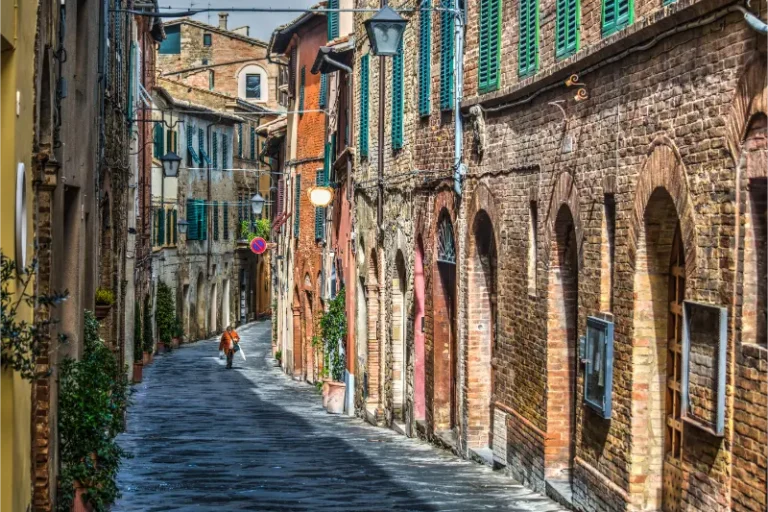
A winery-only itinerary misses the relationship between denomination and town. Use lunch or a late-afternoon walk for the fortress area and central streets. This also creates a useful break between tastings and prevents palate fatigue.
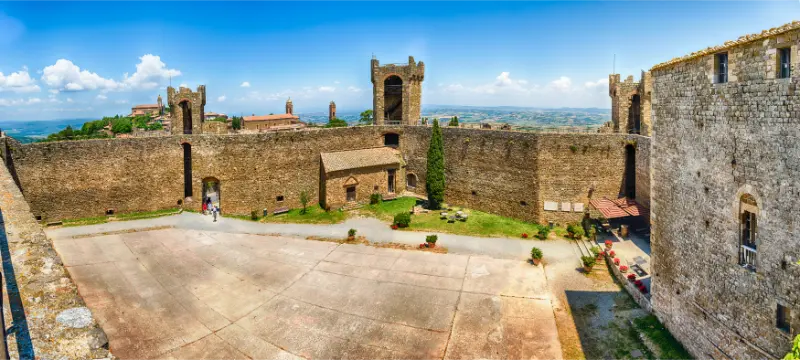
Our Montalcino guide covers the town itself, while the Val d’Orcia scenic drive helps place Montalcino inside the wider landscape.
A practical first-time plan
| 10:00–11:30 | First pre-booked winery, ideally north/east of town. |
|---|---|
| 12:00–14:00 | Montalcino walk and proper lunch. |
| 14:30–16:00 | Second winery in a different part of the denomination. |
| 16:30 onward | Return to accommodation, fortress walk or scenic stop with no further tasting. |
The route is intentionally limited to two estates. Add a third only with professional transport and short confirmed appointments.

Mistakes that make this experience harder than it needs to be
- Booking three or four full tastings because distances look small on a map.
- Leaving reservations until the day of travel.
- Choosing only famous brands without comparing visit style.
- Skipping lunch.
- Letting the person who planned to drive “taste just a little” at every stop.
Wine tourism is most enjoyable when the day has margins. Appointments, food and transport should feel deliberate, not like obstacles between pours.
Official information and booking
Use the producer directory and “visits in winery” filter maintained by the Brunello di Montalcino Consortium. Check the official page again close to your visit because opening hours, weather restrictions, ticket rules or temporary closures can change.
See Tuscany wine tours & tastings
Check Montalcino stays & availability
Final planning advice
For most travellers, two wineries are enough to understand that Brunello is not one uniform style. Make the estates different, put a real lunch between them and leave time for Montalcino itself.
If nobody wants to abstain from tasting, pay for transport. It is not an indulgence added to the wine day; it is part of the responsible cost of the experience.
Extra details that matter on the day
Harvest season can make winery schedules more complicated because hospitality operates alongside the agricultural work that creates the wine. Book earlier and accept that some production areas may be active or unavailable.
Buy wine only after considering luggage and temperature. A bottle left for hours in a hot summer car is not a souvenir strategy, and airline baggage limits can turn enthusiastic purchases into a logistical problem.
If you are new to Brunello, ask each producer to explain Rosso di Montalcino as well. Comparing the two helps you understand ageing, structure and the producer’s style without needing an advanced tasting vocabulary.
How to fit this stop into a wider Tuscany itinerary
Montalcino winery visits works best when the rest of the day is geographically coherent. Before adding another famous place simply because it appears close on a map, compare the route with What to See in Montalcino, Tuscany Wine Experiences, Val d’Orcia scenic drive and 3 Days in Val d’Orcia. These guides help you decide whether the next stop belongs in the same walking area, needs a train or car transfer, or is better saved for another day. The practical advantage is important: fewer unnecessary transfers usually means more time at the attraction, a better lunch break and less pressure from timed tickets.
For a first visit, keep one main objective before Montalcino winery visits and one flexible stop afterward. If the visit runs long, weather changes or traffic slows you down, the flexible stop can disappear without damaging the whole itinerary. This is especially useful in Tuscany, where historic centres, ZTL zones, rural roads and seasonal opening times can make apparently short distances take longer than expected.
Practical checks before you leave
Save the key operating details for Montalcino winery visits on your phone before setting out. In this guide the two details most likely to shape the day are Best number of wineries: 2 serious visits; 3 only with short tastings and a driver and Reservation: Strongly recommended / often required. Recheck them on the official source on the morning of the visit, especially in high season, around public holidays or after severe weather. A screenshot is useful in rural areas or crowded historic centres where mobile reception can be inconsistent.
Build a realistic buffer around Montalcino winery visits. Thirty to forty-five minutes of flexibility before the next fixed booking protects the itinerary from queues, parking searches, ZTL diversions, a slower meal or simply spending longer at the site than expected. Tuscany rewards unhurried visits; the easiest way to create that pace is to reduce the number of non-negotiable reservations rather than trying to make every transfer perfectly efficient.
If you are travelling with children, older relatives or anyone with limited stamina, decide in advance which part of Montalcino winery visits is essential and which part is optional. Historic paving, stairs, hills, summer heat and long outdoor stretches can change the practical difficulty of a visit even when distances look short. A shorter route with one strong viewpoint, museum section or tasting is usually better than completing every stop while everyone is tired.
Keep food, water and restroom timing separate from the attraction schedule. Do not wait until the exact end of Montalcino winery visits to solve lunch if the next transfer crosses a rural area or a busy historic centre. Carry water when outdoor walking is involved, and use a planned café or meal stop as a buffer between the main visit and the next cluster article rather than treating it as lost sightseeing time.