Brunello Wine Tours in Montalcino: Cellars, Tastings & Day Trips Compared
A Brunello tour is worth booking only if it gives you meaningful access to Montalcino wine, not merely a glass labelled Brunello somewhere on a long Tuscany coach itinerary. The territory is large, the wineries are spread across the slopes around Montalcino, and cellar styles range from small family estates to polished hospitality operations. A strong tour should explain the place, production and ageing before it asks you to compare wines.
Current 2026 offers show three very different products: a one-hour estate visit and tasting in the countryside, a town-based historic-cellar experience inside Montalcino, and full-day excursions from Florence that combine Brunello with Montepulciano, Pienza or lunch. These are not interchangeable. This guide helps you choose based on how much you actually care about wine versus sightseeing.
Choose the format before choosing the winery
| Format | Typical time | What you gain | What you give up |
|---|---|---|---|
| Single winery visit | About 1–2 hours | Vineyard/cellar context, focused tasting, slower questions | You need your own transport or transfer |
| Montalcino town + historic cellar | Roughly 2–3 hours | Walkable experience, wine plus town history | Less vineyard landscape |
| Full-day Brunello tour | Most of a day | Transport, one or more estates, lunch or villages | Higher price and less control over winery choice |
| Val d’Orcia combination day | 10–12+ hours from Florence is common | Pienza/Montepulciano scenery plus wine | Brunello is only one element of the day |
What a real Brunello tasting should explain
A useful tasting should clearly distinguish Brunello di Montalcino DOCG from Rosso di Montalcino and from other local or regional wines poured alongside them. It should also explain why producer style, vineyard position, vintage and cellar choices matter. If the host simply lines up glasses without discussing origin and ageing, you are getting hospitality rather than much wine education. That can still be enjoyable, but it is a different product.
One current Visit Tuscany listing at Sasso di Sole includes a walk through the vineyards, the vinification cellar and barrel room, followed by three wines: a rosé sparkling wine, Orcia Sangiovese DOC and Brunello di Montalcino DOCG. The published price is €20 and visits are listed at 11:00 and 16:00 for much of 2026. Those details may change, but the structure is an excellent benchmark for a focused estate visit: place, production and tasting are all connected.
Town cellars versus countryside estates
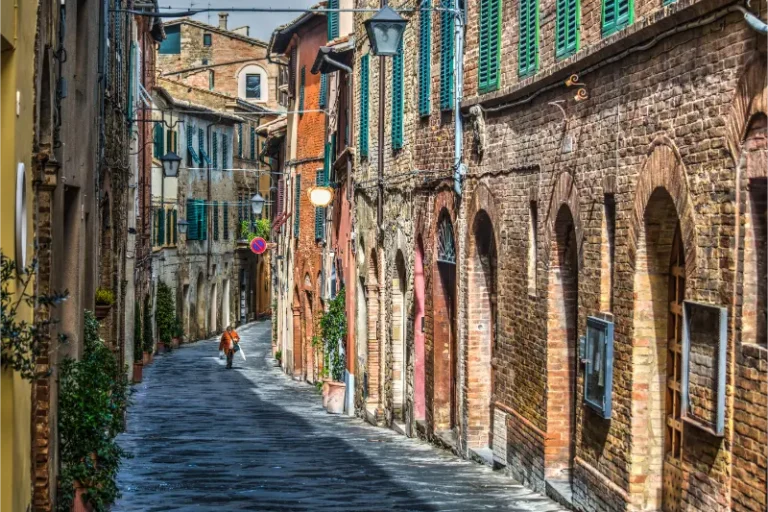
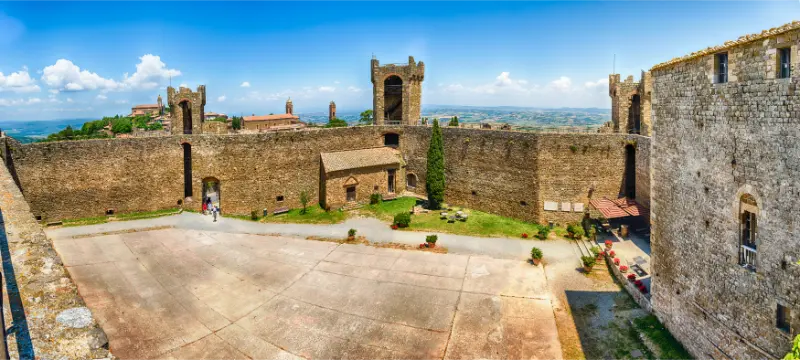
Montalcino itself is worth time. A town-based experience can combine the fortress, streets and viewpoints with a guided tasting in an enoteca or historic cellar. Visit Tuscany currently lists a €58 product that begins with a guided Brunello tasting in town and continues with a historic cellar visit within Montalcino’s walls. This format works particularly well if you are staying in the town and do not want to drive after tasting.
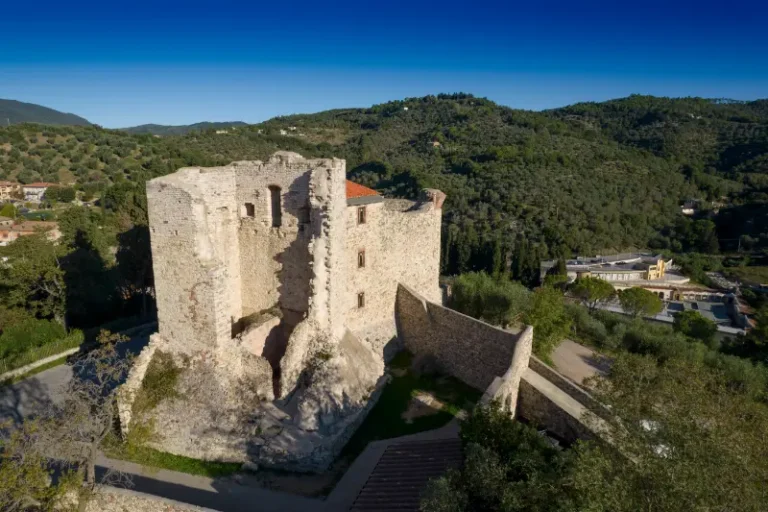
The countryside estate experience is stronger if vineyards matter to you. You see orientation, soils, exposure and the practical relationship between vines, winery and landscape. The logistical problem is transport: many estates are not realistically walkable from the centre. If you self-drive, designate a non-drinking driver or keep tastings extremely restrained. A hired driver or organised transfer is usually the cleaner solution for a wine-focused day.
Brunello day trips from Florence: read the itinerary carefully
GetYourGuide’s current Florence listings illustrate how broad the category has become. Some southern-Tuscany products combine Montalcino, Pienza and Montepulciano and last around 10.5 to 12.5 hours. That can be efficient for a first-time visitor, but it is not the same as a dedicated Brunello day. On a multi-town itinerary, you may have only one formal Brunello tasting and relatively limited producer time because the vehicle must cover long distances.
If wine is the priority, look for the names or at least number of wineries, whether cellar visits are included, which wines are tasted and whether lunch is at an estate. If the product description mainly talks about free time in Pienza and Montepulciano, Brunello is probably a highlight rather than the core. If scenery and villages are equally important, that mixed format may be exactly right.
A practical Montalcino wine day
A balanced independent day usually means one serious winery visit in the morning, lunch, Montalcino in the early afternoon and either a second estate or a town tasting later. Two substantial producers are enough for most visitors. Four wineries often sounds impressive but becomes a sequence of rushed pours. The point is to notice differences, not accumulate labels.

Allow buffer time. Rural roads around Montalcino are scenic but slower than a motorway, and winery appointments are normally timed. Arriving twenty minutes late can affect the entire visit because the next group may be booked immediately after you. If you are coming from Florence, an organised tour or private driver removes that scheduling risk.
Compare Brunello and Val d’Orcia wine tours
Use the full itinerary to see how much time is actually spent at wineries versus in Pienza, Montepulciano and transport.
Compare current Montalcino & Val d’Orcia toursAffiliate link: Tuscany Explorer may earn a commission at no extra cost to you.
What to ask before booking
- How many wineries are visited?
- Are the wineries named in advance?
- Does the price include cellar tours or only tastings?
- Which wine categories are poured?
- Is lunch included and is it at a winery?
- How large is the group?
- Where exactly is the pickup point?
- Is hotel pickup included or only offered on some options?
- How long is free time in Montalcino?
- What is the cancellation deadline?
Frequently asked questions
Can I visit Brunello wineries without a car?
Yes, but not efficiently by relying on public transport between estates. Stay in Montalcino and book a transfer, taxi/private driver or organised wine experience.
How many wineries should I visit in one day?
Two substantial visits are usually enough for a high-quality day. Three can work with careful geography; four often produces more rushing than learning.
Is a cheap tasting in town the same as a winery visit?
No. A town tasting can be excellent for comparing wines, but it does not show vineyards or the production cellar unless that is specifically included.
Should I combine Montalcino with Montepulciano?
Do it when you want a broad southern-Tuscany overview. Keep them separate when wine education and producer time are the priorities.

Can children join?
Some tours allow families while others are designed around adult tastings. Check minimum ages and whether the day length is realistic for your children before booking.
Operational details were checked in September 2026. Prices, schedules, minimum ages, meeting points and inclusions can change, so re-check the booking page for your date.
How to make the experience work in a real Tuscany itinerary
Treat Brunello wine tours Montalcino as a fixed part of the day rather than squeezing it between timed museums, long restaurant reservations and another distant town. Rural Tuscany travel is slower than the map suggests, while Florence workshops often require you to arrive before the stated start time. Keep at least thirty to sixty minutes of buffer around transport and parking when the meeting point is outside a railway station or major attraction.
Read the final voucher after booking. Marketplace pages summarise the product, but the voucher normally contains the definitive meeting instructions, emergency contact, what to bring and last-minute supplier notes. Save it offline because mobile reception can be inconsistent in rural areas. If the operator changes the meeting point or route because of weather, reply promptly so there is a written record of the new arrangement.
Finally, compare the cost of the organised experience with the independent alternative honestly. A tour price may look high until you add rental-car costs, fuel, parking, winery appointments, equipment hire, a guide and the value of not having to navigate. On the other hand, a simple museum or town visit may be far cheaper and more flexible independently. Pay for the parts you cannot reproduce easily on your own: specialist access, instruction, equipment, safe transport or meaningful contact with a producer or artisan.
Independent alternative: when you do not need an organised tour
Montalcino can be visited independently, but winery logistics are the deciding factor. If you have a car and are comfortable appointing a designated driver, reserve one or two estates directly rather than trying to improvise tastings after arrival. Cellars are spread through the countryside and opening hours do not line up like shops on a street. An organised Brunello day earns its price when it solves transport between estates, creates realistic appointment times and allows every adult to taste without driving. If your interest is mainly the hill town, fortress and Enoteca rather than producers, the independent option is usually more flexible and cheaper.
Do not judge a wine tour by the number of labels poured. A visit that walks through vineyards, fermentation spaces and ageing cellars and explains the Brunello di Montalcino production cycle can be more valuable than a rapid succession of glasses. Ask whether the tasting includes Rosso di Montalcino as a comparison, whether food is a real lunch or only snacks, and whether the listed estates are confirmed or examples. Small wineries may change according to harvest work, private events and production needs.
Accessibility, timing and the final booking check
Do not rely on a generic accessibility icon. Historic centres have steps and uneven paving; farms and vineyards have gravel and slopes; boats use gangways and ladders; workshops may be upstairs in old buildings. If someone in your group has reduced mobility, contact the supplier with the exact limitation and ask about the entire route from meeting point to toilet, seating and activity area. The same applies to pregnancy, back problems and other restrictions on active experiences: the operator’s written answer is more useful than a marketplace category label.
Recheck the supplier message 24–48 hours before the activity for the actual meeting point, start time and weather note. Tuscany experiences often depend on small businesses, seasonal timetables and working farms rather than mass-attraction infrastructure. That is part of their appeal, but it means punctuality and communication matter. Build the day around the booked experience instead of assuming it will function like a museum where you can arrive whenever you like.