Garfagnana Travel Guide: Mountain Villages, Forests and Tuscany’s Wilder Side
Garfagnana is Tuscany with steeper horizons. North of Lucca, the Serchio valley narrows between the Apuan Alps and the Tuscan-Emilian Apennines, and the landscape changes from ordered vineyard country to forests, stone villages, rivers and sharp mountain profiles. It is one of the best parts of the region for travellers who like driving without a fixed list, hiking, family-run food and towns where tourism still feels secondary to everyday life.
In a hurry? Give this area at least two days if you can. Choose one logical base, start early for the most popular stops and leave room for a road, village or viewpoint you did not plan. The landscape is part of the attraction, so a schedule that looks efficient on paper can easily become less enjoyable once you are there.
Why Garfagnana feels different
The valley’s geography made it both protected and contested. Medieval communities grew around castles and fortified villages, while later rule by the Este family connected parts of Garfagnana politically with northern Italy. Castles, bridges and churches remain scattered along the valley, but the dominant historical force has always been the mountains themselves: chestnut cultivation, transhumance and difficult roads shaped local life for generations.
What to see and where to stop in Garfagnana
Castelnuovo di Garfagnana
Castelnuovo is the practical centre of the valley and a sensible place to begin. The Rocca Ariostesca anchors the town, and the streets around it are compact enough for a relaxed walk. It is less theatrical than Tuscany’s famous hill towns, which is part of its appeal. Use it for supplies, local markets and orientation before heading toward more remote villages and trailheads.
Barga
Barga stands above the Serchio valley and combines medieval lanes with a surprisingly cosmopolitan cultural history. Climb to the Duomo for a sweeping mountain view, then descend slowly through the old town rather than returning by the same street. Barga is especially beautiful in the evening and works well for dinner because it has more choice than many smaller Garfagnana villages.
Ponte della Maddalena
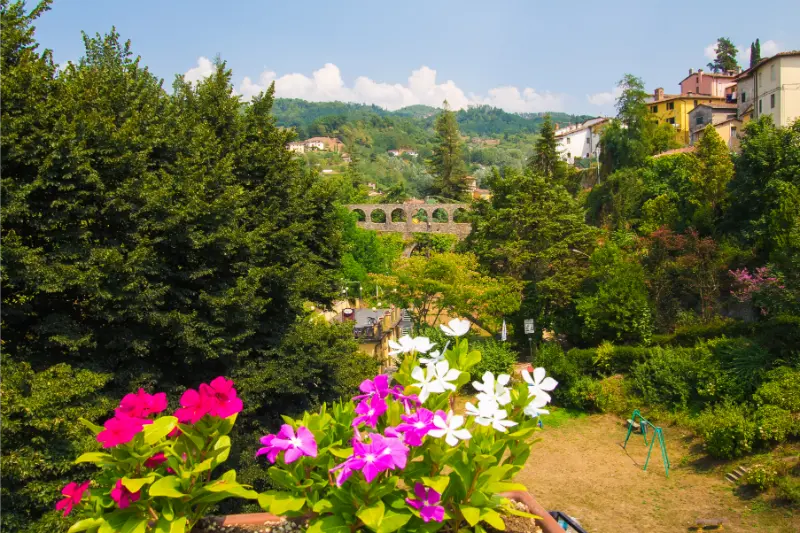
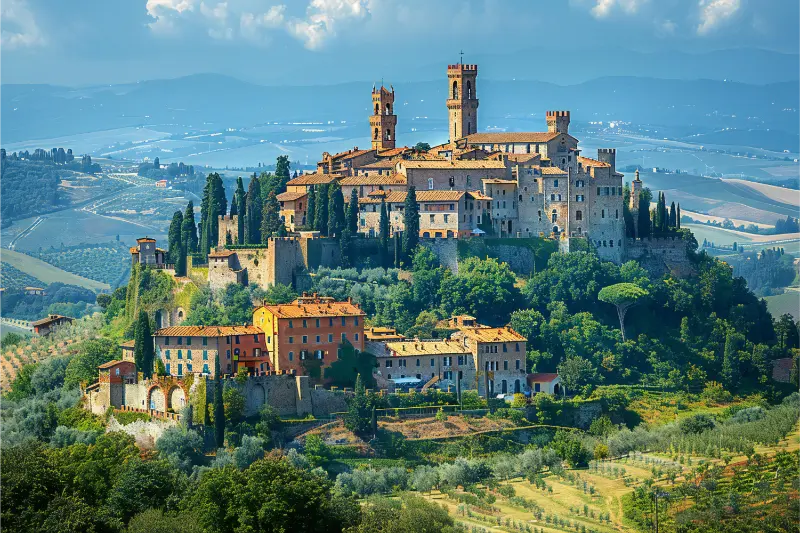
Often called the Devil’s Bridge, the Ponte della Maddalena at Borgo a Mozzano crosses the Serchio with a dramatically asymmetrical arch. The engineering is more impressive when you walk across it and see how steeply the central span rises. Stop early in the day if possible; the road beside the bridge can feel busy later, and the monument is far more atmospheric before groups arrive.
Grotta del Vento
The Grotta del Vento is one of the valley’s classic underground experiences, with guided routes through limestone formations, shafts and chambers. Even in summer, the cave environment is cool, so bring a layer and shoes with reliable grip. It pairs well with a slow drive through the mountain villages rather than another major attraction, because the roads themselves take time.
Orrido di Botri
The Orrido di Botri is a deep limestone gorge north of Bagni di Lucca and one of the most adventurous natural places in this part of Tuscany. Seasonal access, water levels and weather matter, so check current conditions before setting out. When routes are open, expect wet stones and an experience closer to canyon walking than a paved sightseeing trail.
Orecchiella Park
The Orecchiella area offers forests, wildlife and mountain views on a gentler scale than the high peaks. It is particularly suitable for families and travellers who want accessible walks rather than technical hiking. Picnic facilities and visitor services make it easy to spend half a day here, but bring water and do not assume cafés will be available wherever a map shows a settlement.
Isola Santa and Lago di Vagli
Isola Santa is a tiny stone village beside an emerald reservoir, while Lago di Vagli sits in a broader mountain setting famous for the submerged village of Fabbriche di Careggine. Water levels vary, so the landscape is never quite the same. These places are best appreciated as scenic stops within a longer route, not destinations to rush toward and immediately leave.
Getting around Garfagnana: driving and parking
A car gives you the freedom Garfagnana deserves, but driving times are longer than distances suggest. Mountain roads can be narrow, and you should leave space for local traffic rather than hugging the centre line. Park outside village cores where signs indicate and walk in. For hiking areas, check weather before departure: conditions can change quickly around the Apuan Alps, and summer thunderstorms are not unusual. Fuel up before heading into remote sections and keep an offline map on your phone.
A useful habit throughout Tuscany is to treat the brown or blue parking signs at the entrance to a town as your cue to stop looking for a “better” space closer to the centre. Historic streets were not built for modern traffic, and a ten-minute walk is usually preferable to worrying about a ZTL camera, squeezing through a medieval lane or discovering that the route ahead is residents-only.
A quieter way to experience Garfagnana
The valley is full of small places that rarely make a first-time Tuscany itinerary. Camporgiano, Castiglione di Garfagnana and the villages around Villa Collemandina are worth unplanned stops. Chestnut woods are especially atmospheric in autumn, when the air smells of leaves and wood smoke. If you have time, drive one road simply because it looks interesting rather than because an attraction is pinned at the end.
Where to eat
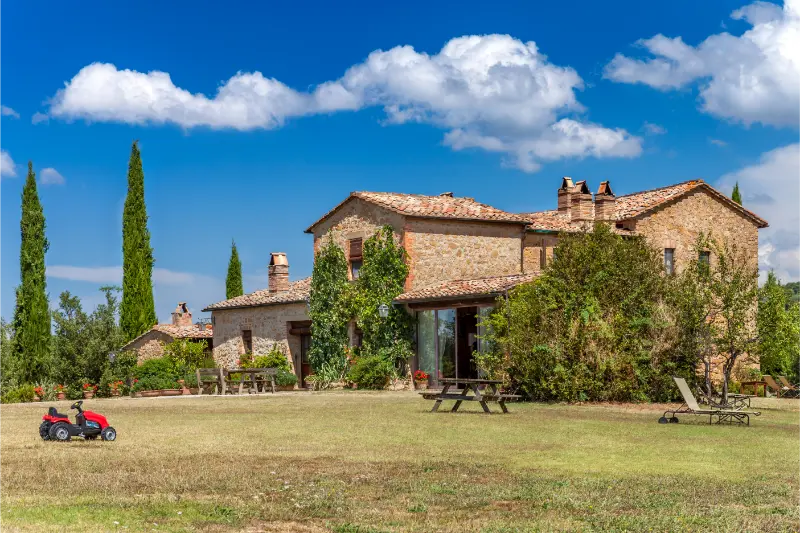
Garfagnana cooking reflects mountain life: farro, chestnut flour, soups, mushrooms, cured meats and hearty pasta dishes. Chestnut-flour specialties and farro from the valley are worth seeking out rather than defaulting to the same dishes you ate in Florence. For a memorable base, Renaissance Tuscany Il Ciocco Resort & Spa, Via Giovanni Pascoli, Castelvecchio Pascoli, sits above the Serchio valley and offers broad views as well as on-site dining. Check Il Ciocco prices & availability
Opening days can change outside high season, and many small Tuscan restaurants close one or two days each week. For anywhere you would be disappointed to miss, reserve and confirm the opening time rather than building the whole day around an old listing.
Useful booking tools for this trip
Car rental: If this trip works better with your own wheels, Compare car rental prices before choosing the pickup point.
Where to stay
Barga is the easiest base if you like an evening stroll and restaurant choice. Castelnuovo is convenient for exploring both sides of the valley, while a mountain agriturismo gives you the most atmospheric mornings. Il Ciocco is a polished option near Barga; smaller family-run stays are better if you want direct contact with village life.
Want more accommodation options? Where to Stay in Tuscany: The Best Areas for Every Kind of Trip compares the best bases and makes it easier to choose the right location before you book.
How many days do you need?
Spend day one between Barga, Borgo a Mozzano and the Devil’s Bridge. On day two, explore Castelnuovo, Castiglione di Garfagnana and Orecchiella. Use a third day for Grotta del Vento, Isola Santa or a mountain walk. The temptation is to collect sights; Garfagnana is better when one afternoon is left mostly empty for a slow road through forests and villages.
If you are travelling for a week or more in Tuscany, an area like this works best as a genuine base rather than a single excursion. Unpacking for two or three nights gives you the freedom to see a famous place early, return to your accommodation for a break and go out again when the light and atmosphere improve in the evening.
Best time to visit Garfagnana
Late spring through early autumn is best for hiking and mountain roads. July and August can be warm in the valley but pleasant at altitude. October is superb for chestnut woods and autumn food. Winter brings snow to higher areas and can be beautiful, but some routes and attractions operate seasonally, so check access before travelling.
Small practical details that make the trip better
Carry water, keep a light layer in the car and download an offline map before rural drives. In summer, do not assume that every village has shade beside the main attraction. In spring and autumn, keep flexible plans because a wet morning can become a brilliant afternoon. When visiting churches and monasteries, carry something to cover shoulders if needed, and when walking natural paths, use proper footwear rather than sandals chosen for the town.
Most importantly, do not measure a Tuscany day by the number of pins you managed to open on a map. The strongest memories often come from the hour that looked inefficient: a quiet piazza after lunch, a road through woodland, a conversation in a food shop or the decision to remain for sunset instead of driving to one more landmark.
If you are connecting this area with a city break, our guide to Lucca is a useful next read.
Is Garfagnana worth visiting?
Yes—especially if you want Tuscany to feel like a place rather than a sequence of famous photographs. Garfagnana rewards curiosity, slower travel and a willingness to look beyond the headline attraction. Give it enough time to develop its own rhythm and it can easily become the part of Tuscany you remember most clearly after the major cities have begun to blur together.
Planning your route without rushing
A realistic visit to Garfagnana works better when you divide the map into small daily zones. Plan one anchor experience before lunch and one after it, then use the spaces between them for viewpoints, cafés and short walks. This also gives you room to adapt when a restaurant is full, a road is slower than expected or a place deserves more time. In rural Tuscany, flexibility is not wasted time; it is often what turns an itinerary into a trip that feels personal.