
What to See in Siena: A Walk Through Tuscany’s Most Beautiful Medieval City
Siena does not need a long list of monuments to make an impression. The city wins you over almost immediately through its shape: steep lanes, brick façades, shadowy passageways and sudden openings toward towers and countryside. Piazza del Campo is the famous image, but the real pleasure of Siena is moving through the web of streets that feed into it.
Medieval Siena was a wealthy independent republic and a serious rival to Florence. Banking, trade and civic ambition financed churches, palaces and paintings that still give the city its unusually coherent appearance. The historic centre later escaped many of the large-scale transformations that altered other cities, which is one reason it can feel less like a collection of sights and more like an intact urban world.
Begin in Piazza del Campo
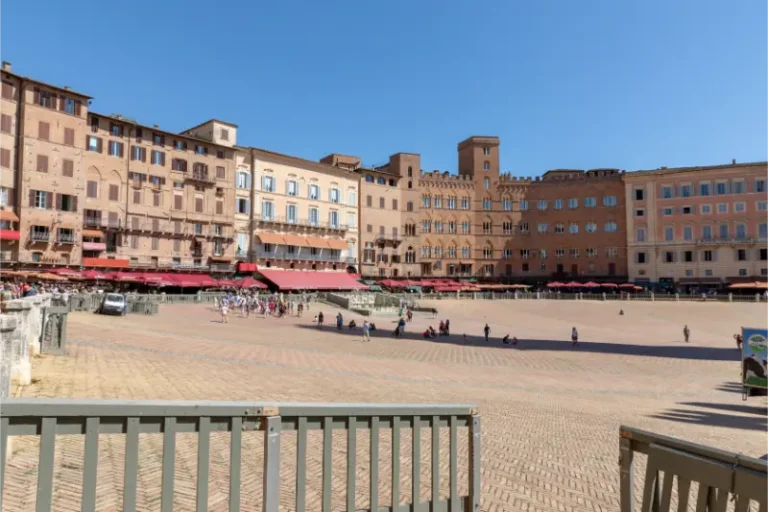
Piazza del Campo is one of Europe’s great public spaces, and its shell-shaped slope makes it unlike a conventional square. Sit for a few minutes rather than walking straight across it. The pavement naturally directs the eye toward Palazzo Pubblico and the Torre del Mangia, while cafés and brick palaces form a continuous edge around the piazza.
The Palio is what most visitors associate with the Campo, but the race makes more sense once you understand Siena’s contrade. These neighbourhood communities are not decorative historical inventions; they remain part of local identity, with their own emblems, museums, churches and social life. As you walk, notice small ceramic plaques, flags and fountains marking the territory of different contrade.
Climb Torre del Mangia for the city’s best overview
If you are comfortable with stairs and narrow passages, the Torre del Mangia gives a superb view over Siena’s red roofs and the rolling countryside beyond the walls. The climb is physical, but the reward is that you finally see how compact the city is and how abruptly it meets the Tuscan landscape.
If you prefer to stay at ground level, visit the Museo Civico inside Palazzo Pubblico. Ambrogio Lorenzetti’s frescoes on good and bad government are among the most extraordinary works of medieval civic art because they are not primarily religious: they show what a well-run city and countryside were supposed to look like.
The Duomo is more surprising inside than outside
Siena Cathedral has one of Tuscany’s most elaborate façades, striped marble and a dramatic position on high ground, but the interior is even richer. Black-and-white columns, sculpted details and the remarkable marble floor create a space that rewards slow looking.
Do not miss the Piccolomini Library, with its vivid fresco cycle. If the Porta del Cielo routes or upper cathedral spaces are available during your visit, they can give a very different perspective on the building. The cathedral complex also includes the Museo dell’Opera, where you can reach the Facciatone, the unfinished façade of an enormous expansion that Siena began before the Black Death disrupted the city’s ambitions. Standing there, you can literally see the scale of a medieval plan that was never completed.
Cross the road to Santa Maria della Scala
Directly opposite the Duomo, Santa Maria della Scala is easy to underestimate from the outside. It was one of Europe’s oldest hospitals and cared for pilgrims, the poor and abandoned children along the Via Francigena. Today the vast complex contains frescoed halls, archaeological spaces and layers of architecture descending into the hill.
If the centre feels crowded, this is an excellent place to slow down. The building is large enough that visitors spread out, and the history of care, pilgrimage and civic responsibility adds another dimension to Siena beyond churches and palaces.
Walk down to Fontebranda and back through the contrade
From the cathedral area, descend toward Fontebranda, one of Siena’s historic fountains. The walk is steep, but it brings you into a quieter part of the city and gives a sense of how medieval Siena managed water before modern infrastructure. Nearby streets are closely linked to the Contrada dell’Oca and the memory of Saint Catherine of Siena.
From Fontebranda, climb toward the Basilica of San Domenico. Its austere brick exterior contrasts with the ornate Duomo, and the terrace nearby opens toward one of the best views back across the city.
Find Orto de’ Pecci below the medieval skyline
Only a short walk from Piazza del Campo, Orto de’ Pecci feels unexpectedly rural. The green space lies in a valley beneath the historic centre, so you can look up at towers and brick buildings from vegetable gardens and lawns. It is a refreshing pause if you are travelling with children or simply want half an hour away from stone streets.
The approach also reveals Siena’s dramatic topography. What looks compact on a map is actually built across ridges and valleys, which explains the city’s endless stairways and changing viewpoints.
Where to park in Siena
The centre is not a place to improvise with a car. Siena has ZTL restrictions and many steep, narrow streets, so use one of the parking areas around the walls and continue on foot or by escalator. San Francesco is particularly practical because a system of escalators brings you up toward the historic centre. Santa Caterina is another useful option if you want to approach the Fontebranda side of town.

Wear comfortable shoes even if you park close to the centre. Siena is wonderfully walkable, but “close” on the map can still involve a strong uphill section.
Where to eat and where to stay
Taverna di San Giuseppe, at Via Giovanni Duprè 132, is tucked into the historic centre and is known for Tuscan dishes in an atmospheric setting. Its position also makes it easy to combine dinner with an evening walk back through Piazza del Campo when the daytime crowds have thinned.
For accommodation with a different perspective on the city, Hotel Palazzo di Valli at Via Enea Silvio Piccolomini 135 occupies a historic villa just outside the densest part of the centre. It is especially appealing if you prefer a quieter stay and are arriving by car. Check Hotel Palazzo di Valli prices & availability
Want more accommodation options? Where to Stay in Siena: Best Areas for Medieval Atmosphere, Parking and Views compares the best bases and makes it easier to choose the right location before you book.
Useful booking tools for this trip
Tours & experiences: For guided visits, attraction tickets and bookable experiences in Siena, See tours & tickets
How to spend one or two days in Siena
With one day, begin at Piazza del Campo, visit Palazzo Pubblico or climb Torre del Mangia, continue to the Duomo complex and Santa Maria della Scala, then finish with a walk through the contrade and an evening return to the Campo.

With two days, add San Domenico, Fontebranda, Orto de’ Pecci and time to wander without a route. Siena is a city where turning down the wrong street usually leads somewhere worth seeing. Early morning and the hour after sunset are especially good times to experience its medieval spaces with fewer people.
For more places to combine with Siena, browse our Tuscany destination guides.
Notice Siena’s colours and street signs
Siena is often described as “medieval,” but that word can become so broad that it hides the details. Pay attention to the warm brick colour that dominates façades and paving, the carved stone around doorways, and the small changes in street level. You will also see contrada symbols—goose, snail, giraffe, shell, eagle and others—on plaques, fountains and flags. Following them turns an ordinary walk into a way of reading the city.
Do not worry about memorising all seventeen contrade. It is more interesting to notice how a few streets can shift from one neighbourhood identity to another. During the year, local dinners, ceremonies and flags make these boundaries even more visible.
What to eat in Siena
Beyond a restaurant recommendation, look for a few distinctly Sienese flavours. Pici are thick hand-rolled pasta strands often served with garlic and tomato, ragù or breadcrumbs. Ribollita and other vegetable-based Tuscan soups suit cooler days, while panforte and ricciarelli connect the city with a long tradition of spiced sweets and almond biscuits.

For a simple snack, do not feel obliged to sit in Piazza del Campo. A bakery or small bar in the streets above the square is often a better place to eat quickly and keep exploring.
Siena is especially good after dark
If you can stay overnight, return to Piazza del Campo after dinner. Without the midday intensity, the brick surface feels larger and the tower more dramatic. Walk from the Campo toward Piazza del Duomo and then down one of the smaller lanes without a destination. Siena’s warm streetlights, enclosed alleys and sudden views are a large part of its atmosphere, and they are difficult to appreciate on a rushed day trip.
Best viewpoints without climbing the tower
If Torre del Mangia is not an option, Siena still offers several rewarding viewpoints. The Facciatone in the cathedral complex gives a broad look over rooftops and countryside, while the area outside San Domenico faces back toward the cathedral and Torre del Mangia. The streets around the upper edge of the city also open unexpectedly toward the hills.
The useful thing about Siena is that the landscape is never far away. Follow a street toward a gate in the walls and within minutes the dense medieval city begins to dissolve into vineyards, gardens and slopes. That relationship between town and countryside is one of the city’s defining features.
When Siena feels most enjoyable
The centre can be busy in the middle of the day, particularly around the Campo and cathedral. If you are visiting on a day trip, arrive as early as practical and save the most famous square for a second look late in the afternoon. If you stay overnight, use the middle of the day for museums and quieter contrada streets, then return outside when the light becomes softer.
Summer can be hot and the hills make temperatures feel more tiring, so carry water and plan steep climbs before lunch. Spring and autumn suit long walks especially well, while winter brings a much quieter, more local atmosphere.