
What to See in Cortona: Etruscan Roots, Hilltop Views and Timeless Tuscany
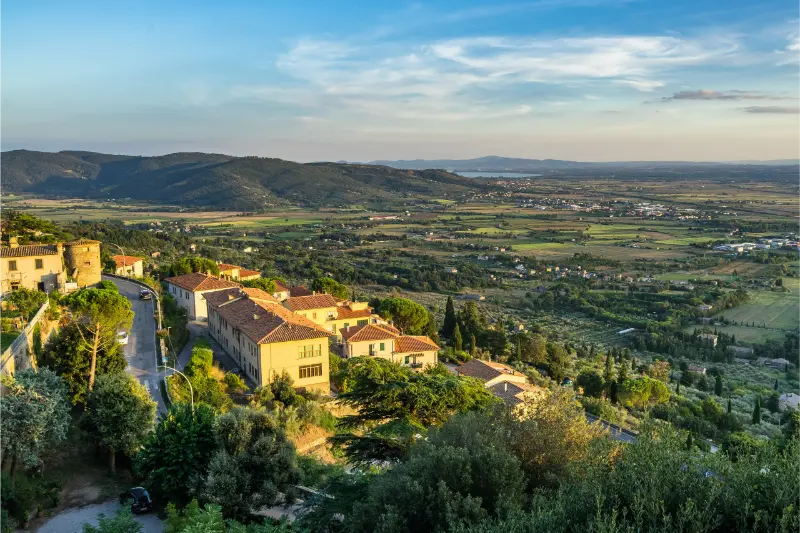
Cortona sits high above the Valdichiana, and the view explains part of its appeal before you enter a single church or museum. From terraces and steep streets, the landscape opens toward Lake Trasimeno, farmland and distant hills. Yet Cortona is more than a beautiful viewpoint. It has Etruscan roots, medieval streets, Renaissance art and a compact centre that feels made for slow walking.
The town became internationally famous through books and films, but its history reaches back more than two thousand years. Cortona was an important Etruscan settlement before becoming a Roman town and later a medieval commune. That long past is unusually visible because archaeological finds, stone walls, churches and palaces all sit within a small area.
Start in Piazza della Repubblica
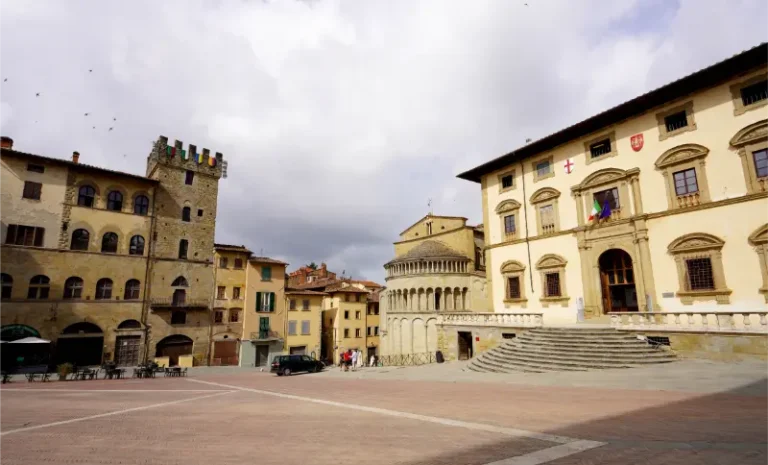
Piazza della Repubblica is the civic heart of Cortona, dominated by the Palazzo Comunale and its broad staircase. The square is not huge, but its proportions and surrounding lanes make it feel like a stage where the whole town crosses paths.
Do not hurry through it. Sit with a coffee, watch people climb the steps and notice how several streets rise immediately away from the piazza. Cortona’s steepness is part of its character, and you understand the town better when you accept a slower pace.
Continue to Piazza Signorelli and the MAEC
Just around the corner, Piazza Signorelli opens beside the Teatro Signorelli and the MAEC — Museo dell’Accademia Etrusca e della Città di Cortona. This is the best place to understand the town’s ancient roots.
The museum brings together Etruscan objects, archaeological finds and later collections. If you plan to explore Etruscan tombs or archaeological areas outside the walls, visit the MAEC first; the context makes those sites much more meaningful.
See Fra Angelico in the Museo Diocesano
The Museo Diocesano, near the cathedral, contains one of Cortona’s greatest artistic treasures: Fra Angelico’s Annunciation. The painting’s luminous colour and calm geometry can be appreciated at close range in a museum that is far more intimate than the major galleries of Florence.
The collection also reflects Cortona’s connection with Renaissance painter Luca Signorelli, who was born here. Art in Cortona rarely feels detached from place; the people behind the works belonged to the same streets you are walking.
Climb to Santa Margherita and the Girifalco Fortress
The upper part of Cortona requires effort, but it delivers the town’s best sense of scale. The Basilica of Santa Margherita stands high above the centre and is linked to the city’s patron saint. Continue farther to the Fortezza del Girifalco, which occupies the highest point.
The views expand dramatically as you climb. If the day is clear, you can look across the Valdichiana toward Umbria. Take water and avoid treating the ascent like a race; the lanes and viewpoints on the way are part of the experience.
Walk Via Nazionale, then leave it
Via Nazionale, locally nicknamed the Rugapiana, is unusual because it is one of the few relatively level streets in Cortona. Shops, cafés and evening activity make it the town’s easy promenade.
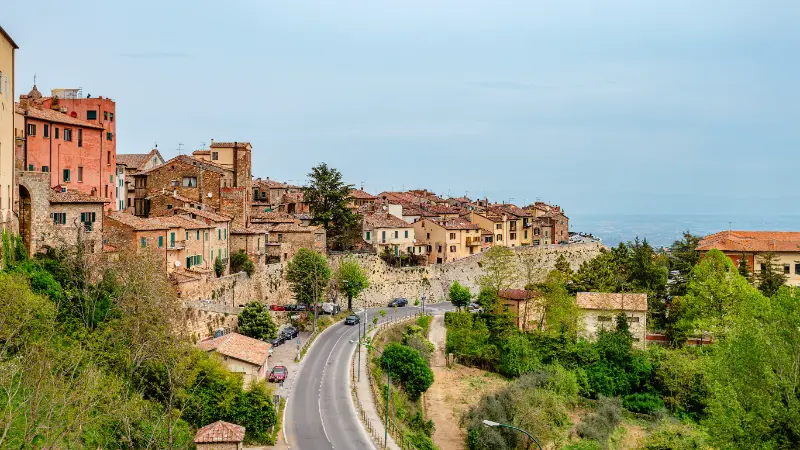
After walking it once, turn into the steeper side streets. Cortona becomes more beautiful as you move away from the most obvious route: stone houses, potted plants, little arches and glimpses of the valley appear without needing a named attraction.
Find the Eremo Le Celle outside town
A short drive from Cortona, Eremo Le Celle is a Franciscan hermitage built into a narrow wooded valley. Saint Francis is traditionally associated with the site, and the complex remains a place of religious life rather than simply a monument.
The contrast with Cortona’s sunny piazzas is striking. Stone cells, water, trees and silence create one of the most memorable stops in the area. Dress respectfully and move quietly, remembering that this is still a spiritual place.
Where to park in Cortona
Driving inside the historic centre is not the best approach because streets are steep, narrow and restricted. Parcheggio dello Spirito Santo is one of the most practical options for visitors. Escalators help connect the lower parking area with Piazza Garibaldi, saving a demanding climb before your sightseeing even begins.
Piazzale del Mercato is another option, but be prepared for an uphill walk. If your hotel is within the walls, ask for precise arrival instructions before following a navigation app into the old streets.
Stop at Piazza Garibaldi for the view
Many visitors pass through Piazza Garibaldi on the way into the centre, but its terrace deserves a proper stop. The panorama over the Valdichiana immediately explains Cortona’s strategic location and why people settled on this hill long before modern tourism.
Come back toward sunset if you are staying overnight. The landscape softens, the day visitors thin out and the town’s elevated position becomes even more dramatic.
Where to eat and where to stay
La Bucaccia – Da Romano at Via Ghibellina 17 occupies a historic setting in the centre and focuses on Tuscan ingredients, including local meats and cheeses. It is a fitting choice after a day of steep streets when you want a substantial dinner without leaving the old town.
For a special stay, Monastero di Cortona Hotel & Spa at Via del Salvatore is set in a former monastery within the historic centre. The building itself becomes part of the experience and lets you enjoy Cortona early in the morning and after the day-trip crowds have gone. Check Monastero di Cortona Hotel & Spa prices & availability
Want more accommodation options? Where to Stay in Tuscany: The Best Areas for Every Kind of Trip compares the best bases and makes it easier to choose the right location before you book.
Useful booking tools for this trip
Tours & experiences: For guided visits, attraction tickets and bookable experiences in Cortona, See tours & tickets
How many days do you need in Cortona?
A full day covers the main squares, MAEC, Museo Diocesano, Santa Margherita and several viewpoints, but one night changes the feel of the visit. Cortona is especially appealing in the early morning and evening, when its steep lanes become quiet and the town feels less like a famous destination.
If you have a second day, drive to Eremo Le Celle and explore the Valdichiana or nearby Lake Trasimeno. Cortona works beautifully as a small-city base because you can combine art, archaeology and countryside without changing hotels every night.
Discover more places in our Tuscany destination guides.
Look for Etruscan Cortona beyond the museum
The MAEC provides the context, but Cortona’s Etruscan story continues outside the centre. Archaeological sites and monumental tombs in the surrounding area reveal how important this hill was long before the medieval town took shape. If you have a car and a second day, ask at the museum which sites are accessible and combine one with a countryside drive.
Even within the town, sections of ancient walling remind you that Cortona’s strategic position was valued centuries before Renaissance painters arrived.
Choose your viewpoint according to your energy
You do not have to climb all the way to Girifalco to enjoy the landscape. Piazza Garibaldi offers an excellent broad view with almost no extra effort if you arrive via the Spirito Santo escalators. The climb to Santa Margherita and the fortress is better when you have time, water and comfortable shoes.

This small decision can change the whole day. Cortona is much more enjoyable when you conserve enough energy to wander its side streets rather than exhausting yourself on the first ascent.
What to eat in Cortona
Menus reflect the Valdichiana and eastern Tuscany: handmade pasta, crostini, pecorino, beans and grilled or slow-cooked meats are common. Chianina beef is closely associated with the wider area, but do not overlook vegetable soups and seasonal dishes, especially if you are eating several traditional Tuscan meals during your trip.
An evening aperitivo on or near Via Nazionale followed by dinner in a side street is an easy way to experience the centre after day visitors leave.
Arrive early if you are visiting on a day trip
Cortona’s main streets are compact, so the difference between a quiet morning and a busy midday can be noticeable. Arriving early gives you time to enjoy Piazza della Repubblica and Piazza Signorelli before groups settle into the centre. Use the first hour for the streets and viewpoints, then move indoors to the MAEC or Museo Diocesano later.
If you stay overnight, do the opposite in the evening: let day visitors leave, then walk Via Nazionale and the surrounding lanes after dinner. Cortona’s atmosphere becomes much more intimate.
Take the climb seriously, but do not fear it
Maps make Cortona look tiny, but vertical distance matters here. Streets can be steep and polished stone may become slippery in rain. Shoes with a good sole are more useful than fashionable sandals, especially if you plan to reach Santa Margherita or Girifalco.
Build short pauses into the climb. A church doorway, a small square or a valley view gives you a natural reason to stop, and you will notice much more of the town than if you simply push uphill toward the next attraction.
Cortona works well with nearby towns
With a car, Cortona can be paired with Montepulciano, Castiglion Fiorentino or the Umbrian side of Lake Trasimeno. By train, the main station serving the area is down in the valley, so you need a bus or taxi connection up to the historic centre.
For that reason, staying one night in Cortona often feels more relaxed than treating it as a quick detour. Once the climb and parking are solved, the town rewards having time to do very little.