
What to See in Grosseto: Medieval Walls and the Gateway to Wild Maremma
Grosseto is the urban heart of the Maremma, a part of Tuscany where the landscape feels broader, wilder and closer to the sea. The city itself is compact and often overlooked by travellers heading straight for beaches, hill towns or natural parks, but its historic centre makes a rewarding stop and an excellent base for exploring southern Tuscany.
Unlike Florence or Siena, Grosseto does not overwhelm you with monumental art. Its appeal is easier and more local: intact Medicean walls, a handsome cathedral, archaeological collections and streets where daily life continues inside a fortified historic core. The city’s story stretches back through Etruscan and Roman Maremma, medieval rule and the period when the Medici reshaped Grosseto’s defences.
Walk the Medicean Walls
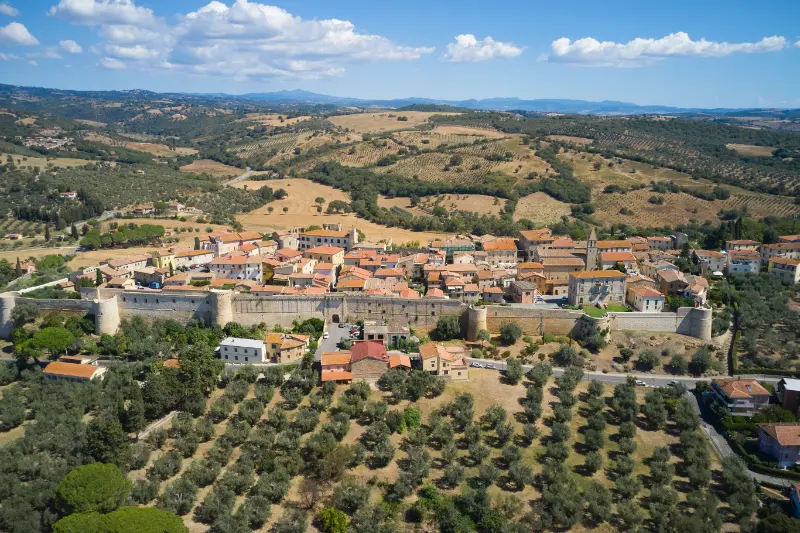
The Mura Medicee are the defining feature of Grosseto. The hexagonal fortifications surround the historic centre and remain remarkably well preserved. Built and strengthened under Medici rule, they once protected a strategic city in territory that was difficult to control because of marshes, malaria and political rivalries.
Today the walls are a green urban promenade. Walking a section before entering the centre helps you understand the compact shape of Grosseto and gives you an immediate contrast between fortified stone and the modern city outside.
Enter Piazza Dante
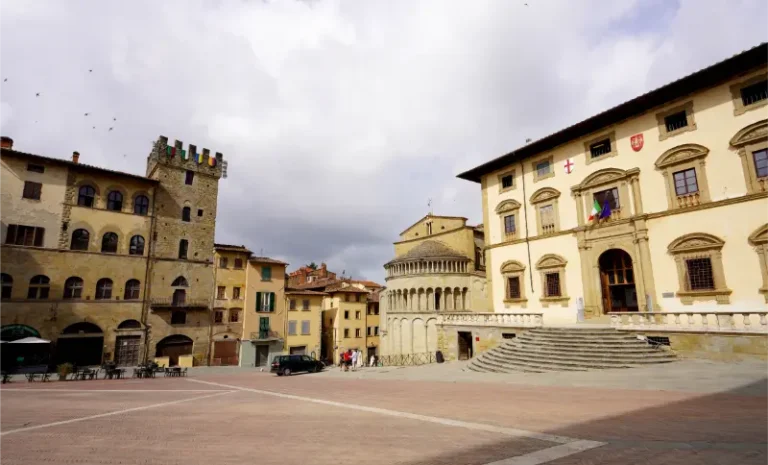
Piazza Dante is Grosseto’s central square, framed by civic buildings and the Cathedral of San Lorenzo. It is elegant without being grandiose and works as the natural starting point for exploring the lanes within the walls.
Take a moment to look at the surrounding façades before entering the cathedral. The square is also a good place to return later for a coffee, when the historic centre feels more like a living neighbourhood than a sightseeing stop.
Visit the Cathedral of San Lorenzo
The cathedral’s striped stone façade immediately recalls the broader Tuscan Romanesque tradition, although the building has been altered over centuries. Inside, the atmosphere is calmer and more restrained than Tuscany’s most famous cathedrals.
Grosseto rewards this slower kind of visit. You are rarely pushed along by crowds, so it is easier to notice architectural details, side chapels and the relationship between the church and surrounding streets.
Understand Maremma at the archaeological museum
The Museo Archeologico e d’Arte della Maremma is one of the most useful museums in southern Tuscany because it places Grosseto within a much older landscape. Etruscan and Roman finds explain the settlements, trade routes and cultures that existed here long before the medieval city took shape.
If you plan to visit Roselle, Vetulonia or other archaeological sites in the region, seeing the museum first can make those outdoor ruins much easier to understand.
Climb toward the Cassero Senese
The Cassero Senese is one of the most recognisable defensive structures in Grosseto and reflects the period before complete Medici control, when Siena dominated much of the Maremma. The building became integrated into the later fortification system, so it is a good place to see different political eras literally connected in stone.
The surrounding bastions are pleasant for a walk and often much quieter than the central piazza.
Make time for the Church of San Francesco
The Church of San Francesco has a simple exterior and a peaceful character. It is associated with a painted crucifix traditionally linked to Duccio’s circle, offering a small but meaningful connection between Grosseto and the great artistic traditions of medieval Siena.
The square around the church is also a pleasant place to pause away from the main pedestrian flow.
Use Grosseto as a gateway to the Maremma
One of the strongest reasons to stay in Grosseto is what lies just outside it. The archaeological area of Roselle is close to the city, while the coast at Marina di Grosseto and Principina a Mare is easy to reach. Farther south, the Maremma Regional Park opens into pine woods, wetlands and stretches of wild coastline.
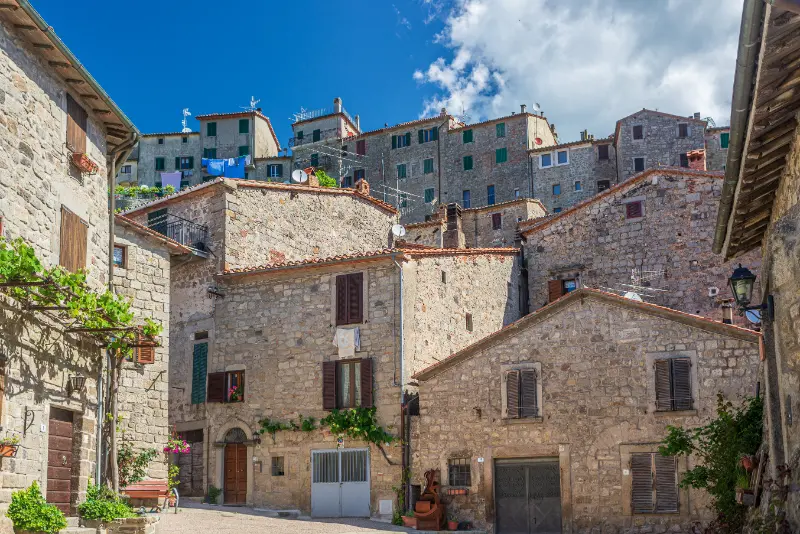
That means you can spend the morning with medieval walls and museums, then be walking beside the sea or through natural landscapes in the afternoon. Few Tuscan city bases offer such a quick transition.
Where to park in Grosseto
The historic centre is enclosed by the walls and includes traffic-controlled areas, so it is simplest to leave the car in one of the public parking facilities immediately outside or beside the fortifications and enter on foot. Grosseto has several structured parking areas close to the centre, meaning there is little benefit in trying to drive inside the old streets.
If you are using the city as a Maremma base, choose accommodation with straightforward car access. You will probably want a vehicle for beaches, archaeological sites and countryside trips even though the centre itself is best explored on foot.
Where to eat and where to stay
For food rooted in the Maremma, Osteria Ghigo at Viale Giacomo Matteotti 15 is a strong local option just outside the old centre. Maremman cooking tends to be robust, with soups, handmade pasta, game and meat sharing the table with coastal influences.
For a central stay, Grand Hotel Bastiani at Piazza Gioberti 64 places you right by the historic centre and within easy walking distance of Piazza Dante and the walls. Its position also works well if Grosseto is your base for short trips around southern Tuscany. Check Grand Hotel Bastiani prices & availability
Want more accommodation options? Where to Stay in Maremma: Coast, Countryside, Hot Springs and Wild Tuscany compares the best bases and makes it easier to choose the right location before you book.
Useful booking tools for this trip
Tours & experiences: For guided visits, attraction tickets and bookable experiences in Grosseto, See tours & tickets
How much time do you need in Grosseto?
Half a day is enough for a first look at the walls, Piazza Dante, cathedral and archaeological museum. A full day lets you slow down and add the Cassero, San Francesco and a long meal. The better plan, however, is often to stay one or two nights and use Grosseto as a practical base for the wider Maremma.
The city will not compete with Florence for Renaissance masterpieces, and it does not need to. Grosseto offers something different: an easy historic centre surrounded by a region of beaches, archaeology, farms and protected nature. In a Tuscany itinerary full of famous names, that change of pace can be exactly what you need.
Explore more places in our Tuscany destination guides.
Walk the walls twice: once by day, once near sunset
The Medicean walls are not merely a boundary around the centre. They are one of Grosseto’s everyday public spaces, with trees, paths and bastions used for walking. In daylight you can examine the fortifications and gates; later in the day the elevated paths become more atmospheric as the light softens over the city.
Because the circuit is manageable, you can use the walls as an orientation tool. Enter the centre through one gate, cross to Piazza Dante, then emerge at another bastion rather than retracing the same street.
Try the flavours of the Maremma
Maremman food is often hearty and rooted in rural traditions. Look for acquacotta, a vegetable and bread soup historically associated with shepherds and agricultural workers, as well as wild-boar ragù, handmade pasta and local pecorino. Nearer the coast, seafood enters the picture, so Grosseto is a useful place to taste both inland and maritime sides of southern Tuscany.
Wine lists may include bottles from Morellino di Scansano and other nearby zones. If you are driving, save a proper tasting for a winery visit or dinner when the car is parked for the night.
Roselle is the easiest historical extension
If archaeology interests you, the ancient city of Roselle is one of the most rewarding additions to a Grosseto stay. Etruscan and Roman remains spread across a hill only a short drive away, with sections of walls, streets and public buildings in an open landscape. Visiting the Grosseto archaeological museum beforehand gives the ruins much more context.
When Grosseto makes the most sense in a Tuscany itinerary
Grosseto is especially useful if you are travelling by car through southern Tuscany. Instead of sleeping every night in a small hill town, you gain supermarkets, restaurants, transport services and straightforward road connections while still having an old centre for evening walks. This practicality can be valuable on a longer road trip.
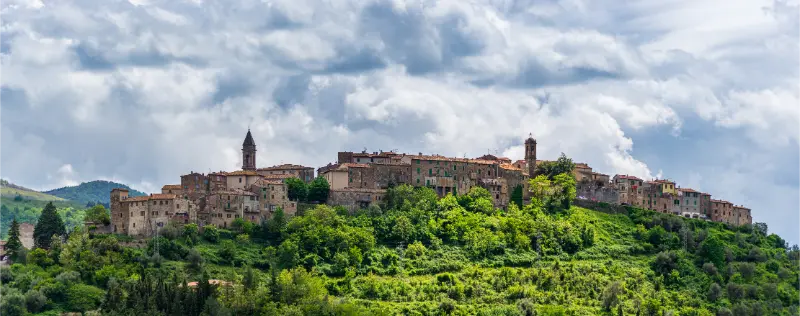
From the city, you can reach the coast, Roselle, the Maremma park and inland villages without packing and unpacking every day. Grosseto may not be the most romantic name on the itinerary, but it can make the trip work better.
Do not skip the evening passeggiata
After museums close, central Grosseto becomes more appealing rather than less. Local residents return to the pedestrian streets, Piazza Dante fills gradually and the walls make an easy pre-dinner walk. If you are staying in the centre, leave the car at the hotel and simply follow the flow.
This is also when Grosseto’s scale feels most comfortable. You can cross the historic core in minutes, stop for an aperitivo and walk another section of the fortifications without planning a route.
Best season for combining city and Maremma
Spring and early autumn are particularly pleasant for combining Grosseto with archaeological sites and nature, because outdoor walks are easier than during the hottest weeks. Summer makes sense if the coast is a major part of your trip; start city sightseeing early and save the beach or a shaded lunch for the hottest hours.
Winter is quiet and gives the centre a strongly local feeling, though some coastal activities naturally become more limited.