What to See in Massa: A Castle Above the City, Apuan Peaks and the Sea Nearby
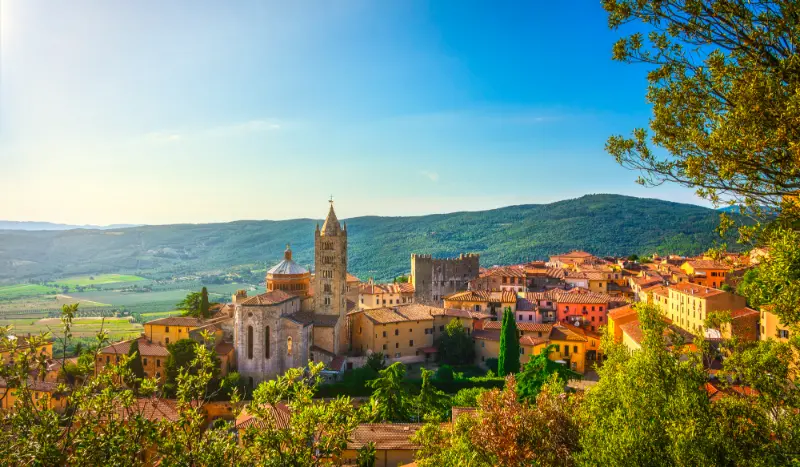
Massa is one of those Tuscan cities that many travellers pass without realising how much is hidden between the Apuan Alps and the sea. Its historic centre is compact and elegant, a powerful castle rises above the rooftops, marble appears in churches and palaces, and the coast at Marina di Massa is only a short drive away. It is not as immediately famous as Lucca or Pisa, which gives the city a more relaxed, local rhythm.
The first documented references to Massa date back to the early Middle Ages, but the city was shaped strongly by the Malaspina and later Cybo-Malaspina families. Their presence explains both the hilltop fortress and the monumental buildings around Piazza Aranci. Today Massa works particularly well for travellers who want to combine history, mountains and coast without changing base every night.
Begin in Piazza Aranci
Piazza Aranci is the formal heart of Massa. Rows of orange trees soften the broad space, while the imposing Palazzo Ducale gives the square its aristocratic character. The palace developed over several centuries as the residence of the ruling family and is one of the city’s most distinctive buildings.
Stand near the centre of the piazza and look toward the surrounding mountains. Massa’s geography is unusually present even in the historic core. The Apuan peaks rise close behind the city, and that visual relationship between urban architecture and steep mountains is part of what makes the place memorable.
Walk to the cathedral and notice the marble details
The Cathedral of Santi Pietro e Francesco sits a short walk from Piazza Aranci. Its history includes rebuilding and modification, and the interior contains works connected with the Cybo-Malaspina family.
Because Carrara’s marble district is so close, stone is more than decorative material in this part of Tuscany. Look at altars, façades and funerary monuments with that context in mind. A visit to Massa becomes richer when you connect the polished surfaces in the city with the pale mountain quarries visible in the distance.
Climb to Castello Malaspina
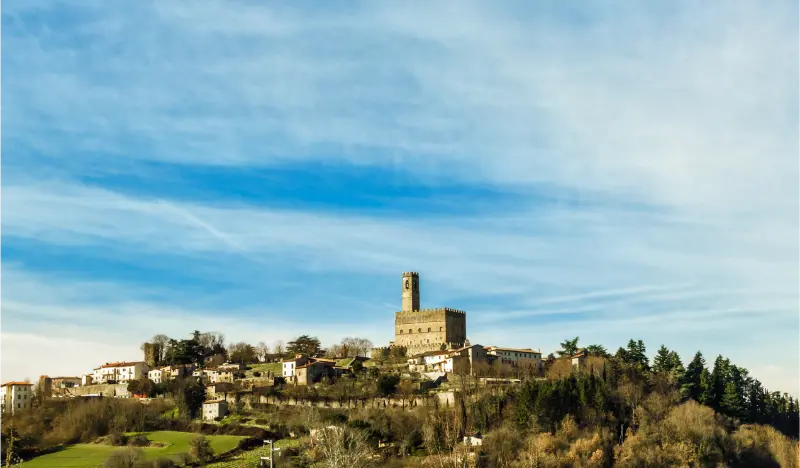
The Castello Malaspina is the landmark that changes Massa from an ordinary provincial city into something much more dramatic. The fortress rises on a rocky hill immediately above the centre, combining medieval defensive structures with later residential additions.

From the castle area, views stretch over Massa toward the coast and back to the Apuan Alps. The climb is steep if you approach on foot, especially in warm weather, so carry water and take your time. If you drive closer, remember that parking near historic fortresses is usually limited; do not assume you will find a space at the entrance.
The castle is particularly atmospheric late in the day when the light softens over the coast. Check opening arrangements before making the climb, as access hours can vary by season and events.
Explore the streets between Piazza Aranci and Piazza Mercurio
Massa’s centre is easy to explore without a strict route. Piazza Mercurio and the surrounding streets have a more everyday atmosphere than the monumental Piazza Aranci. Cafés, small shops and local movement make this part of town feel lived-in rather than staged for tourism.
Look for narrow lanes that frame the castle above the roofs. Those accidental views are one of Massa’s pleasures. Because the centre is relatively small, you can wander without worrying about losing time.
Discover the Martana air-raid shelter
One of Massa’s less obvious historical sites is the Martana air-raid shelter, created during the Second World War to protect residents during bombing. When accessible for visits, the tunnels reveal a very different chapter from the palaces and castles above ground.
It is a reminder that historic cities are not only medieval or Renaissance. Massa’s 20th-century experience also shaped local memory, and the shelter can be one of the most affecting stops for travellers interested in social history.
Visit Villa La Rinchiostra and the Gigi Guadagnucci Museum
South of the historic centre, Villa La Rinchiostra adds another layer to the city’s cultural life. The villa and park host the museum dedicated to sculptor Gigi Guadagnucci, whose work is closely connected with marble.
The setting makes this a pleasant choice when you want a quieter hour away from central streets. Contemporary and modern sculpture also helps bridge Massa’s historic architecture with the living artistic culture of the marble region.
Go to Marina di Massa for the coast
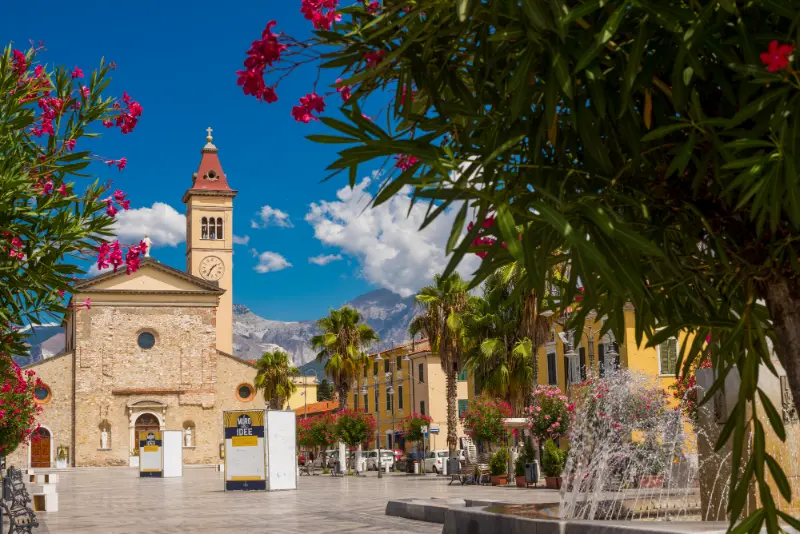
Marina di Massa lies only a short drive from the centre, making it easy to combine a city morning with a seaside afternoon. The beachfront is organised around promenades, beach establishments and open views toward the Ligurian Sea.
The most striking feature is often behind you: the Apuan Alps appear surprisingly close to the water. On clear days, the combination of beach and steep mountain silhouettes creates one of northern Tuscany’s most distinctive landscapes.
If you are travelling in July or August, expect the coast to be much busier than central Massa. For a calmer experience, visit the beach in the morning or toward evening and keep the historic centre for the hotter middle hours.
Take the road toward San Carlo for a different panorama
The hills above Massa around San Carlo offer elevated views over the city and coast. This area has historically been associated with mineral waters and provides a useful perspective on how tightly the urban area is squeezed between mountains and sea.
If you have a car and enjoy viewpoints, the short drive can be a pleasant addition near sunset. Roads become narrower as you climb, so allow extra time and drive conservatively.
Where to eat in Massa
Osteria Tradizione, at Piazza della Conca 2, is a highly rated option in the city and a good choice for travellers wanting a local meal away from the beach-strip atmosphere. Its position works well after exploring the centre.
If your day ends at Marina di Massa, Ristorante La Peniche, at Via Lungobrugiano 3, is a well-regarded dining address near the coast and makes sense for a seafood-focused evening.
Useful booking tools for this trip
Tours & experiences: For guided visits, attraction tickets and bookable experiences in Massa, See tours & tickets
Where to stay
Hotel Villa Maremonti, at Lungomare di Levante 51, is a distinctive option on the coast, useful if you want a seaside base while visiting both Massa and Carrara. The villa setting gives it more character than a standard beach hotel. Check Hotel Villa Maremonti prices & availability
If your priority is the historic centre and castle, choose accommodation in central Massa and treat the beach as a separate excursion. The two areas are close by car but feel quite different.
Want more accommodation options? Where to Stay in Tuscany: The Best Areas for Every Kind of Trip compares the best bases and makes it easier to choose the right location before you book.
Where to park in Massa
For the historic centre, use public parking around its perimeter and explore Piazza Aranci, Piazza Mercurio and the cathedral on foot. The streets immediately around the oldest areas are not where you want to spend time searching for a perfect space.
If you plan to visit Castello Malaspina, consider whether everyone in your group is comfortable with a steep walk before choosing a lower parking area. Driving closer can reduce the climb, but spaces near the castle are limited. At Marina di Massa, summer parking is a separate challenge; arriving early is the simplest solution.
How long do you need?
Four hours are enough for the historic centre and castle. A full day allows you to add Villa La Rinchiostra or the Martana shelter and finish at Marina di Massa. Two days work well if you also plan Carrara’s marble quarries.
For a broader northern Tuscany route, Massa combines well with Lucca or the Versilia coast, but its strongest pairing is Carrara because the two cities reveal different sides of the same marble-and-mountain territory.
A route for your first visit
Start in Piazza Aranci, see Palazzo Ducale from the square and visit the cathedral. Wander toward Piazza Mercurio, then climb to Castello Malaspina before lunch. In the afternoon, choose between Villa La Rinchiostra and the Martana shelter depending on your interests. Finish at Marina di Massa or drive toward San Carlo for an elevated view.
The city does not need an overcomplicated itinerary. Its appeal is the contrast compressed into a small area: aristocratic architecture below a fortress, marble mountains behind apartment streets and the sea only minutes away.
Why Massa is worth stopping for
Massa rarely appears near the top of international Tuscany lists, which can make a visit more enjoyable. You are less likely to move through a crowd following the same route, and local life remains visible in the main squares.
Come without expecting Florence in miniature. Massa has its own geography and history. The Apuan Alps give it a dramatic backdrop, the Cybo-Malaspina legacy gives it architectural character and the nearby coast adds an ease that inland hill towns cannot offer. It is precisely this combination that makes the city worth a day.
See the city in the morning before heading to the beach
If you are visiting in summer, reverse the instinct to begin at the coast. Piazza Aranci and the castle are much more comfortable before the strongest heat, while Marina di Massa becomes more pleasant later in the afternoon. This simple order also avoids trying to park near the beach at the exact moment everyone else arrives.
Morning light is good for the historic centre because the Apuan Alps often remain clearly visible before haze builds over the coast. Take one last look back from the lower castle route: the closeness of mountains, city and sea is the image that best explains Massa.