Val d’Orcia Travel Guide: Cypress Roads, Hill Towns and Tuscany’s Golden Light
Val d’Orcia is the Tuscany many travellers imagine before they arrive: pale roads curling over bare hills, cypress trees marking a ridge, stone farmhouses standing alone in enormous spaces. Yet its beauty is not accidental. The valley is a cultural landscape, shaped over centuries by farming, settlement and an idea of harmony between people and land. That is why the experience feels more powerful when you stop treating viewpoints as isolated photo spots and begin connecting them through villages, thermal water, food and long stretches of open countryside.
In a hurry? Give this area at least two days if you can. Choose one logical base, start early for the most popular stops and leave room for a road, village or viewpoint you did not plan. The landscape is part of the attraction, so a schedule that looks efficient on paper can easily become less enjoyable once you are there.
Why Val d’Orcia feels different
UNESCO added Val d’Orcia to the World Heritage List in 2004, recognising a landscape that reflects Renaissance ideals of good governance and harmonious land management. Pienza, rebuilt under Pope Pius II as an ideal Renaissance town, gives the valley an architectural centre, while medieval strongholds such as Radicofani and Castiglione d’Orcia remind you that this peaceful landscape once sat on strategic routes, including the Via Francigena toward Rome.
What to see and where to stop in Val d’Orcia
Pienza
Pienza is the natural starting point because it combines architecture, food and one of the finest balcony-like views in Tuscany. Piazza Pio II is small but perfectly composed, while the lanes behind the cathedral suddenly open toward Monte Amiata. Walk Via dell’Amore and Via del Bacio, but also wander beyond the famous signs: the town’s real pleasure comes from the transition between carefully designed Renaissance stone and the enormous agricultural landscape immediately outside the walls.
San Quirico d’Orcia
San Quirico is calmer than Pienza and deserves more than a coffee stop. The Horti Leonini gardens, Romanesque Collegiata and long main street reveal a town shaped by pilgrims on the Via Francigena. It is also a practical base because you can reach Pienza, Bagno Vignoni and many of the valley’s iconic roads quickly. Early evening is particularly lovely, when residents reclaim the centre and the light softens on the stone façades.
Bagno Vignoni
Bagno Vignoni is unforgettable because its central square is essentially a pool of thermal water. You cannot bathe in the historic basin, but the steam, old stone buildings and channels running downhill create an atmosphere unlike any other Tuscan village. Come early or late, especially in summer, and walk below the centre to see how thermal water once powered mills. The village is tiny, so an hour can be enough unless you are using the spa facilities.

Montalcino
Montalcino stands on the western side of the valley and brings wine, fortress architecture and broad views into the same visit. The Fortezza is the obvious landmark, but the pleasure is walking the steep streets, browsing enoteche and then driving south toward Sant’Antimo. If you already have our Montalcino guide open, use it for the town itself and treat this day as part of a wider Val d’Orcia route rather than an isolated destination.
The Chapel of Vitaleta and cypress roads
The small Cappella della Madonna di Vitaleta has become one of Tuscany’s most photographed rural churches, but it is worth seeing with patience rather than as a quick roadside target. Park only where permitted and respect private land. Nearby, the famous cypress groups and winding roads are best viewed around sunrise or late afternoon. The light changes the valley more dramatically than almost any monument does.
Radicofani
Radicofani sits high above the southern valley under a dramatic fortress. The climb gives you one of the clearest ways to understand Val d’Orcia as geography: Pienza, Amiata and the old pilgrimage route begin to make sense as parts of one system. It is also an excellent antidote to the busiest Instagram stops because many visitors never drive this far south.

Bagni San Filippo
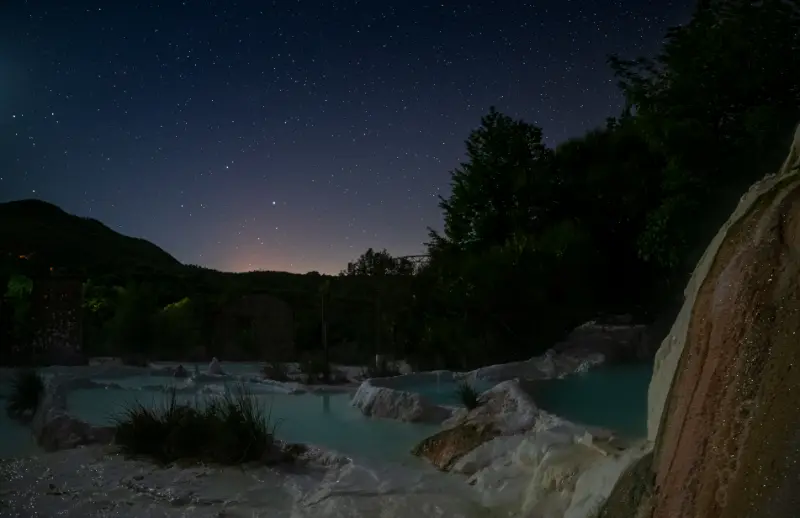
On the slopes toward Monte Amiata, Bagni San Filippo offers a very different encounter with thermal water. The wooded setting and white mineral formations feel almost alpine compared with the bare hills around Pienza. Conditions around natural pools can change, and paths become slippery, so wear shoes with grip and check local access information rather than arriving dressed only for photographs.
Getting around Val d’Orcia: driving and parking
Val d’Orcia is best explored by car. Distances look short on a map, but narrow roads, tractors, viewpoints and frequent stops mean you will travel more slowly than expected. Historic centres such as Pienza and Montalcino have restricted traffic zones, so use the clearly marked car parks outside the walls. Never stop on narrow country roads simply because a famous cypress view appears; there are places where improvised parking damages verges and blocks agricultural access. A good rule is one major village in the morning, a long lunch, then one or two smaller stops in the afternoon.
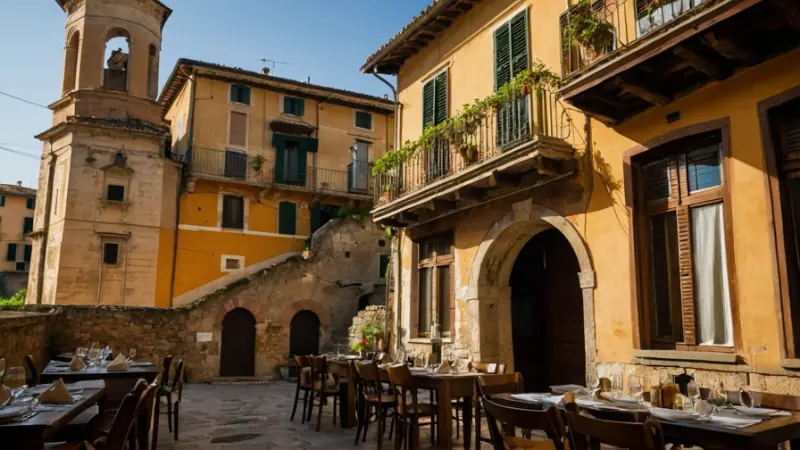
A useful habit throughout Tuscany is to treat the brown or blue parking signs at the entrance to a town as your cue to stop looking for a “better” space closer to the centre. Historic streets were not built for modern traffic, and a ten-minute walk is usually preferable to worrying about a ZTL camera, squeezing through a medieval lane or discovering that the route ahead is residents-only.
A quieter way to experience Val d’Orcia
One of the easiest ways to improve a Val d’Orcia trip is to stay out after the tour buses leave. The countryside after 6 p.m. can feel completely different. San Quirico is excellent for this, and so is the stretch toward Castiglione d’Orcia. If photography matters, sunrise is even better: mist sometimes settles in the folds of the hills, and the roads around Pienza can be remarkably quiet.
Useful booking tools for this trip
Tours & experiences: For guided visits, attraction tickets and bookable experiences in Val d’Orcia, See tours & tickets
Car rental: If this trip works better with your own wheels, Compare car rental prices before choosing the pickup point.
Where to eat
This valley tastes of pecorino from Pienza, pici, local olive oil, mushrooms and the great wines of nearby Montalcino. For a simple and much-loved meal in Pienza, Sette di Vino is at Piazza di Spagna 1. Another polished option is the restaurant at La Bandita Townhouse on Corso il Rossellino, where seasonal ingredients are central to the menu. Book ahead in high season because Pienza’s small size means the best tables fill quickly.
Opening days can change outside high season, and many small Tuscan restaurants close one or two days each week. For anywhere you would be disappointed to miss, reserve and confirm the opening time rather than building the whole day around an old listing.
Where to stay
Pienza and San Quirico are the most convenient central bases. Hotel San Gregorio, Via della Madonnina 4 in Pienza, is close enough to walk into the historic centre while avoiding the difficulty of trying to drive inside it. Countryside agriturismi are more atmospheric if you have a car and value sunrise views over late-night restaurants. Check Hotel San Gregorio prices & availability
Want more accommodation options? Where to Stay in Val d’Orcia: Pienza, Montalcino, San Quirico or the Countryside? compares the best bases and makes it easier to choose the right location before you book.
How many days do you need?
For one day, combine Pienza, San Quirico, Bagno Vignoni and one sunset viewpoint. With two days, add Montalcino and Sant’Antimo or Radicofani and Bagni San Filippo. Three days lets you drive less, walk part of the Via Francigena and devote time to a winery without sacrificing the landscape. The valley rewards repetition: the same road can look completely different in morning and evening light.
If you are travelling for a week or more in Tuscany, an area like this works best as a genuine base rather than a single excursion. Unpacking for two or three nights gives you the freedom to see a famous place early, return to your accommodation for a break and go out again when the light and atmosphere improve in the evening.
Best time to visit Val d’Orcia
May and June bring green hills and wildflowers; late June and July turn many fields gold. September and October are excellent for wine, softer temperatures and harvest landscapes. Winter can be stark and beautiful, with far fewer visitors. In summer, plan outdoor viewpoints early or late and use the middle of the day for lunch, churches, museums or thermal experiences.
Small practical details that make the trip better
Carry water, keep a light layer in the car and download an offline map before rural drives. In summer, do not assume that every village has shade beside the main attraction. In spring and autumn, keep flexible plans because a wet morning can become a brilliant afternoon. When visiting churches and monasteries, carry something to cover shoulders if needed, and when walking natural paths, use proper footwear rather than sandals chosen for the town.
Most importantly, do not measure a Tuscany day by the number of pins you managed to open on a map. The strongest memories often come from the hour that looked inefficient: a quiet piazza after lunch, a road through woodland, a conversation in a food shop or the decision to remain for sunset instead of driving to one more landmark.
For nearby city planning, continue with our guides to Pienza, Montalcino and Montepulciano.
Is Val d’Orcia worth visiting?
Yes—especially if you want Tuscany to feel like a place rather than a sequence of famous photographs. Val d’Orcia rewards curiosity, slower travel and a willingness to look beyond the headline attraction. Give it enough time to develop its own rhythm and it can easily become the part of Tuscany you remember most clearly after the major cities have begun to blur together.