Elba Island Travel Guide: Beaches, Fortresses and the Wild Side of Tuscany’s Sea
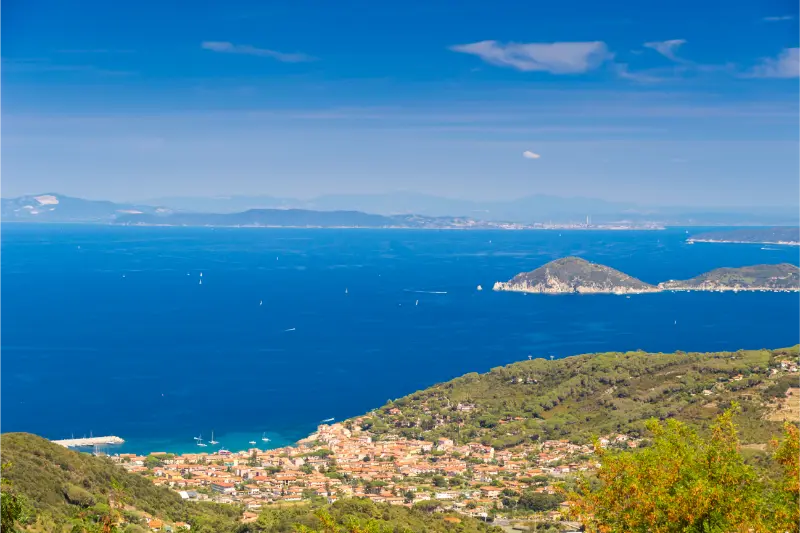
Elba is close enough to the Tuscan coast to feel accessible, yet large and varied enough to become a trip of its own. In a single day you can move from white-pebble coves to iron-coloured beaches, from Napoleonic history in Portoferraio to mountain paths on Monte Capanne. The island has 147 kilometres of coastline and a surprisingly rugged interior, so the best visits avoid the mistake of treating Elba as one beach with a ferry terminal.
In a hurry? Give this area at least two days if you can. Choose one logical base, start early for the most popular stops and leave room for a road, village or viewpoint you did not plan. The landscape is part of the attraction, so a schedule that looks efficient on paper can easily become less enjoyable once you are there.
Why Elba Island feels different
Elba’s position in the Tyrrhenian Sea made it valuable long before tourism. Iron resources attracted ancient peoples, fortifications guarded harbours and in 1814 Napoleon Bonaparte arrived for his famous period of exile, leaving residences that can still be visited. Mining, fishing and agriculture shaped island communities before beach tourism became dominant. That layered history explains why villages and landscapes can feel so different within a relatively small area.
What to see and where to stop in Elba Island
Portoferraio
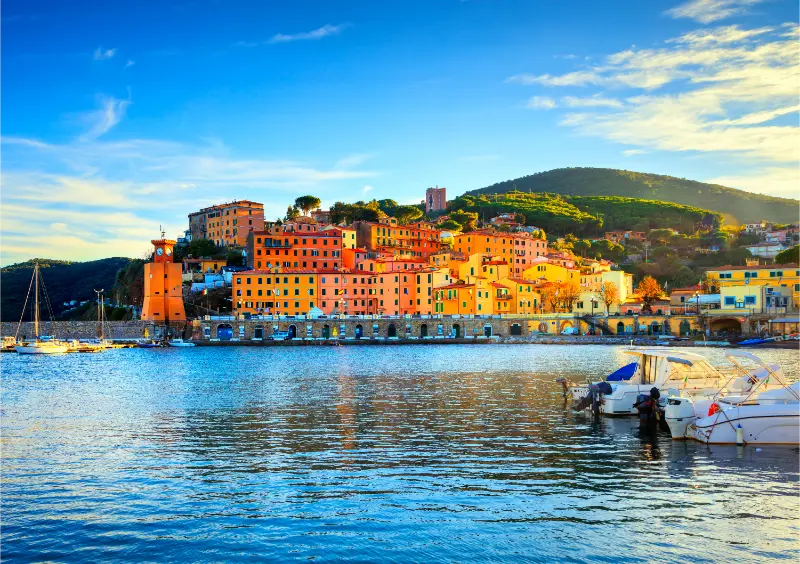
Most visitors first see Elba from the ferry approaching Portoferraio, and the arrival is worth enjoying rather than treating as logistics. Medici fortifications wrap around the old harbour, while steep streets climb toward Forte Falcone and Forte Stella. Park outside the tightest historic lanes and explore on foot. The old town is most atmospheric in the evening after day traffic eases.
Napoleon’s residences
Villa dei Mulini in Portoferraio and Villa San Martino outside town connect Elba to one of Europe’s most famous historical episodes. You do not need to be a Napoleonic specialist to enjoy the contrast between imperial ambition and island scale. Check current opening times before planning, because museum schedules can vary by season.
Biodola and the north-coast beaches
Biodola’s sheltered bay is one of Elba’s classic beach settings, while nearby Scaglieri and Forno create smaller alternatives. In high summer, parking near famous beaches fills quickly and road shoulders are not a safe fallback. Arrive early, use accommodation shuttles where offered or choose beaches within walking distance of your base.
Fetovaia, Cavoli and Seccheto
The south-west coast has some of Elba’s most celebrated clear-water beaches. Fetovaia is particularly beautiful but can feel very busy in peak season. Cavoli and Seccheto have different scales and moods. Rather than driving between all three after breakfast, choose one for several hours and use late afternoon for a village or viewpoint.
Marciana and Monte Capanne
Marciana is a mountain village far removed from the harbour atmosphere, and the upper slopes of Monte Capanne reveal how rugged Elba really is. Trails and the cableway area offer broad views across the archipelago in clear weather. Conditions can be windy even when beaches are calm, so check mountain weather and carry water.
Capoliveri
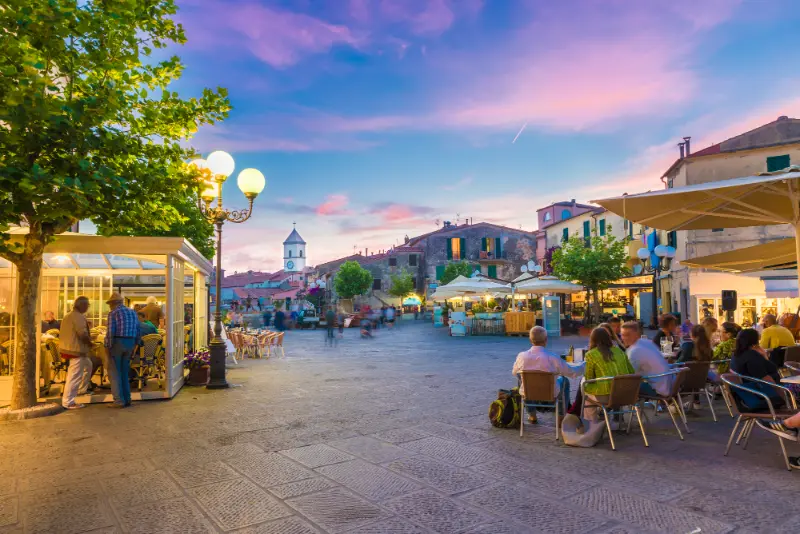
Capoliveri combines a lively hilltop centre with access to beaches and former mining landscapes. The evening passeggiata is one of the island’s pleasures: streets fill with diners and families after the heat fades. Park outside the core and walk in rather than trying to navigate narrow central lanes. From the surrounding roads, sea views appear in several directions.
Rio and the mining side
Eastern Elba has darker rock, iron-rich earth and a more industrial history. Around Rio Marina and Rio, mining heritage explains the unusual colours of some beaches and slopes. This side is especially worthwhile for repeat visitors or anyone who wants a story beyond resort scenery. The geology gives Elba a character that no mainland Tuscan coast can reproduce.
Getting around Elba Island: driving and parking
Ferries leave from Piombino, and taking a car is useful if you plan to explore widely, but book vehicle space ahead in summer. Once on Elba, roads are often narrow and winding; distances that look small can take time. Beach parking is the main practical challenge in July and August. Start early, avoid illegal roadside parking and consider buses or boats for selected days. If you are staying only two nights, choose one side of the island rather than spending the trip crossing it repeatedly.
A useful habit throughout Tuscany is to treat the brown or blue parking signs at the entrance to a town as your cue to stop looking for a “better” space closer to the centre. Historic streets were not built for modern traffic, and a ten-minute walk is usually preferable to worrying about a ZTL camera, squeezing through a medieval lane or discovering that the route ahead is residents-only.
A quieter way to experience Elba Island
Elba becomes much more memorable when you give the interior equal importance. Walk around Marciana in the morning, take a mountain route, then swim late in the day when beaches begin to empty. Small coves reached by foot often feel more special than the famous beaches beside large car parks. In spring, wildflowers and clear hiking weather make the island almost a different destination from August.
Where to eat
Island cooking mixes fish, local vegetables and dishes shaped by maritime history. Schiaccia briaca, a traditional sweet enriched with local wine, is worth trying. In Portoferraio, Osteria Pepenero, Via dell’Amore 48, is a well-regarded seafood restaurant. For a distinctive seaside stay, Hotel Hermitage on the Biodola road in Portoferraio sits directly on one of the island’s most beautiful bays and has its own restaurants.
Opening days can change outside high season, and many small Tuscan restaurants close one or two days each week. For anywhere you would be disappointed to miss, reserve and confirm the opening time rather than building the whole day around an old listing.
Useful booking tools for this trip
Tours & experiences: For guided visits, attraction tickets and bookable experiences in Elba Island, See tours & tickets
Car rental: If this trip works better with your own wheels, Compare car rental prices before choosing the pickup point.
Ferries: For Elba crossings, Check ferry times & prices
Where to stay
Portoferraio is practical for short visits and ferry logistics. Capoliveri offers evening atmosphere and good access to the south-east, while Marciana Marina works well for the western side. Biodola is ideal if the beach is central to the trip. Choose location before hotel category: on Elba, saving forty minutes of daily driving can improve a holiday more than adding another hotel amenity.
Compare accommodation: See stays on Booking.com. For a more detailed comparison, read Where to Stay on Elba Island: Best Towns and Beaches for Your Trip
How many days do you need?
For three days, use one for Portoferraio and a north-coast beach, one for Marciana and the western beaches, and one for Capoliveri and the mining side. With five days, add a boat trip or dedicated hiking day. Elba rewards staying put for part of each day; constantly changing beaches can turn an island holiday into a search for parking.
If you are travelling for a week or more in Tuscany, an area like this works best as a genuine base rather than a single excursion. Unpacking for two or three nights gives you the freedom to see a famous place early, return to your accommodation for a break and go out again when the light and atmosphere improve in the evening.
Best time to visit Elba Island
May, June and September are excellent for warm weather, hiking and easier parking. July and August bring the liveliest beach atmosphere and the largest crowds. April and October are attractive for walking but sea temperatures and services vary. Winter is quiet and some tourist businesses close, though Portoferraio and larger towns retain year-round life.
Small practical details that make the trip better
Carry water, keep a light layer in the car and download an offline map before rural drives. In summer, do not assume that every village has shade beside the main attraction. In spring and autumn, keep flexible plans because a wet morning can become a brilliant afternoon. When visiting churches and monasteries, carry something to cover shoulders if needed, and when walking natural paths, use proper footwear rather than sandals chosen for the town.
Most importantly, do not measure a Tuscany day by the number of pins you managed to open on a map. The strongest memories often come from the hour that looked inefficient: a quiet piazza after lunch, a road through woodland, a conversation in a food shop or the decision to remain for sunset instead of driving to one more landmark.
If you are connecting this area with a city break, our guide to Livorno is a useful next read.
Is Elba Island worth visiting?
Yes—especially if you want Tuscany to feel like a place rather than a sequence of famous photographs. Elba Island rewards curiosity, slower travel and a willingness to look beyond the headline attraction. Give it enough time to develop its own rhythm and it can easily become the part of Tuscany you remember most clearly after the major cities have begun to blur together.
Planning your route without rushing
A realistic visit to Elba Island works better when you divide the map into small daily zones. Plan one anchor experience before lunch and one after it, then use the spaces between them for viewpoints, cafés and short walks. This also gives you room to adapt when a restaurant is full, a road is slower than expected or a place deserves more time. In rural Tuscany, flexibility is not wasted time; it is often what turns an itinerary into a trip that feels personal.