What to See in Pienza: The Tiny Renaissance City with Val d’Orcia at Its Feet
Pienza is small enough to cross in a few minutes, yet it changed the way people imagined an ideal Renaissance city. Perched above the Val d’Orcia, it combines carefully planned architecture with huge views, pecorino shops, quiet stone lanes and a countryside that seems to begin immediately beyond the walls. It is one of Tuscany’s most famous small towns, but its beauty comes less from a long list of monuments than from the harmony between them.
The story begins with Enea Silvio Piccolomini, born in the village of Corsignano and later elected Pope Pius II. In the 15th century he commissioned architect Bernardo Rossellino to transform his birthplace into a model Renaissance town. The project was never fully completed, but the compact centre around Piazza Pio II became one of the clearest expressions of humanist urban planning in Italy. Knowing that makes the square more interesting: it was designed to impress, but also to feel balanced and humane.
Begin in Piazza Pio II and look at the space, not only the buildings
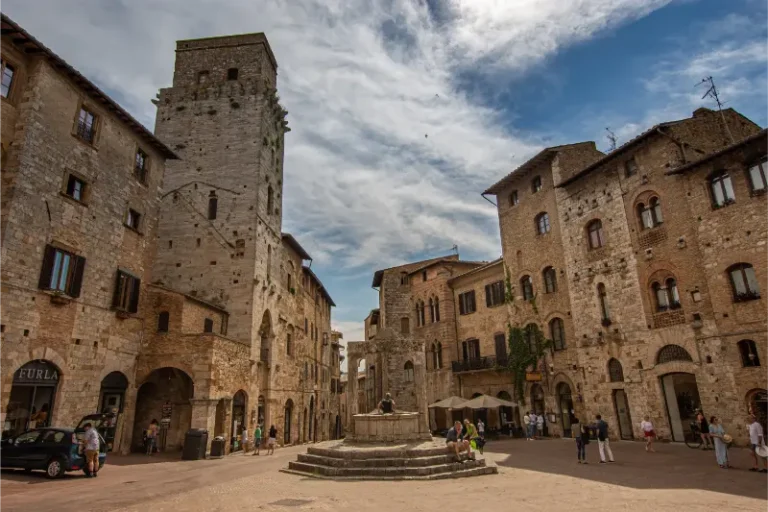
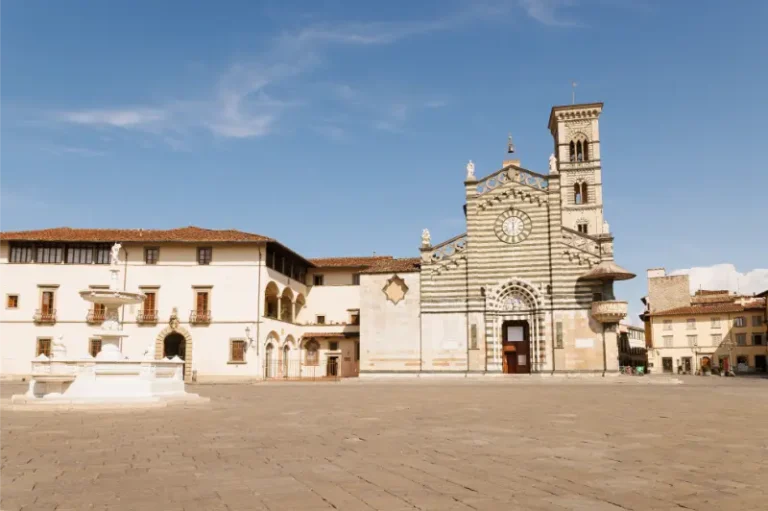
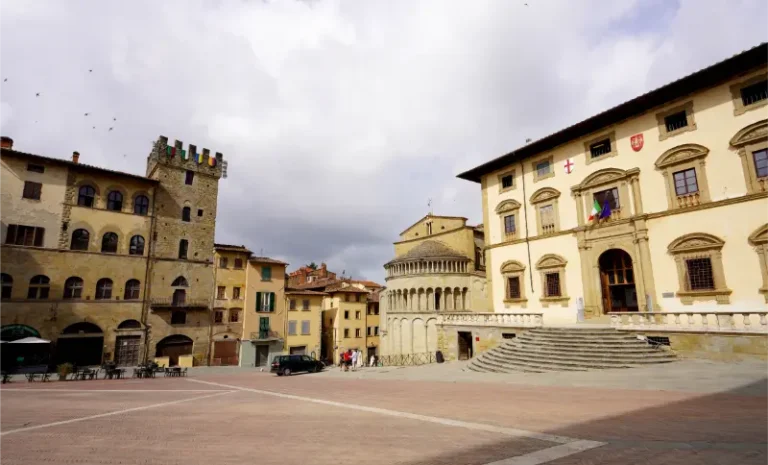
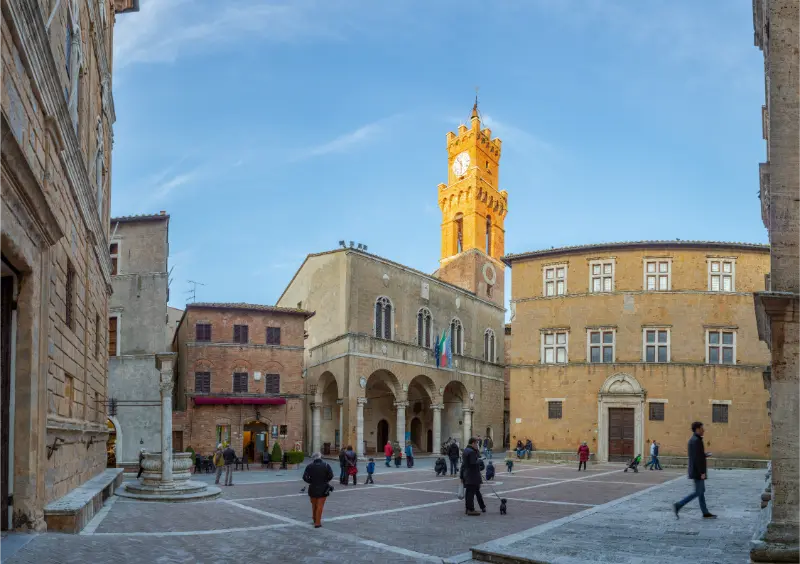
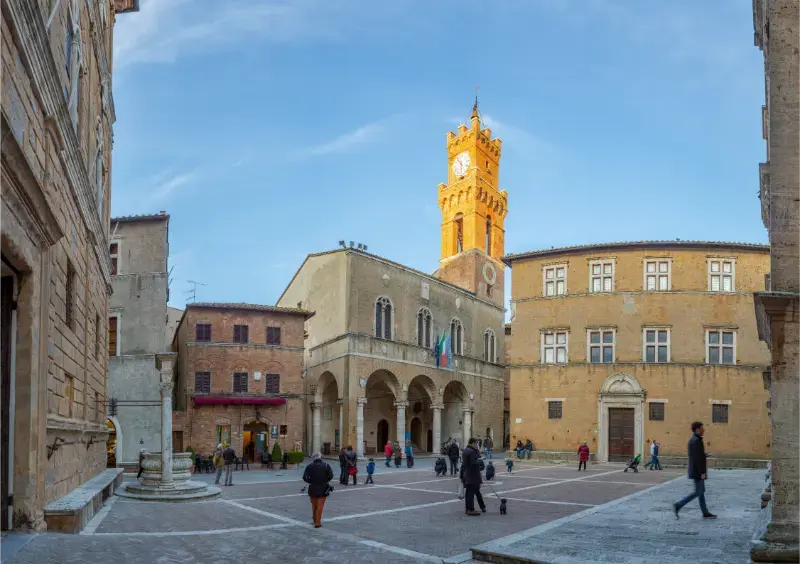
Piazza Pio II is the centre of Pienza and the best place to understand the town’s design. The square is trapezoidal rather than rectangular, a subtle choice that makes it feel larger and draws attention toward the cathedral. Palazzo Piccolomini, the Duomo and Palazzo Borgia form a carefully controlled architectural ensemble.
Stand near the edge and turn slowly. The proportions are part of the attraction. Compared with the grand piazzas of Florence or Siena, this one is intimate, almost domestic, yet every façade has been positioned to contribute to the whole. Pienza is a reminder that Renaissance ambition did not always mean enormous scale.
Step inside the cathedral and notice the unusual light
The Cathedral of Santa Maria Assunta stands at the edge of the ridge. Large windows bring more light into the interior than you might expect from a 15th-century church, reflecting Pius II’s preference for a bright, ordered space. The artworks are important, but the feeling of the building is what many visitors remember.
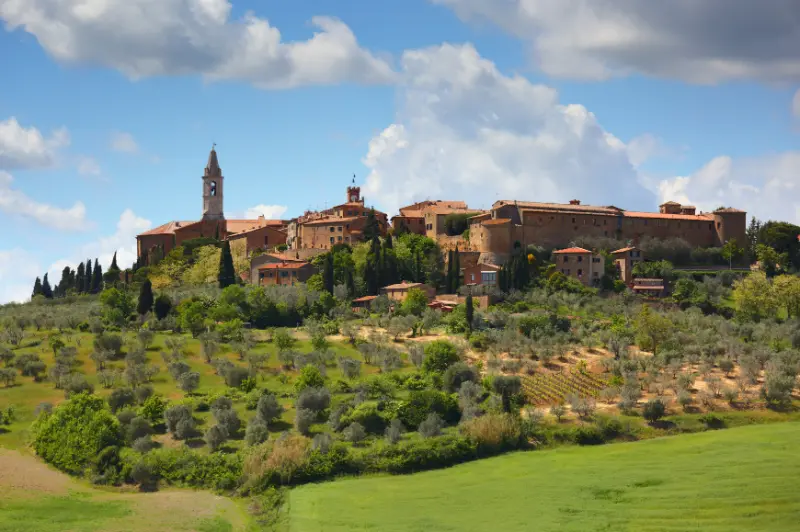
The cathedral’s position also tells you something about Pienza’s landscape. Walk around the square and you quickly reach viewpoints where the ground falls away toward the Val d’Orcia. Architecture and countryside are never separate for long here.
Visit Palazzo Piccolomini for one of the best framed views in Tuscany
Palazzo Piccolomini was the pope’s family residence and is one of the essential visits in town. The rooms give context to Renaissance life, but the hanging garden at the back is the real surprise. Its loggia frames the Val d’Orcia like a painting.
On a clear day, the view extends across rolling fields toward Monte Amiata. Take your time rather than rushing through for photographs. The garden makes the humanist idea behind Pienza tangible: a cultivated building opening deliberately toward a cultivated landscape.
Walk the panoramic lanes behind the main street
After Piazza Pio II, move away from Corso Rossellino and explore the lanes along the southern edge of the town. Streets with romantic names such as Via dell’Amore and Via del Bacio are famous, but the real attraction is the sequence of viewpoints between the stone houses.
These lanes are especially beautiful early in the morning or near sunset. At midday they can become crowded with visitors looking for the same photograph. Walk another block, wait a few minutes, or continue toward the quieter edges and the town immediately feels different.
Follow the Passeggiata for a wider Val d’Orcia panorama
The panoramic walkway along the town wall is one of Pienza’s simplest pleasures. Rather than seeing the valley through a single viewpoint, you walk beside it. Fields roll away in broad curves, cypress-lined roads cut across the hills and isolated farmhouses appear in the distance.
This is a good place to slow the pace of your visit. Pienza can technically be “done” in two hours, but walking the edge of town and sitting for a while is exactly what turns it from a sightseeing stop into a memorable place.
Go down to Pieve di Corsignano
A short distance below the historic centre stands the Pieve di Corsignano, the Romanesque church connected with the older village that existed before Pienza’s Renaissance transformation. Pius II was baptised here, and the modest church creates a useful contrast with the carefully planned piazza above.
You can walk down from town if you are comfortable with the climb back, or include it by car when leaving Pienza. The surrounding countryside feels open and quiet, making it one of the easiest ways to add a less polished layer to the visit.
Taste pecorino without turning the town into a shopping stop
Pienza is closely associated with Pecorino di Pienza, a sheep’s milk cheese produced in the surrounding area. Shops along Corso Rossellino display wheels at different ages, from soft young cheese to firmer mature versions. Sampling a few styles is more interesting than simply buying the largest souvenir pack.
Pair it with local honey, preserves or a glass of Tuscan wine if you have time. The aromas from the cheese shops are part of the town’s character, but do not let food shopping consume the entire visit. Some of Pienza’s best moments are free: a wall, a view and ten quiet minutes.
Where to eat in Pienza
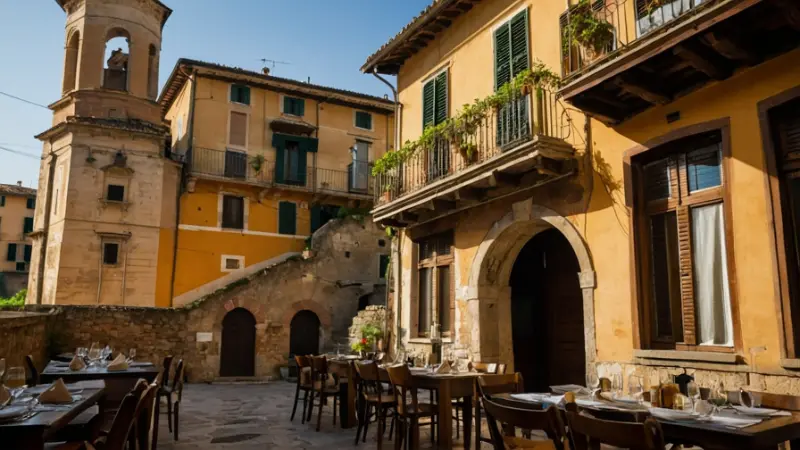
Sette di Vino, at Piazza di Spagna 1, is a small and highly regarded place focused on simple Tuscan flavours. It suits Pienza well: intimate, straightforward and centred on ingredients rather than elaborate presentation. Because the dining room is small, reserving ahead is wise.
Baccus L’Osteria, at Corso il Rossellino 70, is another strong option in the centre and convenient if you want to stay close to the main route. Pici pasta and pecorino-based dishes are natural things to look for in this part of Tuscany.
Where to stay
Hotel Corsignano, at Via della Madonnina 11, sits just outside the compact historic core. That position is useful if you are travelling by car because you can remain close to the centre without trying to negotiate the pedestrian lanes with luggage. Check Hotel Corsignano prices & availability
For the most atmospheric experience, consider staying one night in or immediately around Pienza rather than visiting between multiple Val d’Orcia towns. Evening and early morning are when the balance between architecture and landscape feels most natural.
Want more accommodation options? Where to Stay in Val d’Orcia: Pienza, Montalcino, San Quirico or the Countryside? compares the best bases and makes it easier to choose the right location before you book.
Useful booking tools for this trip
Tours & experiences: For guided visits, attraction tickets and bookable experiences in Pienza, See tours & tickets
Where to park in Pienza
The historic centre is tiny and pedestrian-friendly, so there is no benefit in trying to drive close to Piazza Pio II. Follow the signed public parking areas outside the walls and walk the final few minutes. On busy spring and summer weekends, arriving before late morning makes parking noticeably easier.
If you are carrying luggage, check your accommodation’s instructions before arrival. A five-minute walk on normal paving can feel very different with heavy suitcases on sloping streets. Once parked, leave the car where it is; everything in Pienza itself is best explored on foot.
How long should you spend in Pienza?
Two or three hours are enough for Piazza Pio II, Palazzo Piccolomini and the panoramic lanes. A half day is better if you want lunch and the Pieve di Corsignano. Staying until evening gives the town a completely different atmosphere once the busiest day-trip period ends.
Pienza works beautifully as part of a Val d’Orcia day, but resist the temptation to combine Pienza, Montepulciano, Montalcino and every famous photo stop in a single rush. Two towns plus countryside is a much more enjoyable rhythm. If Montepulciano is also on your route, read our Montepulciano guide and decide which place deserves your longer meal or overnight stay.
A route that fits Pienza perfectly
Enter the historic centre and begin in Piazza Pio II. Visit the cathedral and Palazzo Piccolomini, then walk Corso Rossellino before turning into the panoramic lanes behind it. Follow the edge of town for Val d’Orcia views, stop for pecorino or lunch, and finish with the Pieve di Corsignano below the walls.
There is no need to make the route complicated. Pienza was designed around clarity, and the best visit follows the same principle: look carefully, walk slowly and leave space for the landscape.
Why Pienza feels different from other Tuscan hill towns
Many Tuscan towns became beautiful gradually through centuries of additions, conflicts and rebuilding. Pienza is unusual because one powerful idea shaped its centre in a relatively concentrated period. That gives the town an almost composed quality, yet it never feels sterile because real life continues around the Renaissance plan.
Morning deliveries pass through the streets, residents stop to talk, cheese shops open their doors and swallows move above the roofs. The planned city and the lived town overlap. That contrast is what makes Pienza more than a perfect photograph of the Val d’Orcia.
One small detail worth noticing before you leave
When you return to Piazza Pio II, look at the paving and the way the buildings align with it. The square’s geometry was not accidental: perspective, proportion and controlled sightlines were part of the Renaissance project. It is easy to photograph the cathedral and miss the quieter intelligence of the space beneath your feet.
Then step through one of the nearby lanes and look back toward the square. Pienza’s greatest achievement may be how quickly monumental architecture turns into ordinary street life. Within a few metres you move from a papal palace to laundry, flowerpots and a view across wheat fields. That transition is a good final memory to carry away.