
Best Time to Visit Tuscany: Weather, Crowds, Prices and What Each Season Feels Like
The best time to visit Tuscany depends on the Tuscany you want. Spring is wonderful for cities, gardens and countryside walks. Summer brings long evenings, beaches and festivals but also heat and the largest crowds in famous places. Autumn can be glorious for food, wine country and softer light, while winter gives Florence, Siena and smaller towns a quieter, more local rhythm. There is no single perfect month; there is a season that fits the way you like to travel.
Spring: the easiest all-round choice
From roughly March through May, Tuscany moves from cool early-spring days into one of the most comfortable periods for exploring. Hills green up, gardens and wildflowers become part of the landscape, and walking through Florence or Siena is generally easier than during the hottest summer afternoons.
Spring weather can change quickly. A bright morning may turn into rain, especially earlier in the season, so pack layers and a light waterproof jacket. The countryside can be vivid after rain, but unpaved paths may be muddy.
May is particularly popular because it combines longer days, generally pleasant temperatures and a landscape that still looks fresh. That popularity means well-known hotels, agriturismi and restaurants can book earlier than travellers expect. If you want a special countryside stay, reserve it rather than assuming spring is “off season.”
Summer: long days, beaches and heat
June through August brings the longest daylight, busy cultural calendars and the easiest conditions for combining art cities with the coast. It is also the period when Tuscany can be very hot, especially inland. Florence, Siena and stone hill towns hold heat, and midday sightseeing can become tiring.
A summer itinerary benefits from a different daily rhythm: start early, take a slower lunch or rest in the hottest part of the afternoon, then return outside in the evening. Churches and museums provide welcome breaks, but air-conditioning varies in historic buildings.
On the coast and Elba, summer is naturally a major season. Beaches, bathing establishments and island services operate at full rhythm, but popular areas can be crowded and parking becomes more competitive. Our Versilia guide and Elba guide help if the sea is central to your trip.
Early autumn: one of Tuscany’s richest moods
September and October are favourites for travellers who want warm days without the peak-summer feeling. Vineyards, harvest activity and food traditions give the countryside a different atmosphere, and the lower sun can make Val d’Orcia and Chianti especially photogenic.
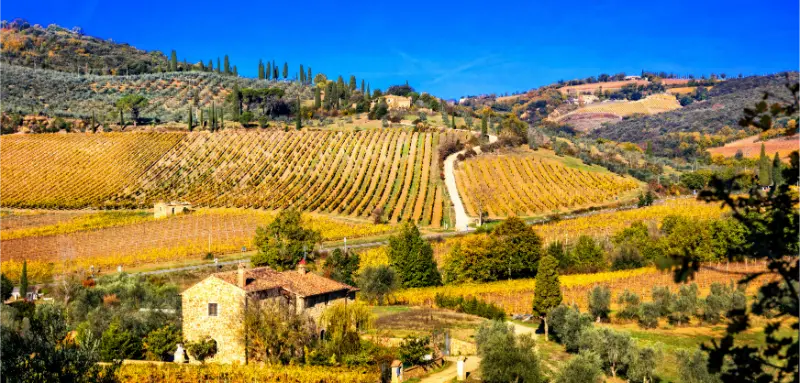
Do not assume every autumn day is cool. September can still feel summery, and warm spells can continue into October. At the same time, evenings get cooler and rain becomes more likely as the season progresses.
Wine-country demand can be strong around harvest and weekends, so book tastings rather than arriving at famous estates unannounced. The appeal of autumn is not simply fewer people; it is the sense that agriculture and local food are visibly shaping the season.
Late autumn: quieter, moodier, wetter
November is far quieter in many tourist areas and can be beautiful for slow city travel, but it is also among the months when rain can be more frequent. Daylight is shorter, some rural experiences reduce hours, and a countryside holiday built entirely around outdoor views carries more weather risk.
For Florence, Arezzo, Lucca and museum-rich destinations, this can still be an excellent time. You can build days around indoor culture and treat clear weather as a bonus for walks and viewpoints.
If your dream is a poolside agriturismo and golden evening drives, late autumn is probably not the best match. If you like cafés, art, seasonal cooking and cities without summer pressure, it can be deeply satisfying.
Winter: Tuscany without the postcard crowds
December through February changes the balance of the region. Florence, Pisa, Lucca and Siena remain living cities rather than seasonal resorts, so museums, cafés and daily life continue. Rural destinations become quieter, and some hotels, restaurants or experiences may close temporarily.
Days are shorter and mornings can be cold. Higher areas such as Monte Amiata and the Apennine side of Tuscany can experience wintry conditions very different from the coast. This is not a season to assume the entire region has mild Mediterranean weather.
The reward is atmosphere: lower visitor numbers in many places, winter food, clearer views on crisp days and a more local feeling in towns that are extremely busy in summer. Christmas and New Year periods are exceptions, with events and increased domestic travel.
Best season for Florence, Siena and art cities
For city-heavy itineraries, April–May and late September–October are often the most comfortable combinations of daylight and walking weather. Summer works too if you plan around heat and reserve major attractions. Winter can be excellent for travellers who prioritise museums and do not mind shorter days.
Florence requires advance booking for famous museums in busy periods, regardless of whether the street outside feels crowded that morning. Siena’s open spaces and steep streets make temperature more noticeable, so shoulder-season walking can be particularly pleasant.
If art cities are the main purpose of the trip, do not postpone Tuscany simply because you cannot travel in spring. Each season changes the pace more than the essential value of the city.
Best season for a countryside road trip
For Chianti and Val d’Orcia, spring and early autumn are especially attractive because you can spend long periods outdoors without designing the day around extreme heat. Summer road trips are still beautiful, but the car should have good air-conditioning and you may prefer morning and evening village walks.
Road surfaces and weather matter in winter and during heavy rain. Some agriturismi are reached by gravel roads, so ask the property if access conditions concern you. In mountain areas, winter equipment requirements can apply on designated roads and periods.
See our driving in Tuscany guide before planning a seasonal road trip.
Useful booking tools for this trip
Car rental: If this trip works better with your own wheels, Compare car rental prices before choosing the pickup point.
Best season for beaches and islands
If swimming and beach life are essential, summer is the obvious choice, with late spring and early autumn often offering a quieter alternative depending on sea temperatures and weather. Resort towns have the broadest range of beach services in peak season.

July and August bring the greatest pressure on popular coastal roads, car parks and accommodation, especially around weekends and Italian holiday periods. Booking ahead matters more than in a city with a huge hotel inventory.
For hiking, villages and landscapes on Elba rather than just beach time, spring and autumn can be more comfortable than midsummer.
Crowds: think by place, not by region
Tuscany is not uniformly crowded. Florence’s main museum corridor can feel busy while a village an hour away is calm. San Gimignano can be intense in the middle of a summer day and peaceful in the evening. Rural Maremma can feel spacious even during periods when Florence is full.
Travel earlier or later in the day in famous places and sleep overnight in at least one popular hill town if you want to experience it outside excursion hours. Avoid treating “crowds in Tuscany” as a single regional condition.
The same logic applies to weekends. Wine areas, seaside towns and event destinations can attract domestic visitors even when international tourism is moderate.
Prices and availability
Accommodation prices generally rise when demand is highest, but the exact pattern depends on destination. A coastal hotel peaks differently from a Florence business hotel or a countryside wedding venue. Major events can make one city expensive while the next town remains normal.

Shoulder seasons often provide a better balance of choice and price, but popular agriturismi with only a handful of rooms can sell out months ahead even in May or September. If a specific property is part of the dream, book the property first and shape the route around it.
For flexible travellers, winter can offer strong city value, though a smaller selection of rural properties may be open.
Packing by season
Spring and autumn reward layers: a light jacket, compact umbrella or rain shell, comfortable walking shoes and something warmer for evenings. Summer requires sun protection, breathable clothing and a reusable water bottle; remember that churches and some religious sites expect respectful clothing even in heat.
Winter calls for a proper coat, especially for evenings and inland towns. Do not pack for “Italy” as if Sicily and the Apennines share one climate.
Year-round, comfortable shoes matter more than fashionable ones. Cobbles, slopes and long museum days are part of the Tuscany experience.
Choose the season by your priorities
If you want flowers and green landscapes, choose spring. If you want swimming, outdoor dinners and the longest days, choose summer. If food, wine and warm-toned countryside matter most, early autumn is hard to beat. If you want museums, quieter streets and a slower local atmosphere, consider winter.
For a first trip that combines cities and countryside, late April to May or late September into October often offers the easiest balance. But a well-designed July or January itinerary can be better than a poorly planned “perfect month.”
The regional tourism portal’s seasonal ideas at Visit Tuscany are useful for current events and activities when your dates are fixed.
Where to stay for this trip: Where to Stay in Tuscany: The Best Areas for Every Kind of Trip. Check prices & availability
Final thoughts
The best time to visit Tuscany is the season whose trade-offs you actually enjoy. Spring and early autumn are the safest all-round recommendations, summer is unbeatable for long evenings and the sea, and winter belongs to travellers who value culture and quiet. Pick the season first, then design the route around what that season does best.