
Saturnia Hot Springs: Cascate del Mulino, Parking, Best Times and Spa Options
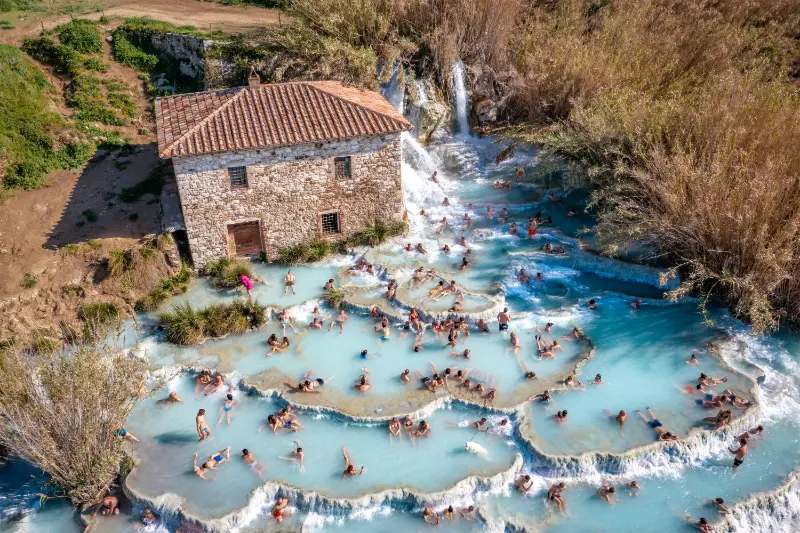
Saturnia Hot Springs is one of the easiest places in Tuscany to recognise from a photograph and one of the easiest to misunderstand when planning a real visit. The famous cascade is Cascate del Mulino, a free, open-air series of limestone pools fed by warm sulphurous water near the village of Saturnia in southern Tuscany. It is not the same place as the nearby commercial spa resort, and the experience changes dramatically depending on the hour, season and way you arrive.
This guide focuses on the practical details that make the difference: where to go, when to arrive, what to bring, how parking works, how long to stay, what the water feels like, what the free pools do and do not offer, and how to combine Saturnia with the Maremma. If you are still deciding among Tuscany’s hot springs, start with our guide to the best thermal baths in Tuscany.
Saturnia at a glance
| Famous free pools | Cascate del Mulino |
|---|---|
| Water temperature | About 37.5°C at the natural cascade |
| Admission | Free access to Cascate del Mulino |
| Best transport | Car for most independent travellers |
| Ideal visit | 1.5–3 hours at the cascade; longer if combined with lunch or a spa |
| Best crowd strategy | Arrive very early or later outside peak daytime hours |
| Best base | Saturnia, Montemerano or another Maremma village |
Cascate del Mulino vs Terme di Saturnia: they are not the same thing
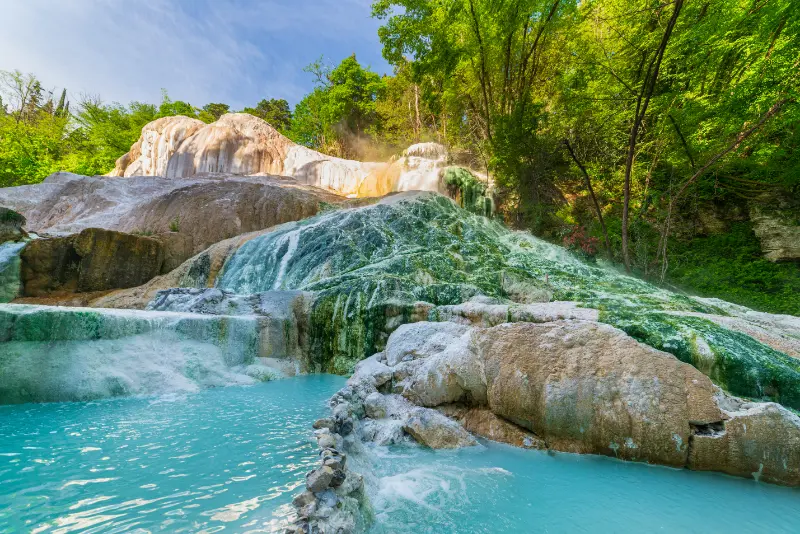
The distinction matters. Cascate del Mulino is the photogenic natural cascade with small travertine basins around an old mill. It is outdoors and free. You should expect a natural setting rather than a conventional swimming complex: no reserved lounger, no private changing room included with admission, and no guarantee of a quiet pool to yourself.
Terme di Saturnia, by contrast, is the nearby spa complex with organised pools and wellness facilities. It can make sense when you want a full spa day, changing facilities and a more structured experience. Some travellers combine the two: the natural cascade early, then a booked spa experience later. Check the current spa products and access conditions before travelling because commercial packages can change.
Visit Tuscany’s official Cascate del Mulino page is a useful official reference for the natural springs.
What Cascate del Mulino is actually like
The thermal stream flows over pale mineral formations and fills a sequence of shallow pools. Some basins are only suitable for sitting; others allow you to immerse more fully. The bottom can be irregular and slippery, and the small channels between pools are part of the appeal. The water is warm rather than “hot-tub hot”, which is why the cascade can still be enjoyable outside winter.
The sulphur smell is noticeable. It can cling to swimwear, towels and hair after you leave, so this is not the place for your best swimsuit or a towel you need to keep pristine for the rest of the trip. A separate bag for wet items is extremely useful.
The best time of day to visit Saturnia
If Saturnia is a priority rather than a casual stop, early morning is the best strategy. The site is famous and free, so there is no timed-entry system controlling the number of bathers. By late morning on popular days, the pools can feel very different from the tranquil images that attracted you there.

Sunrise and early morning
This is the strongest option for photographers and anyone who values space. In cooler months, steam above the water can add atmosphere. The trade-off is obvious: you need to be staying close enough to avoid a punishingly early drive.
Late afternoon and evening
Later visits can also work, especially outside midsummer. Build in time to change before darkness and remember that a natural site is less convenient after sunset than an organised spa.
Middle of the day
It is the easiest time logistically and often the busiest. In summer, the combination of hot sun, little shade and warm thermal water can be tiring. If midday is your only option, keep the visit shorter and bring drinking water and sun protection.
Parking and arrival: the detail that can make or break the visit
Cascate del Mulino lies outside the centre of Saturnia. For most independent visitors, a car is the practical solution. Follow signs for the cascade and use designated parking rather than stopping along narrow access roads. Parking arrangements and restrictions can change, especially during busy periods, so obey local signs on the day rather than relying on an old map screenshot.
Do not plan this stop as though you were parking beside a conventional pool entrance. Leave a little time for walking from the car and for changing. If you are building a wider driving route, our driving in Tuscany guide and parking in Tuscany guide explain the broader road rules and town-centre restrictions.
What to bring to Cascate del Mulino
- Water shoes with grip: the mineral surfaces and wet stones can be slippery.
- A swimsuit you do not mind exposing to sulphurous water.
- Old or dark towel: keep your hotel’s white towel at the hotel.
- Change of clothes and a waterproof bag for wet swimwear.
- Drinking water: warm bathing can be dehydrating.
- Sun protection in spring and summer.
- Minimal valuables: a free natural site is not the place to leave expensive belongings unattended.
A bathrobe can be useful in cooler weather, especially if you need to walk back to the car after getting out of the water.
How long should you spend at Saturnia?
For the free cascade alone, around two hours is a sensible planning figure. That allows time to change, try several pools and enjoy the place without turning a relaxing stop into an endurance test. Some visitors are satisfied after an hour; others stay much longer. Warm water, sun and crowds are good reasons not to schedule an exact departure minute.
A stronger Maremma day can combine the cascade with Montemerano, a beautiful medieval village nearby, and Saturnia village itself. If you have more time, use our Maremma travel guide to build a broader route rather than driving to southern Tuscany for a single photograph.
A practical half-day plan
07:30–08:00: arrive at Cascate del Mulino, change and enter the pools before the main daytime flow.
09:30–10:00: leave the water, change properly and have breakfast or coffee.
10:30: walk around Saturnia village or drive to Montemerano.
12:30: lunch in the area, followed by a slow Maremma afternoon.
If you prefer organised transport or want to combine Saturnia with other southern Tuscan stops without managing the route yourself, compare current day tours rather than assuming every excursion follows the same programme.
See Saturnia tours & experiences
Can you visit Saturnia as a day trip from Florence?
Technically yes; strategically, it is not my favourite use of a day. Southern Tuscany is far enough from Florence that a return drive turns the hot springs into a long transport exercise. If Saturnia matters to you, the better plan is to make it part of a Maremma or southern Tuscany overnight, or integrate it into a longer road trip.
Our Where to Stay in Maremma guide explains the best bases. If you are already planning a longer circuit, also see the 10-day Tuscany itinerary.
Check Saturnia stays & availability
Saturnia with children
Families can enjoy the cascade, but it is not a purpose-built children’s pool. Surfaces are slippery, pool depth varies, there are uneven natural edges, and there may be many adults moving through narrow basins. Keep young children within arm’s reach and choose calmer, shallower areas rather than trying to reproduce an adult spa experience.
For a larger family-planning framework, use our Tuscany with kids guide and Tuscany with toddlers guide.
Saturnia in winter, spring, summer and autumn
Winter: the contrast between cold air and warm water is memorable, but getting changed outdoors is less pleasant and daylight is short.
Spring: one of the best compromises for green countryside, comfortable driving and less intense heat.
Summer: visit very early. Warm water plus strong sun makes long midday bathing less appealing.
Autumn: excellent for a road trip, particularly when temperatures drop but days remain usable.
Common mistakes at Saturnia
- Confusing the free cascade with the paid spa and arriving with the wrong expectations.
- Turning up at peak midday in August expecting an empty pool.
- Bringing no water shoes or dry change of clothes.
- Leaving valuables unattended on the bank.
- Planning a huge Florence round trip when an overnight in Maremma would be more enjoyable.
- Assuming parking and access rules will be identical to an old blog post; always follow current signs.
Is Saturnia worth it?
Yes, if you plan it as a real thermal stop inside southern Tuscany rather than a social-media checkpoint. The water is genuinely warm, the limestone cascade is unusual, and the surrounding Maremma deserves time of its own. The difference between an unforgettable visit and an overcrowded one is often simply the hour you arrive.
- (‘best-thermal-baths-in-tuscany’, ‘Compare Tuscany’s best thermal baths’)
- (‘maremma-travel-guide’, ‘Plan the wider Maremma’)
- (‘where-to-stay-in-maremma’, ‘Choose the best Maremma base’)
- (‘monte-amiata-travel-guide’, ‘Explore Monte Amiata and southern Tuscany’)
- (‘driving-in-tuscany’, ‘Driving in Tuscany: practical rules’)